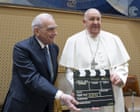
The world premiere of Martin Scorsese’s upcoming film regarding Pope Francis in Vatican City represents a strategic convergence of soft power, religious branding, and high-culture validation. This event is not merely a promotional milestone; it is a calculated deployment of cinematic assets within the unique geopolitical and ecclesiastical framework of the Holy See. By hosting the premiere within the walls of the sovereign city-state, both the filmmaker and the papacy engage in a symbiotic exchange of legitimacy that addresses specific institutional needs for both parties.
The Tripartite Value Exchange
The selection of Vatican City as the launchpad for this project functions across three distinct value streams.
1. The Validation Premium
For a filmmaker like Scorsese, whose career has frequently intersected with themes of faith, guilt, and the burdens of the priesthood, a Vatican premiere serves as the ultimate institutional imprimatur. It effectively bypasses traditional critical reception by positioning the work as a matter of historical and spiritual record. The "Validation Premium" here refers to the immediate increase in cultural capital granted to a creative work when it is hosted by the very institution it depicts. This removes the friction typically found between secular art and religious orthodoxy.
2. The Narrative Correction Mechanism
For the Vatican, the premiere serves as a narrative correction mechanism. The papacy under Francis has prioritized accessibility and a "church for the poor." Scorsese’s lens, known for its humanistic and often gritty realism, provides a modern visual language that aligns with this branding. By facilitating this premiere, the Vatican internalizes the narrative, ensuring that the primary public association with the film is one of cooperation rather than critique.
3. The Geopolitical Signal
Hosting a world premiere is a rare exercise of the Vatican’s status as a sovereign entity. This uses the entertainment industry’s global reach to reinforce the Holy See's relevance in the modern digital commons. It signals that the Church is not merely a repository of history but an active participant in the contemporary cultural "prime time."
The Structural Mechanics of the Collaboration
The relationship between Martin Scorsese and the Jesuit influence within the Vatican provides the foundational logic for this premiere. Scorsese’s 2016 film Silence was similarly screened for Jesuits in Rome, establishing a precedent for this specific workflow.
The Gatekeeper Protocol
Access to the Pope is governed by a strict hierarchy. The "Gatekeeper Protocol" in this context involves the Dicastery for Communication. This body manages the visual and verbal output of the Holy See. A premiere within Vatican City suggests that the film has passed through an informal vetting process, where the alignment of the director’s vision and the Church’s messaging has reached a point of equilibrium. This is not censorship in the traditional sense; it is a collaborative alignment of interests.
The Audience Composition as a Data Point
The guest list for a Vatican premiere is a curated dataset of influence. Unlike a Hollywood premiere populated by influencers and commercial partners, the Vatican audience typically includes:
- High-ranking clergy (The Curia)
- Diplomatic corps members
- Theological academics
- Select members of the Catholic press
This specific demographic ensures that the initial "word of mouth" is intellectually dense and strategically favorable, setting the tone for secular critics later.
Economic and Branding Intersections
While the Vatican does not operate on a traditional profit-and-loss model regarding film premieres, the economic implications are significant for the production entities involved.
The Scarcity Effect
By choosing the Vatican over Cannes, Venice, or New York, the production creates an artificial scarcity of access. This increases the "eventized" nature of the film. The exclusivity of the venue generates a higher volume of earned media—unpaid press coverage—than a standard red-carpet event could ever achieve. The cost-to-reach ratio is optimized because the venue itself is the headline.
Brand Halo Synergy
The "Scorsese" brand and the "Vatican" brand share a specific aesthetic: longevity, tradition, and a preoccupation with the "grand themes" of humanity. This creates a brand halo where the prestige of the director rubs off on the institution (making it look modern and cultured) and the authority of the institution rubs off on the director (making him the definitive voice on the subject).
Technical Hurdles and Sovereign Constraints
Organizing a premiere within a sovereign enclave presents unique operational challenges. The Vatican is a walled city with stringent security protocols and limited infrastructure for high-capacity digital projection.
- Security Overhead: The integration of the Gendarmerie Corps and the Swiss Guard into the logistics of a film premiere adds layers of complexity that do not exist at the Dolby Theatre.
- Acoustic Challenges: Many of the potential screening spaces within the Vatican (such as the Paul VI Audience Hall or the Casina Pio IV) were not designed for modern cinema sound profiles. This requires a temporary but high-level technical overhaul of the space.
- Protocol Friction: The timing and flow of the event must adhere to the Pope's schedule and liturgical calendar, which can create significant shifts in the production’s marketing timeline.
Comparative Precedent and Historical Trajectory
The history of films premiering or screening at the Vatican is short and highly selective. The Passion of the Christ (2004) and The Nativity Story (2006) represent the earlier attempts to bridge the gap between Hollywood and the Holy See. However, the Scorsese-Francis partnership is distinct because it involves a living subject and a director who has previously been at odds with the Church (most notably following 1988’s The Last Temptation of Christ).
This trajectory shows a maturation of the Vatican’s communication strategy. Under the current administration, there is a clear shift toward engaging with "troubled" or "searching" artists rather than solely endorsing purely devotional art. This move acknowledges that secular prestige is a necessary component of modern religious influence.
Identifying Potential Failure Points
Despite the high-level coordination, this strategy contains inherent risks.
- The Theological Disconnect: If the film contains elements that contradict core dogma, the Vatican’s hosting of the premiere could trigger a backlash from the Church’s conservative wing.
- The Secular Critique: Conversely, the film risks being viewed by secular audiences as "hagiography"—a sanitized, uncritical biography. If the film is perceived as a propaganda tool for the papacy, Scorsese’s reputation for uncompromising realism may be diluted.
- The Over-Exposure Risk: Using the Vatican for a film premiere is a "silver bullet" strategy; it can only be done effectively once per cycle. If the film fails to meet critical or commercial expectations, the Vatican may be more hesitant to lend its sovereign prestige to future Hollywood endeavors.
Strategic Forecast
The premiere of the Scorsese Pope Francis film will likely serve as a blueprint for "High-Prestige Cultural Diplomacy." Expect other major institutions—including other sovereign monarchies or major global NGOs—to attempt to replicate this model of internalizing the media that depicts them.
The immediate action for the production team is to manage the post-premiere narrative. The "Vatican Premiere" must be framed not as an endorsement of the film's theology, but as an endorsement of its artistic merit. This distinction allows the film to maintain its "edge" in the secular market while enjoying the benefits of the world's most exclusive venue.
The broader entertainment industry should monitor the "earned media" metrics of this event. If the Vatican premiere generates a higher SEO impact and social sentiment score than a traditional festival premiere, it will signal a permanent shift in how biographical or institutional films are launched. The focus will move from "The Red Carpet" to "The Sovereign Event."
The final play for Scorsese and his distributors is the leverage of the "Vatican Review." In the weeks following the premiere, the commentary appearing in L'Osservatore Romano or via the Vatican News portal will serve as the definitive "source of truth" for the film’s authenticity. Managing this secondary wave of intellectual critique is as critical as the premiere itself.