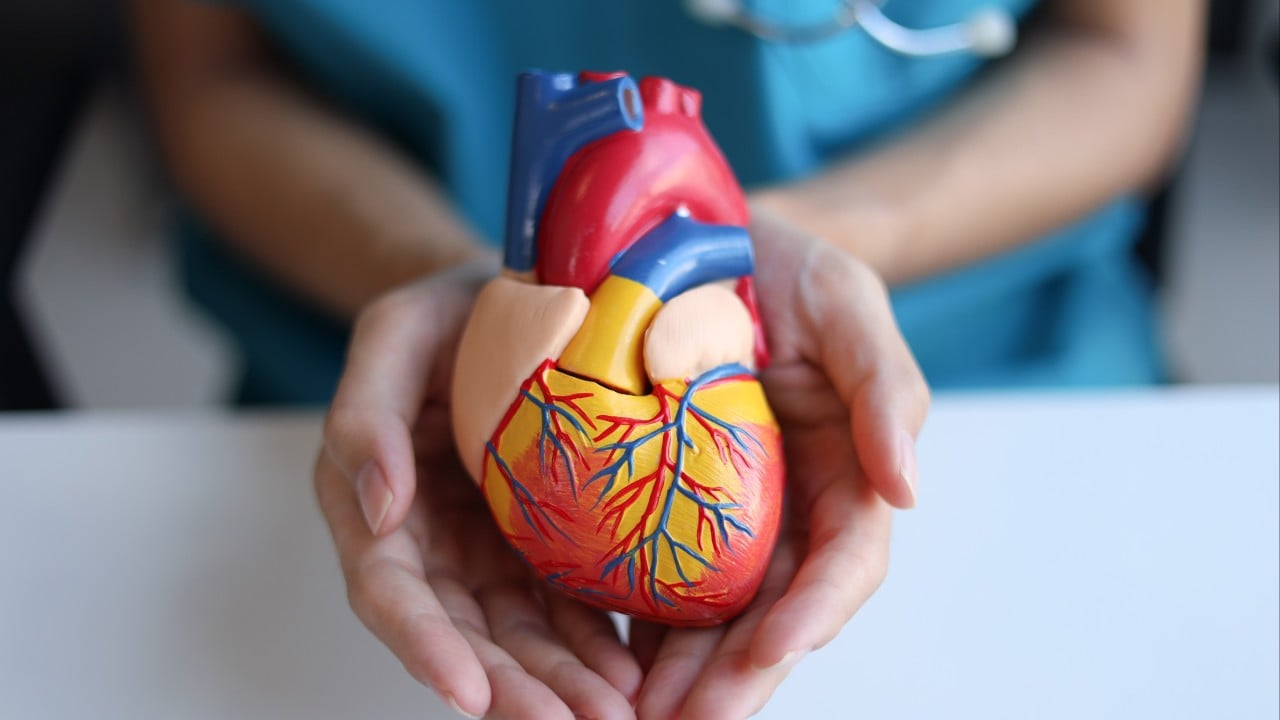
Artificial intelligence is quietly reshaping how physicians process information, making it the most significant disruptor to clinical reasoning since the invention of the stethoscope. While tech executives promise that machine learning will eliminate diagnostic errors, the reality inside hospitals is far more complicated. Software is not just assisting doctors. It is altering their cognitive architecture. By outsourcing the foundational steps of differential diagnosis to algorithms, the medical community risks eroding the very intuition that saves lives when technology inevitably fails.
The immediate danger is not a rogue algorithm making a catastrophic error. It is a slow, systemic atrophy of human critical thinking.
The Automation Bias Trap in Emergency Triage
Medical education has long relied on heuristic processing—mental shortcuts honed by years of pattern recognition at the bedside. When an experienced physician walks into a patient's room, they are scanning for subtle, non-verbal cues. The pale tint of the skin, the specific cadence of a labored breath, or the scent of a particular metabolic imbalance.
Artificial intelligence operates on a completely different plane. It ingests thousands of data points from the electronic health record, runs them through a neural network, and spits out a probability score.
When a doctor is presented with an AI-generated recommendation before they have even laid eyes on the patient, it triggers a documented psychological phenomenon known as automation bias. This is the human tendency to favor suggestions from automated systems, even when those suggestions contradict human judgment or observable reality.
Consider a crowded emergency department. A machine flags a patient as a high-risk sepsis candidate based on subtle fluctuations in heart rate and lab values. The attending physician, exhausted eight hours into a twelve-hour shift, accepts the diagnosis without undergoing the rigorous internal skepticism that traditionally defines clinical practice. They order broad-spectrum antibiotics and aggressive fluid resuscitation.
But the machine missed the context. The patient is a marathon runner who recently completed a race and is experiencing normal physiological stress compounded by an unrelated, minor infection. The aggressive treatment plan, while statistically validated by the algorithm's training data, is entirely inappropriate for the individual sitting on the gurney.
The physician's internal compass did not malfunction. It was simply overridden by the comfort of a pre-packaged answer.
How Neural Networks Short-Circuit the Diagnostic Journey
To understand why this matters, one must examine how a differential diagnosis is built. Historically, it is a messy, iterative process. A doctor gathers a history, forms a preliminary hypothesis, tests it against physical examination findings, and refines it with targeted diagnostics. It is a narrative journey.
AI eliminates the journey. It jumps straight to the destination.
- Loss of the Causal Chain: Algorithms provide correlations, not causation. A deep learning model might accurately predict that a patient with a specific pattern on an X-ray has a 92% chance of having pneumonia. However, it cannot explain why it reached that conclusion in a way that aligns with human pathophysiology.
- The Black Box Dilemma: Because the inner workings of complex neural networks are obscured, clinicians are forced to either accept the output on blind faith or reject it entirely. There is no middle ground for collaborative reasoning.
- Cognitive Passivity: When doctors become mere validators of algorithmic outputs rather than active investigators, their diagnostic muscles begin to waste away.
This shift from active generation to passive verification changes the neurological load on a clinician. Generating a differential diagnosis requires deep, generative thinking. Verifying an AI's list requires recognition memory, a much lower-level cognitive function. Over time, relying on recognition memory dulls the sharp edge of clinical expertise.
The Hidden Cost of the Algorithmic Safety Net
Hospital administrators are enamored with AI because it promises standardization. In theory, standardizing care reduces variability, lowers costs, and mitigates legal liability. If a physician follows the recommendation of a validated hospital AI system and the patient suffers a poor outcome, the institutional blame is diffused.
This creates a perverse incentive structure. Physicians who challenge the algorithm take on immense personal and professional risk. If they deviate from the machine's suggested pathway and the patient deteriorates, they face intense scrutiny from quality assurance boards and malpractice attorneys.
"Why did you think you knew better than a system trained on ten million patient records?" becomes the unanswerable question in a deposition.
Consequently, defensive medicine is mutating. It is no longer just about ordering extra tests to cover every conceivable base. It is about conforming to the digital consensus. This compliance-driven environment actively discourages the kind of unorthodox, brilliant leaps of logic that have historically defined medical breakthroughs and saved patients with rare, atypical presentations of common diseases.
The Threat to the Next Generation of Physicians
The impact of this cognitive shift is not distributed equally. Senior physicians, who spent decades developing their clinical intuition before the introduction of predictive algorithms, possess the foundational knowledge required to push back against a flawed AI recommendation. They know when a machine's output looks wrong because they have seen thousands of similar cases.
Medical residents and students do not have that luxury. They are learning medicine in an environment where the machine's voice is often the loudest one in the room.
If a trainee spends their formative years simply approving or tweaking lists of diagnoses generated by a computer, they never learn how to sit with the discomfort of uncertainty. They do not develop the cognitive resilience required to navigate a diagnostic crisis when the power goes out, the network crashes, or they find themselves practicing in a resource-limited environment without digital infrastructure.
We are actively training the first generation of dependent clinicians. They are experts in software navigation, but novices in independent synthesis.
Restructuring the Human Machine Interface
The solution is not to banish artificial intelligence from the clinic. That would be an exercise in futility, and it would deny patients the genuine benefits of machine learning in areas like image analysis, drug interaction screening, and administrative burden reduction.
Instead, the medical establishment must aggressively redraw the boundaries of engagement between human intelligence and machine prediction.
Medical schools must implement "cognitive blind spots" training. Future doctors need to be taught exactly how and when algorithms fail, treating the AI not as an oracle, but as an aggressive, overly confident intern whose work must always be double-checked.
Furthermore, software developers must change how diagnostic data is presented. Instead of delivering a final probability score or a definitive diagnosis at the top of a patient's chart, AI systems should operate in the background. They should remain silent until the physician has entered their own independent differential diagnosis into the system. Only then should the software compare its findings with the human's, highlighting discrepancies and forcing a conscious, documented reconciliation process.
This maintains the physician as the primary author of the clinical narrative, ensuring that the machine serves human intellect rather than replacing it.
The Myth of the Flawless Dataset
The core fallacy driving the current rush toward algorithmic medicine is the belief that medical data is inherently objective. It is not. The notes, lab values, and diagnostic codes contained within electronic health records are deeply flawed, reflective of human biases, systemic inequalities, and administrative box-checking.
When an AI model is trained on this dirty data, it does not eliminate human error; it codifies it at scale.
If a machine learns from a historical dataset where patients from a certain socioeconomic background were consistently underdiagnosed with a specific cardiac condition due to a lack of insurance access, the algorithm will learn that those patients are statistically less likely to have that condition. It will then reproduce that bias in real-time, advising doctors to look elsewhere for diagnoses.
If physicians stop thinking critically, they lose the ability to spot these systemic hallucinations. They become the delivery mechanism for automated bias, executing flawed digital mandates with a misplaced sense of scientific certainty. The stethoscope allowed doctors to hear what the human ear could not catch. AI must not become a device that blinds doctors to what their own eyes can plainly see.