Time does not heal everything. Sometimes, it merely hardens the edges around an open wound, turning grief into a permanent architecture of daily life. Three years have passed since the morning of October 7, 2023. Three years since the sirens tore through the quiet kibbutzim, since the festivals of light turned into sudden darkness, and since the world for thousands of families fractured into a permanent before and after.
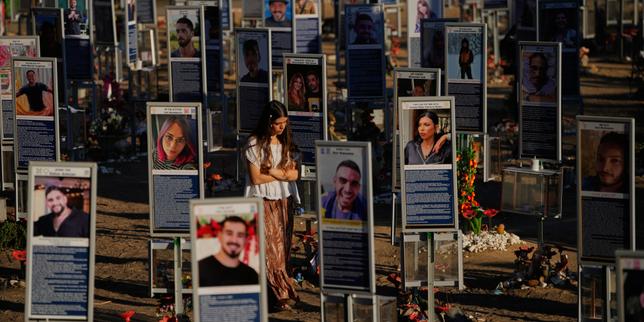
Today, the ceremonies of remembrance unfold across Israel under a heavy, autumn sky. The flags are lowered, the candles are lit, and the names are read aloud in public squares, schools, and military cemeteries. But behind every official memorial, behind the solemn cadence of politicians and the haunting notes of a cello, lies the raw, unvarnished pulse of human survival.
Consider the kitchen table in a modest home in Sderot.
The chair remains pulled out. Just an inch. Exactly how he left it before walking out into the blinding morning light to check on a neighbor. For three years, the dust has settled on that wooden armrest, and for three years, a mother has refused to let anyone push it back in. To clean it away would be to admit defeat against the relentless march of days that refuse to make sense.
This is the invisible geometry of trauma. Nations measure history in treaties, casualty counts, and political shifts. Individuals measure history in the space left behind by a pair of shoes by the door, the sudden silence of a text thread that will never update again, and the sickening drop in the stomach when an air raid siren echoes unexpectedly in the distance.
The third anniversary carries a distinct, crushing weight. The initial shock has long since burned away, replaced by the grueling marathon of endurance. The temporary housing units are no longer temporary; they are where children have learned to sleep with one ear open. The hostage families, whose loved ones remain trapped in the subterranean shadows of Gaza, live in a purgatory where hope and despair wage a daily civil war. Every gathering, every public gathering of mourning, is an agonizing reminder of an incomplete equation.
Yet, within this overwhelming darkness, something stubborn persists. It is not the toxic positivity of silver linings—there are none here. Instead, it is a fierce, quiet defiance.
Look at the volunteers who arrive before dawn at the scorched fields of the south to harvest crops left untended. Look at the therapists who sit hour after hour in makeshift clinics, listening to the nightmares of children who drew monsters with smoke pouring from their eyes. Look at the survivors who stand at the Western Wall, weeping openly, not because they are weak, but because they have carried an impossible burden for thirty-six months without dropping it.
Loss strips away the non-essential. It forces a society to confront its deepest fractures and its most profound solidarities. The commemorations held today are not merely rituals of sorrow; they are acts of shared witness. They declare to the world, and to each other, that these lives mattered, that these absences are impossible to ignore, and that forgetting is a luxury no one here can afford.
The wind shifts across the valleys of the Negev, rustling the olive trees that survived the burning days. In the distance, a train rattles along the tracks, carrying commuters toward Tel Aviv, toward routine, toward the illusion of normal. But beneath the veneer of modern life, the heartbeat of a wounded nation continues to throb—uneven, scarred, but profoundly alive.
The candles burn down to the wax. The crowds slowly disperse into the approaching dusk. But the chairs remain pulled out, and the memory of that morning remains as vivid as yesterday's sunset, waiting for a closure that refuses to arrive.