Most celebrity charities burn cash on galas, press releases, and vague "awareness" campaigns that change nothing on the ground. You've seen it a thousand times. A famous couple puts their name on a letterhead, hosts a black-tie dinner in New York or London, and calls it a day.
That's why the latest numbers out of the Clooney Foundation for Justice (CFJ) deserve a closer look.
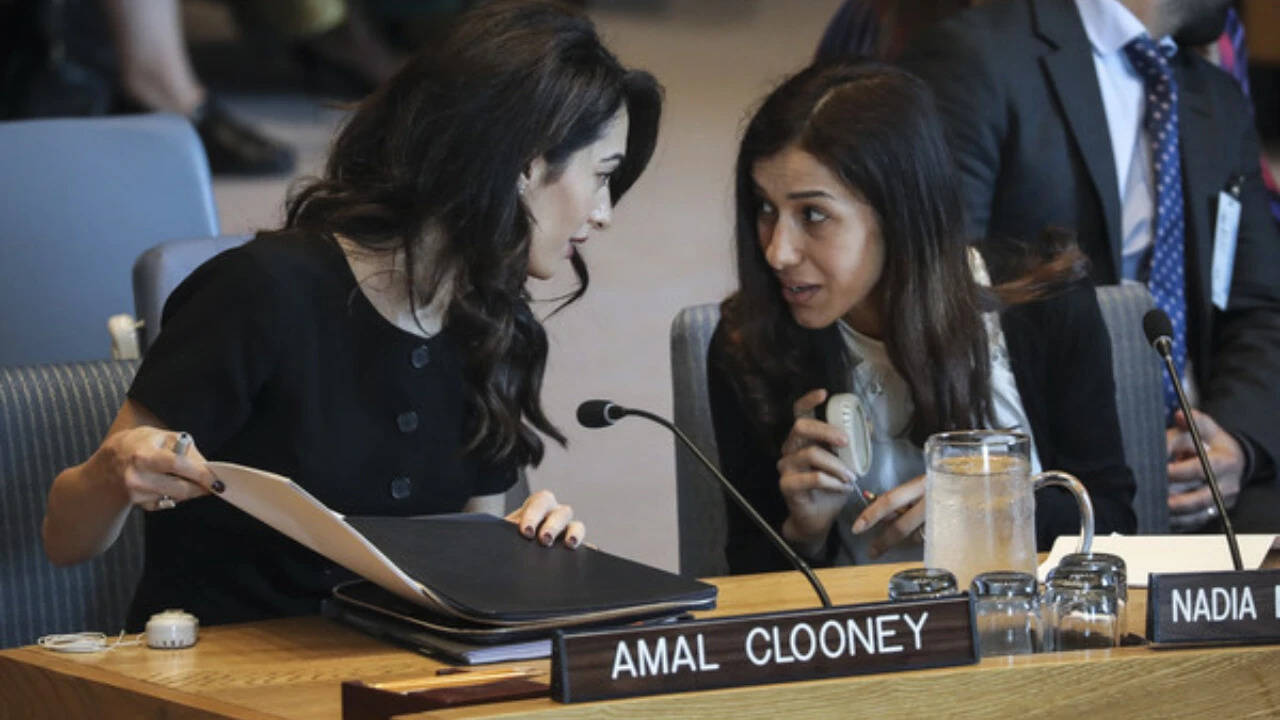
Founded in 2016 by human rights lawyer Amal Clooney and actor George Clooney, the organization recently hit a major operational milestone. Through its Waging Justice for Women initiative, the foundation has provided free legal aid to over 9,000 women and children across sub-Saharan Africa—and it's aggressively expanding its mobile legal clinics to push that number even higher.
It's a quiet, unglamorous model of philanthropy. It also happens to work.
Why Traditional Legal Aid Fails Rural Women
If you want to understand why mobile legal clinics matter, you first have to understand how broken traditional justice systems are for poor women in rural areas.
In countries like Malawi, Kenya, Tanzania, and Uganda, rights often exist on paper. Constitutions ban child marriage. Statutes criminalize gender-based violence and protect a widow's right to inherit property.
None of that matters if the nearest courthouse is eighty miles away down an unpaved road.
For a woman living on less than two dollars a day, hiring a lawyer isn't just expensive—it's absurd. Even when free legal aid offices exist in capital cities like Lilongwe or Nairobi, getting there requires bus fare she doesn't have, time away from subsistence farming or childcare, and navigating a bureaucratic maze designed for people who speak fluent English or French rather than local dialects.
Abusers and predatory relatives know this. They count on the friction of distance and poverty to guarantee impunity. When a husband dies and his brothers seize the family land—a practice known as property grabbing—the widow doesn't lose because the law is against her. She loses because she can't get into a courtroom to enforce it.
The Clooney Foundation didn't try to fix this by building shiny new courthouses. They flipped the model entirely. Instead of asking vulnerable women to travel to the law, they put lawyers in vans and drove the law straight to the villages.
Inside the Clooney Foundation Mobile Legal Clinics
Let's look at how this actually operates on the ground, because the mechanics are where most non-profits fall apart.
CFJ doesn't parachute Western lawyers into African villages for photo ops. That would be useless. Local courts require local bar admissions, cultural fluency, and deep knowledge of customary law alongside statutory law.
Instead, the foundation funds and equips local legal fellows and grassroots partner organizations. Through the Waging Justice for Women program—which Amal Clooney launched alongside Michelle Obama and Melinda French Gates under the broader umbrella of tackling child marriage and gender inequality—CFJ deploys teams of local attorneys, paralegals, and community advocates directly into underserved districts.
Here is what happens when a mobile clinic pulls into a rural community:
- Immediate Triage and Intake: Women line up—sometimes hundreds in a single day—to speak privately with trained paralegals. They bring tangled, urgent problems involving domestic abuse, child support, forced marriage, birth registration, and stolen inheritance.
- On-the-Spot Legal Drafting: Lawyers don't just hand out pamphlets. They draft affidavits, file formal complaints, and prepare court petitions right there under a tent or inside a community center.
- Direct Representation: When a case needs to go before a magistrate, a CFJ-funded fellow takes it on free of charge, following the case through every adjournment until a judgment is actually enforced.
- Community Sensitization: While lawyers handle individual cases, educators work with local village chiefs, religious leaders, and police officers. In many rural areas, traditional leaders hold more sway than distant judges. Getting a village headman to understand that child marriage is illegal—and that lawyers are watching—stops dozens of cases before they ever start.
By stripping away travel costs, legal fees, and intimidation, these mobile units have already assisted more than 9,000 women and children. Expanding the fleet means moving into deeper, harder-to-reach regions where state presence is practically zero.
The Real Cases Driving the 9,000 Milestone
Numbers like "9,000" can feel abstract until you look at what those files actually contain. Based on CFJ's public case reporting and partner updates across East and Southern Africa, the clinics spend the bulk of their time fighting four specific battles.
1. Reclaiming Stolen Land and Inheritance
In parts of Malawi and Tanzania, customary traditions often clash with modern statutory inheritance laws. When a man dies without a formal will, extended relatives frequently evict his wife and children, stripping them of their home, livestock, and farmland. Mobile clinic lawyers step in to secure letters of administration, prove legal marriage, and obtain court orders forcing relatives to return the land. Without that intervention, those children almost always drop out of school.
2. Halting Child Marriage
Despite legal bans across much of the region, economic desperation still pushes families to marry off girls as young as twelve or thirteen. Mobile legal teams work alongside local child protection committees to annul illegal unions, rescue girls from abusive households, and hold perpetrators accountable under national penal codes.
3. Enforcing Child Support and Paternity
It sounds mundane compared to international war crimes tribunals, which is where Amal Clooney built her global reputation. Yet securing a legally binding maintenance order from an absent father is often the single difference between a child eating one meal a day or going to bed hungry. Mobile clinics track down deadbeat parents, establish paternity through the courts, and enforce wage or asset garnishments.
4. Securing Basic Legal Identity
You can't enroll in secondary school, open a mobile money account, or claim inheritance without a birth certificate or national ID. Millions of rural children exist off the grid administratively. Mobile legal teams run massive documentation drives alongside local registrars, bringing women and children into the formal legal system for the first time.
Why Amal Clooney's Background Changes the Playbook
A lot of people assume George Clooney is the engine behind the foundation because he's the movie star. That's backwards.
Amal Clooney is one of the most accomplished human rights and international law barristers in the world. Before the foundation existed, she was already representing victims of ISIS genocide, imprisoned journalists in Egypt and Myanmar, and political prisoners across the globe. She knows how courtrooms work—and more importantly, she knows why legal aid organizations run out of money or lose focus.
That legal DNA shows up in how CFJ spends its budget. Look at their other major arm, TrialWatch. That program trains monitors to sit inside high-profile criminal trials around the world—tracking everything from sham prosecutions of journalists to crackdowns on peaceful protesters—and grades those trials against international human rights standards.
The mobile legal clinics apply that same obsession with hard accountability to everyday injustices. There's no fluff here. Every dollar goes toward measurable legal outcomes: cases filed, injunctions granted, land restored, marriages annulled, and young African women trained as full-time human rights lawyers through CFJ's fellowship pipeline.
Honestly, that fellowship piece might be the smartest part of the entire operation. Foreign aid usually collapses the moment grant money dries up. By funding year-long fellowships for early-career African female lawyers—giving them salaries, mentorship, and courtroom reps—CFJ is building a permanent bench of local defenders who will keep practicing long after the headlines fade.
The Hard Truths About Scaling Mobile Justice
It would be easy to paint this expansion as an unvarnished triumph, except anyone who has worked in international development knows better. Scaling mobile legal clinics across rural Africa comes with brutal logistical and political headaches.
First, court backlogs are massive. You can file a brilliant legal petition from the back of a mobile clinic van, only to watch the local magistrate's court adjourn the hearing six times over eighteen months because the judge is sick, the courthouse ran out of paper, or the police didn't serve the summons. Winning a case on paper doesn't automatically put food on a table if the judicial machinery moves at a glacial pace.
Second, backlash is real. When a woman suddenly shows up to a village dispute backed by a sharp-suited lawyer from the capital, local power dynamics get threatened. Women who pursue domestic violence charges or land claims sometimes face intense social ostracization from their own neighbors and in-laws. Mobile clinics can't just win a court order and drive away; they have to coordinate with local shelters, social workers, and women's cooperatives so the client stays safe after the verdict.
Third, funding dependency remains a constant threat. Philanthropic grants fluctuate. Donors get distracted by new global crises every six months. While the Clooneys bring immense fundraising gravity—securing major backing from partners like the Bill & Melinda Gates Foundation, the Ford Foundation, and corporate sponsors—sustaining mobile fleets, fuel costs, security, and full-time legal salaries across multiple countries requires relentless cash flow.
What Makes This Model Worth Watching
Despite those hurdles, the expansion of CFJ's mobile legal clinics proves something crucial about human rights work: small, localized legal interventions produce massive compounding returns.
When one widow in a rural district successfully uses a mobile clinic lawyer to win back her late husband's farm, every other woman in a ten-mile radius hears about it by nightfall. Suddenly, the law stops being an abstract rumor from the capital city. It becomes a real tool that regular people can actually touch.
Predators take notice too. The mere rumor that a mobile legal team is visiting a district next month is often enough to make an abusive relative settle a land dispute out of court or think twice before forcing a fourteen-year-old into marriage. Deterrence doesn't require a million-dollar media campaign. It just requires a credible threat that someone will actually show up and file paperwork.
How You Can Support or Track This Work
If you're looking for ways to back direct-impact legal aid—or simply want to verify how organizations like CFJ spend their money before donating anywhere—take a few concrete steps:
- Audit Legal Aid Non-Profits Before Giving: Skip charities that spend heavily on vague "awareness" initiatives. Look at annual reports on Charity Navigator or directly on the Clooney Foundation for Justice website to check how much funding goes directly to local legal fellows, court fees, and grassroots partner grants.
- Back Local Grassroots Legal Partners: Organizations like the Women Lawyers Association of Malawi (WLAM) and FIDA-Kenya do the daily heavy lifting on the ground alongside international foundations. Supporting local bar associations and legal aid clinics directly ensures money stays in the community.
- Follow TrialWatch and Waging Justice Reports: Read the actual case briefings published by CFJ's legal teams. Understanding how statutory law clashes with customary practices in developing nations will give you a much sharper eye for which global development policies actually protect women—and which ones are just expensive theater.


