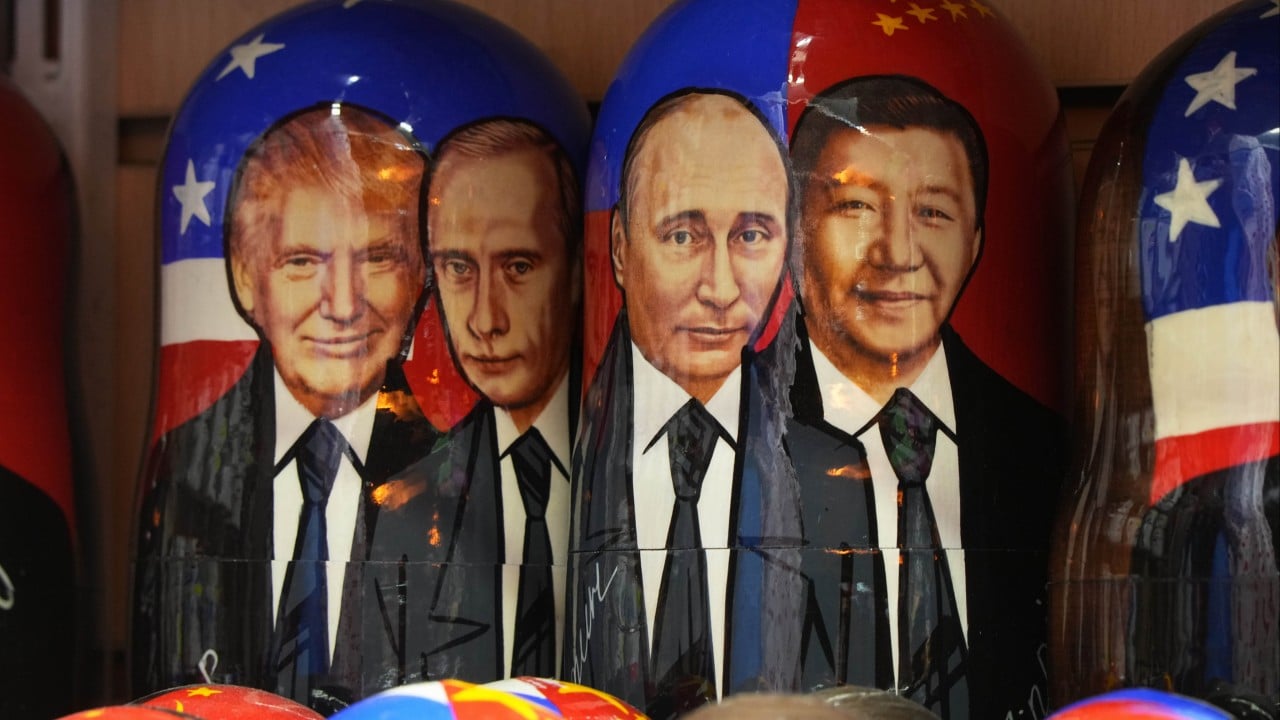
The White House has officially confirmed that senior representatives from the United States, China, and Russia held unscheduled trilateral discussions on the sidelines of the Asia-Pacific Economic Cooperation summit. While official readouts describe the encounter as a routine exchange on regional trade stability and maritime safety, the reality inside the room points to a far more urgent diplomatic calculation. For the first time in years, the three dominant nuclear and economic powers have bypassed traditional bilateral channels to address overlapping crises that none of them can contain alone.
Diplomacy rarely happens by accident at multilateral summits. Every hallway brush-by, every shared motorcade route, and every sudden schedule adjustment is choreographed weeks in advance by deputies who spend their careers measuring the exact distance between a handshake and a concession. When the National Security Council acknowledges a three-way meeting at APEC, the headline is never the meeting itself. The real story is why three capitals locked in bitter ideological, economic, and proxy conflicts suddenly decided that silence had become more expensive than engagement. Meanwhile, you can find other events here: Why Trump Is Actually Holding Off on New Iran Attacks Right Now.
The Mechanics of Sideline Diplomacy
To understand what happened at APEC, you have to strip away the ceremonial pomp of the summit. APEC was designed in 1989 as a low-friction forum for trade liberalization across the Pacific Rim. Because it operates on consensus and avoids legally binding treaties, it provides the exact kind of diplomatic cover that rivals need when domestic politics make formal summits impossible. Nobody loses face by attending a trade conference.
Sideline meetings operate on a strict hierarchy of plausibility. A formal bilateral summit requires months of deliverable-hunting, joint communiques, and carefully vetted press pools. A sideline pull-aside requires none of that. Officials can sit down for forty minutes, deliver blunt warnings without the pressure of signing an agreement, and walk back into the main plenary hall as if they had merely been discussing tariff schedules on agricultural goods. To see the bigger picture, we recommend the detailed article by The New York Times.
The decision to bring all three parties into a single room changes the geometry of the conversation entirely. In a bilateral setting, Washington can press Beijing on industrial overcapacity, or warn Moscow about sanctions evasion, while the other party deflects. Put all three at the same table, and the triangulation stops. Every excuse offered by one capital is immediately weighed against the silent presence of the third.
Why the Bilateral Playbook Stopped Working
For the past decade, American foreign policy operated on a compartmentalized track. The State Department managed China through a framework of strategic competition, while isolating Russia through economic sanctions and military deterrence. That separation collapsed the moment Moscow and Beijing deepened their "no limits" partnership, turning two distinct regional challenges into a single interconnected front.
Washington quickly discovered that pressuring Moscow without accounting for Beijing's economic lifeline was an exercise in futility. Conversely, attempting to stabilize trade relations with China while ignoring dual-use technology transfers to Russian defense industries created an unsustainable contradiction at home. The bilateral tools were simply too narrow for the reality on the ground.
Beijing faced its own set of diminishing returns. While Chinese state banks and manufacturers profited from discounted Russian energy and reduced Western competition in Eurasian markets, the secondary sanctions threat from the United States began biting into China's broader export economy. For an economy already wrestling with a sluggish property sector and weak domestic consumption, losing access to Western financial clearinghouses is a risk Beijing cannot afford to take lightly.
Moscow, meanwhile, found itself increasingly dependent on a single economic patron. Being the junior partner in an asymmetric relationship with Beijing carries long-term strategic costs that Russian planners recognize, even if they rarely admit them publicly. Opening a direct, three-way channel with Washington allows the Kremlin to reassert its status as an independent great power rather than a regional client state.
What Was Actually on the Table
Official statements from multilateral summits are written to obscure more than they reveal. Phrases like "candid exchange of views" and "maintaining open lines of communication" are diplomatic shorthand for deep disagreement tempered by mutual fear of miscalculation. Based on established diplomatic priorities and the specific composition of the delegations present at APEC, three concrete issues dominated the room.
Maritime Chokepoints and Supply Chain Fragility
APEC economies account for roughly sixty percent of global gross domestic product and nearly half of world trade. Most of that commerce moves across water, specifically through the South China Sea, the Strait of Malacca, and the northern Pacific routes connecting Asian manufacturing hubs to North American ports.
Escalating naval incidents in the South China Sea and increased Russian-Chinese joint naval patrols in the North Pacific have pushed insurance premiums and shipping risks to their highest levels in decades. Neither Washington nor Beijing can absorb a sudden freeze in maritime freight. If a naval collision or an accidental radar lock spirals into a localized blockade, global inflation surges overnight. The trilateral format gave military and diplomatic advisors a rare opportunity to establish basic deconfliction protocols before an accident forces their leaders into an unwanted escalation.
Nuclear Risk Reduction and Strategic Stability
The collapse of traditional arms control frameworks has left the world's three largest nuclear powers operating without shared verification rules. With existing treaties expiring or suspended, and new hypersonic and space-based capabilities entering active deployment, the margin for strategic error has shrunk to minutes.
Washington has spent years trying to pull Beijing into arms control talks, only to be told that China's arsenal is too small to warrant parity discussions with the United States and Russia. By bringing Moscow and Beijing into the same room, American negotiators shifted the framing from numerical caps to crisis communication. Establishing a direct, three-way hotline for missile launch notifications and cyber incidents affecting command-and-control infrastructure is a modest step, yet it addresses the most immediate danger facing all three capitals.
Export Controls and Sanctions Enforcement
Economic statecraft has become the primary weapon of twenty-first-century conflict, but sanctions regimes leak when major economies refuse to enforce them. American officials used the APEC sidelines to lay down clear red lines regarding specific microelectronics, machine tools, and chemical precursors flowing into defense supply chains.
Rather than issuing public ultimatums that force Beijing and Moscow to dig in, the closed-door setting allowed for granular, technical discussions. In these rooms, diplomats trade specific lists of corporate entities and shipping vessels, signaling which transactions will trigger immediate secondary sanctions and which commercial channels Washington is willing to leave untouched.
The Domestic Trap Each Leader Faces
Every diplomat sitting at that table carried the weight of domestic political constraints that limit how far any agreement can actually go. Understanding those internal pressures explains why the White House waited until the final hours of the summit to confirm the meeting, and why none of the participants rushed to claim a breakthrough.
In Washington, any sign of accommodation toward either Beijing or Moscow triggers immediate bipartisan backlash on Capitol Hill. Lawmakers view engagement through a zero-sum lens, treating diplomatic dialogue as a sign of weakness rather than a tool of statecraft. The administration had to frame the trilateral talk strictly as a defensive measure designed to protect American economic interests and prevent accidental conflict.
In Beijing, the leadership must project absolute strength to a domestic audience conditioned by years of nationalist messaging. Appearing to bow to American pressure over its relationship with Russia would undermine the central narrative of Chinese foreign policy. Consequently, Chinese readouts emphasized sovereign equality and opposition to unilateral sanctions, burying any quiet concessions beneath layers of standard ideological rhetoric.
In Moscow, the political calculus revolves around breaking the narrative of international isolation. Simply sitting at the same table as the United States and China on equal footing serves a vital propaganda purpose at home. It signals to Russian elites and the broader public that Western efforts to quarantine the Kremlin have failed, regardless of what was actually agreed upon behind closed doors.
The Flaws in the Competitor Narrative
Most mainstream coverage of the APEC announcement fell into a predictable trap, treating the trilateral talk as either a historic peace breakthrough or a naive diplomatic blunder. Both interpretations miss the structural reality of great-power politics.
First, talking is not the same as agreeing. History is littered with high-level sideline meetings that produced polite handshakes followed weeks later by fresh sanctions, naval standoffs, or covert operations. The presence of all three powers in one room does not erase the fundamental clash of interests over the future of the Indo-Pacific, the security architecture of Europe, or the rules governing global trade.
Second, this format carries a distinct risk of alienating key regional allies. Countries like Japan, South Korea, the Philippines, and Australia rely on American security guarantees to balance against Chinese and Russian coercion. Whenever Washington engages directly with Beijing and Moscow behind closed doors, regional capitals immediately worry about quiet trade-offs made over their heads. Keeping allies briefed and reassured requires almost as much diplomatic bandwidth as managing the adversaries themselves.
Consider a hypothetical scenario involving maritime fishing rights and coast guard patrols in disputed waters. If Washington and Beijing quietly agree to lower the temperature in one sector to preserve trade talks, a regional partner whose vessels are still being harassed in an adjacent sector will view that bilateral quietness as abandonment. Managing that friction is the hardest part of trilateral diplomacy.
Historical Echoes and Strategic Precedents
Great-power triangulation is hardly a new invention. During the Cold War, the Nixon administration famously exploited the Sino-Soviet split, using rapprochement with Beijing to gain diplomatic advantage over Moscow. That strategy worked because China and the Soviet Union were bitter ideological rivals bordering on open war.
Today's dynamic is almost the exact inverse. Beijing and Moscow are aligned in their desire to dilute American global influence, even if their underlying interests do not always match. Washington cannot play one off against the other the way Henry Kissinger did in the 1970s. Instead, American diplomats are trying to identify the friction points within the Sino-Russian partnership—such as Central Asian influence, Arctic shipping routes, and financial compliance risks—and force both capitals to manage those contradictions in real time.
The closest historical parallel is not the 1972 Nixon trip to China, but rather the Helsinki Accords process of the mid-1970s. Back then, deeply antagonistic blocs agreed to establish basic rules of the road for security, economics, and crisis management while continuing to compete fiercely across every other domain. It was cold, transactional, and entirely devoid of illusions.
What Observers Should Watch Next
The true test of the APEC trilateral meeting will not be found in press releases or diplomatic cables. It will show up in observable shifts on the ground and in the markets over the next ninety days.
Watch the frequency and proximity of naval intercepts in the South China Sea and the Taiwan Strait. If the deconfliction talks held any weight, military commanders will quietly dial back aggressive maneuvers to avoid testing the new communication channels.
Watch the enforcement actions coming out of the Treasury Department and Chinese customs authorities. A sudden drop in customs declarations for sensitive dual-use components, paired with a temporary pause in new American sanctions designations against mid-tier Chinese banks, will confirm that a quiet understanding was reached regarding compliance boundaries.
Watch the diplomatic calendar for lower-level working groups. When major powers decide to keep talking seriously, they immediately spin up technical committees led by assistant secretaries and deputy ministers who do not attract television cameras. If those quiet meetings begin appearing on public schedules in Geneva, Vienna, or Singapore, the APEC sideline encounter was more than a photo opportunity.
Great powers rarely announce when they step back from the brink. They simply stop escalating, adjust their naval patrol routes by a few nautical miles, and let the diplomats keep talking in rooms where the microphones are turned off.



