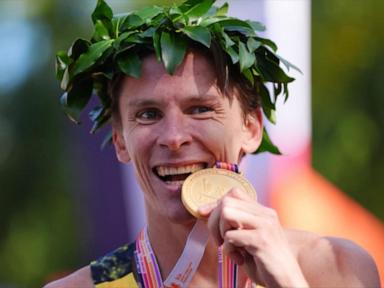
Watching a runner win a 26.2-mile race by two minutes is impressive, sure, but it's honestly boring television. What actually glues millions of people to their screens every November are the thrilling finishes at the NYC Marathon where the outcome hangs on a single stride down Central Park South.
Most marathoners spend months obsessing over even splits and conservative pacing. Then they get to New York, hit the Queensboro Bridge, and watch the elite field throw every textbook rule out the window. Because New York doesn't use pacemakers—what the running world calls rabbits—nobody is there to shield the leaders from the wind or dictate a smooth, predictable tempo. The race turns into a tactical street fight where someone always blinks too early, and someone else waits just long enough to steal the tape. In similar news, read about: The Mechanics of Kimi Antonelli and the Mercedes Succession Model.
Why Central Park Produces the Best Sprint Finishes in Distance Running
If you've never run the final three miles of the New York City Marathon, the television broadcast doesn't do the topography justice. It's brutal. After grinding through four boroughs, runners enter Central Park at East 90th Street, exit at 59th Street onto Central Park South, and then turn back into the park at Columbus Circle for a deceptive, uphill kick to the finish line near Tavern on the Green.
Those rolling hills destroy tired legs. On a flat course like Berlin or Chicago, the strongest aerobic engine usually grinds everyone else down by mile 22. In New York, a runner who looks completely cooked on Fifth Avenue can recover on a short downhill, tuck behind a rival to block the wind coming off the Hudson River, and launch a vicious counterattack with 400 meters left. Sky Sports has analyzed this fascinating issue in great detail.
I've stood near the Columbus Circle turn watching the elite women and men make that final left-hand bend. You can practically hear their breathing over the roar of the grandstands. At that point, glycogen stores are empty, lactic acid is pooling in their quads, and the race stops being about fitness. It becomes pure nerve.
The Most Unforgettable Thrilling Finishes at the NYC Marathon
When people talk about photo finishes in marathon history, New York owns the highlight reel. You don't need vague generalizations to prove it; the clock tells the whole story.
The 2023 Women's Three-Way Brawl
Nobody who watched the 2023 women's race is going to forget it anytime soon. Hellen Obiri, Letesenbet Gidey, and Sharon Lokedi entered Central Park locked together in a slow, tactical chess match that suddenly exploded into a track sprint.
Gidey, the 10,000-meter world record holder, looked like she had the top-end speed to blow everyone away. Lokedi, the defending champion, refused to let go. Obiri, a two-time Olympic silver medalist on the track, timed her move to perfection on the final incline. She crossed the line in 2:27:23, beating Gidey by six seconds and Lokedi by ten. Six seconds after nearly two and a half hours of running is basically nothing—roughly 30 meters of asphalt separating glory from second place.
Geoffrey Kamworor vs. Wilson Kipsang in 2017
Before 2017, Wilson Kipsang was a former world record holder known for making decisive, crushing surges. Geoffrey Kamworor was his younger training partner who had finished second in New York two years earlier.
They ran shoulder-to-shoulder through the final miles, trading tiny surges that looked like sparring jabs. Kamworor finally opened a small gap entering the final stretch, only for Kipsang to mount a terrifying late charge down the blue line. Kamworor held on to win in 2:10:53, beating Kipsang by just three seconds. Watching Kamworor glance over his shoulder in sheer panic while sprinting full-out after 26 miles remains one of the rawest moments the sport has ever produced.
The 1984 Women's Dead Heat That Wasn't
You can't talk about close NYC finishes without mentioning Grete Waitz and Adriana Barbu, or better yet, the 2006 men's duel between Marilson Gomes dos Santos and Stephen Kiogora, or the 2001 thriller where Tesfaye Jifar held off Japhet Kosgei. Even further back, in 2006, Jelena Prokopcuka outlasted Tatiana Hladyr in a grinding duel where every step looked painful.
Then there's the wheelchair division, which routinely delivers the closest margins of the entire weekend. In 2018, Daniel Romanchuk edged out Marcel Hug and David Weir in a sprint finish that came down to less than a second, proving that drafting and last-second positioning matter just as much on three wheels as they do on two feet.
What Most Spectators Miss During the Final Mile
Casual viewers usually think the winner of a close marathon is simply the person with the fastest 400-meter personal best. That's only half true. Track speed helps, obviously, which is why former 5,000-meter and 10,000-meter stars like Hellen Obiri and Kenenisa Bekele do so well when a race goes slow early.
Real marathon finishing speed comes down to three things you can't easily see on a wide camera angle:
- Stride frequency over stride length. By mile 25, hip flexors are too tight to open up into a long, loping track stride. The runners who win sprint finishes are the ones who keep their cadence quick and choppy, turning their feet over rapidly rather than reaching forward and braking with their heels.
- Tangent discipline. The NYC Marathon course is measured along the shortest possible path—the blue painted line on the road. In a tight pack, runners get forced wide around turns. Losing two feet on four different turns inside Central Park adds up to an extra 15 or 20 meters of running, which is the exact margin of defeat in a three-second finish.
- Fluid intake at mile 23. Elite runners grab specialized carbohydrate bottles at fluid stations every 5 kilometers. Missing that last bottle around mile 23 doesn't hurt at mile 24, because your brain still has circulating blood glucose. It hits you at mile 25.8, right when someone else kicks and your brain literally refuses to let your muscles fire at maximum capacity.
How Pacing Mistakes Create Late-Race Chaos
In races with pacemakers, the first half is usually blisteringly fast, which strings the field out into single file. By mile 20, maybe two or three people are left, and everyone is simply trying to survive.
New York does the exact opposite. Without rabbits, the elite men and women often jog the opening miles across the Verrazzano-Narrows Bridge and through Brooklyn at a pace that feels slow for them—sometimes 5:15 or 5:20 per mile for the men, or 5:45 for the women. Because nobody wants to eat the wind alone on Fourth Avenue, a pack of 15 or 20 runners stays bunched together past the halfway mark.
That creates a pressure cooker. Everybody feels fresh at mile 16, so ego takes over. Someone throws in a 4:40 mile on First Avenue just to see who flinches. Three miles later, that same runner blows up, the pack fractures, and the smart veterans who sat quietly in seventh place suddenly find themselves hunting down a fading leader inside Central Park.
It's messy. It's unpredictable. And frankly, it's why New York Road Runners refuses to bring back pacemakers despite pressure from shoe sponsors who want faster course records. Fast times are great for press releases, but head-to-head racing is what puts eyeballs on the broadcast.
How to Watch and Analyze the Next NYC Marathon Like an Insider
If you're tuning in for the next broadcast—or standing behind the barricades on First Avenue—don't just stare at the clock on the corner of the screen. Watch the body language and tactical positioning starting around mile 20 in the Bronx.
- Watch the shoulders on the Willis Avenue Bridge. The first runner whose shoulders start creeping up toward their ears as they climb out of Manhattan is in trouble. Relaxed hands and low shoulders at mile 20 mean someone still has a gear left for Central Park.
- Track who hugs the blue line. Look down at the pavement. The runner glued directly over the painted blue tangent line is saving energy every single minute, while the runner drifting three feet to the outside is quietly giving away the race.
- Pay attention to the mile 23 water station. Watch who actually grabs their bottle and gets it down without choking or breaking stride. If a contender misses their drink there, expect them to fade when the final uphill starts near Columbus Circle.
- Check the split between 40K and the finish. On the official TCS New York City Marathon tracking app, look at the pace drop—or surge—over that final 2.2 kilometers. Anyone running faster than their average race pace over that brutal closing stretch is executing a textbook negative-split kick.
Next time you watch the replay of Obiri, Kamworor, or any of the classic Central Park showdowns, mute the commentary for the last five minutes. Watch their feet on the turns, watch who hides from the wind until the final 300 meters, and you'll see immediately why the best marathon finishes have almost nothing to do with raw endurance and everything to do with nerve.



