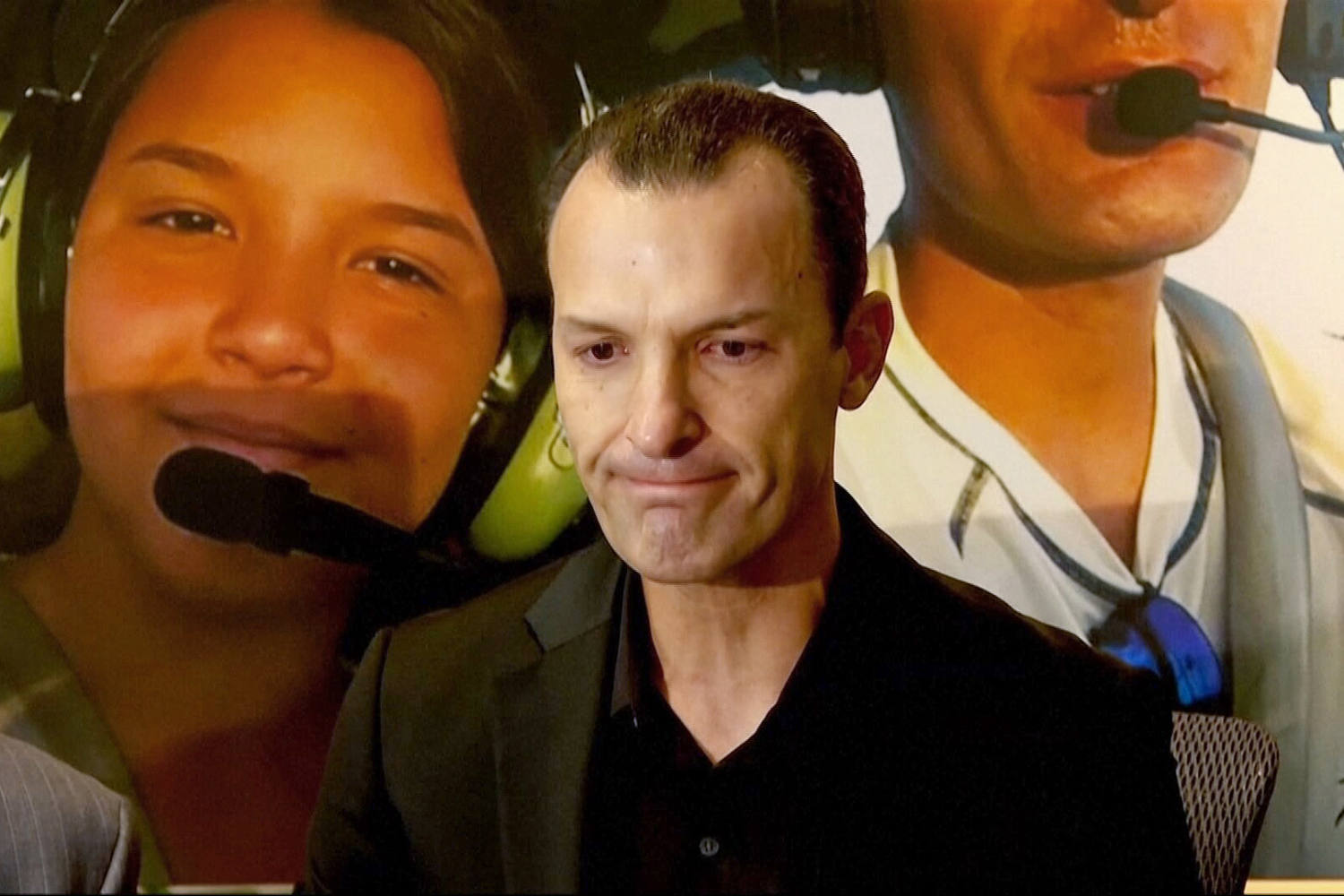
Public narratives surrounding aviation disasters frequently center on emotional accounts from grieving families, such as a parent describing a young co-pilot fighting to save an aircraft until the final seconds of a flight. While these accounts capture the human toll of a fatal crash, they obscure the rigorous, multi-layered engineering and human-factors methodologies used to determine why an aircraft actually leaves controlled flight. Understanding what happens inside a cockpit during an emergency requires separating public interpretation of Cockpit Voice Recorder (CVR) audio from the systematic frameworks of aviation accident investigation.
The Anatomy of Cockpit Voice Recorder Analysis
A Cockpit Voice Recorder does not merely capture spoken words; it is an acoustic diagnostic tool designed to reconstruct the physical and cognitive environment of the flight deck during the final moments of a flight. Under international aviation standards governed by the International Civil Aviation Organization (ICAO), modern CVRs must record at least two hours of high-fidelity audio across multiple dedicated channels, typically capturing the captain's headset, the first officer's headset, a third crew or observer station, and a Cockpit Area Microphone (CAM).
When investigators analyze a recording where a co-pilot is heard actively working until impact, they are not simply listening for emotional determination. They are conducting acoustic spectrum analysis to extract hard operational variables:
- Control Input Verification: The CAM captures the distinct mechanical clicks, clacks, and motor whirs of trim wheels, throttle quadrants, flap levers, and circuit breakers. By cross-referencing these acoustic signatures with Flight Data Recorder (FDR) parameters, investigators verify whether a pilot's verbalized intentions matched their physical control inputs.
- Alert and Warning Prioritization: Modern flight decks feature aural warning systems—such as Ground Proximity Warning System (GPWS) alerts, stall warnings, and master caution chimes—that can saturate the auditory environment during a compounding failure. Acoustic mapping reveals which alarms were sounding simultaneously and whether the crew's verbal communication indicated cognitive tunneling or effective threat prioritization.
- Background Aeroacoustic Cues: Changes in the pitch and amplitude of airflow noise over the fuselage, engine spool-down frequencies, and structural vibration sounds allow engineers to corroborate airspeed, angle of attack, and propulsion state independently of electronic sensors.
Crew Resource Management and the Co-Pilot Dynamic
In multi-crew commercial and corporate jet operations, the relationship between the Pilot Flying (PF) and the Pilot Monitoring (PM) is governed by Crew Resource Management (CRM) protocols. When a young or lower-time co-pilot is involved in a terminal emergency, public commentary often focuses on individual heroism. From a human-factors engineering perspective, however, the critical variable is authority gradient management and task allocation under extreme acute stress.
The Authority Gradient Problem
Historically, aviation accidents frequently occurred when a junior first officer recognized a deteriorating flight path or a critical system failure but hesitated to challenge a senior captain due to steep social and professional hierarchy. Modern CRM training specifically targets this vulnerability by establishing standardized assertive communication protocols. When a co-pilot is documented fighting an aircraft until the final second, investigators examine whether that effort occurred within a coordinated dual-pilot loop or as an isolated attempt to recover control after a breakdown in shared situational awareness.
Cognitive Load and Task Saturation
During a severe in-flight upset—such as an uncommanded pitch excursion, dual-engine flameout, or spatial disorientation in Instrument Meteorological Conditions (IMC)—human working memory degrades rapidly. Stress triggers physiological vasoconstriction and auditory exclusion, narrowing a pilot's focus to a single instrument or control axis.
- Primary Flight Path Control (Aviate): Maintaining attitude, airspeed, and structural integrity takes absolute precedence over all other tasks.
- Spatial Orientation and Trajectory (Navigate): Ensuring terrain clearance and alignment with a safe landing area follows immediately.
- External and Internal Coordination (Communicate): Transmitting distress calls to Air Traffic Control (ATC) and executing emergency checklists occur only after the aircraft is stabilized.
If a CVR reveals a co-pilot exerting continuous physical effort on the flight controls right up to impact, it demonstrates adherence to the first rule of aviation survival: never stop flying the aircraft until the kinetic energy is completely dissipated. Yet physical persistence alone cannot overcome aerodynamic or mechanical boundaries if the aircraft has already entered an unrecoverable flight regime, such as a deep stall or a low-altitude upset below the minimum recovery height.
Separating Public Narrative from Forensic Reality
Media reports built around family interviews serve a distinct journalistic function, humanizing the victims of a tragedy. However, relying on secondary summaries of CVR transcripts introduces significant analytical distortion. Investigators rarely release raw CVR audio to the public; instead, national safety boards like the National Transportation Safety Board (NTSB) publish written transcripts vetted by a specialized group comprising representatives from the airline, the aircraft manufacturer, the pilot union, and the regulatory authority.
Family members permitted to listen to segments of a recording or read preliminary transcripts naturally interpret the audio through the lens of personal grief and pride. A family member hears courage and dedication; an accident investigator hears specific operational sequences that answer technical questions:
- Fact vs. Hypothesis in Early Reporting: Immediately following a crash, the exact sequence of mechanical failures is rarely known. A co-pilot's vocal strain or rapid control inputs recorded on the CVR are confirmed facts. The underlying cause of why those inputs were required—whether due to a jammed flight control surface, icing-induced stall, or erroneous airspeed data—remains a hypothesis until metallurgical examination and FDR correlation are complete.
- The Illusion of Recoverability: Hearing a pilot actively working until the final second often leads lay observers to assume the crash was nearly averted. In aerodynamic terms, once an aircraft's descent rate and pitch attitude cross a specific energy threshold near the ground, no amount of control deflection can arrest the sink rate before terrain impact. The crew's continued inputs demonstrate discipline and training retention, not necessarily that the aircraft remained physically recoverable.
Limitations of Audio Evidence in Crash Reconstruction
While CVR recordings provide irreplaceable insight into human decision-making, treating audio evidence as a complete explanation of an accident is a fundamental analytical error. CVR data carries inherent structural limitations that require integration with physical wreckage analysis:
- Absence of Visual Context: Audio cannot capture where a pilot's eyes were directed. Without eye-tracking data, investigators must infer from verbal callouts whether a crew was looking at a malfunctioning primary flight display or scanning outside the windscreen.
- Lack of Tactile Force Measurement: A microphone can record a pilot grunting from physical exertion or verbally stating that the controls feel heavy, but it cannot quantify the exact pounds of force applied to the control column or rudder pedals. That metric must be derived from FDR control surface position sensors and hydraulic pressure logs.
- Survivability Gaps: While crash-protected memory modules are engineered to withstand extreme impact forces, intense post-crash fires, and deep-sea submersion, electrical power loss prior to impact can terminate CVR recording seconds or minutes before the final collision unless an independent Recorder Independent Power Supply (RIPS) is installed and functional.
Structural Reforms Driven by CVR Findings
Every major advancement in modern cockpit design and pilot training stems from dissecting the exact moments captured on flight deck recorders. Rather than treating a co-pilot's final struggle as a purely tragic story, aviation safety regulators convert those acoustic data points into systemic defenses.
When CVR analysis shows a crew overwhelmed by a cascading failure, manufacturers redesign Engine-Indicating and Crew-Alerting Systems (EICAS) to suppress nuisance alarms and highlight only the primary root-cause failure. When recordings reveal a junior pilot struggling to assert control authority during a critical phase of flight, airlines overhaul recurrent simulator scenarios to drill rapid, unambiguous transfer-of-control callouts.
To evaluate future aviation accident coverage with precision, readers and analysts must look past emotional headlines and demand the complete forensic triad: the synchronized Flight Data Recorder parameters, the verified CVR transcript context, and the physical wreckage teardown. Only when acoustic evidence of human effort is mapped directly against aerodynamic performance limits does the true cause of an aviation disaster emerge.