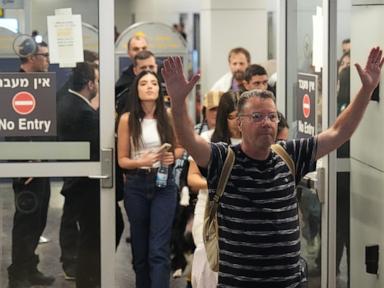
When an in-flight attack on a FlyDubai flight thrust cockpit security back into the headlines, the aviation industry responded with its usual choreographed routine. Officials muttered about heightened threat matrices, airline representatives pointed to strict international protocols, and security analysts debated the finer points of standard operating procedures. Everyone missed the point. The incident was not an isolated anomaly born of bad luck or an exceptional security lapse. It was the predictable result of a systemic blind spot that commercial aviation has consciously ignored for over two decades.
Commercial flight decks are supposed to be impenetrable fortresses. Since the architectural redesigns that followed the events of September 11, 2001, hardened cockpit doors, deadbolts, and biometric access panels have dominated security budgets. Billions of dollars have been spent ensuring that hostile actors on the outside cannot breach the flight deck. Yet, this entire paradigm rests on a dangerous, outdated assumption: that the greatest threat to a commercial aircraft comes exclusively from the passenger cabin. When an altercation or security breach originates from within the operational procedures themselves—or involves authorized personnel whose vetting process fails to catch underlying volatility—the fortress design suddenly becomes a trap.
Understanding why these incidents continue to expose critical vulnerabilities requires looking past the glossy PR statements issued by regulatory bodies. Aviation security has long suffered from reactive policy-making. Regulators wait for a catastrophic failure, parse the wreckage, and write a rulebook for yesterday's crisis. When a passenger tries to force their way forward, airlines buy heavier doors. When a pilot experiences a mental health crisis, airlines introduce peer support programs. But what happens when the threat bypasses the physical hardware entirely and exploits the human element at the controls?
The reality of modern flight operations is stark. Pilots and first officers spend upwards of ten to fourteen hours locked inside a restricted space under immense physiological and psychological strain. Fatigue management programs are notoriously inadequate across many regional and international carriers, often treating human circadian rhythms as variables that can be managed with a spreadsheet. While physical security hardware undergoes rigorous stress testing, the psychological baseline of the crew is monitored through infrequent self-reporting and rigid medical exams that pilots often learn to game out of fear of losing their livelihoods.
This creates an environment ripe for sudden behavioral volatility. Modern aviation security treats the flight crew as an infallible security asset rather than a human component subject to the same pressures, stressors, and potential failures as anyone else. When an in-flight disturbance occurs involving a crew member or an individual who has managed to manipulate access channels, the cockpit transforms from a safe haven into a confined space with zero margin for error.
To fix this, the industry must fundamentally rethink how it defines perimeter security. The traditional perimeter is drawn at the reinforced door. A forward-thinking security framework must draw the perimeter around the psychological and operational ecosystem of the flight crew long before pushback occurs.
The Illusion of Total Isolation
Hardened doors solved a specific vulnerability from a specific era. They stopped external hijackers from gaining physical access to the flight controls. However, they also created a dangerous psychological bubble. Once the door is sealed, the crew is isolated from the rest of the aircraft in ways that can compound emergency situations.
Consider the operational reality of managing an unruly cabin or an onboard security threat from behind a locked door. Standard operating procedure dictates that under no circumstances should the flight deck door be opened during a security incident in progress. This rule is absolute, and for good reason. Yet, it forces the captain and first officer to manage an unfolding crisis through a grainy closed-circuit camera feed, disconnected from the immediate physical feedback of the cabin.
This isolation breeds its own set of vulnerabilities. If a security incident originates near the forward galley or directly impacts the crew compartment, the traditional containment strategy fails. The assumption that a locked door solves every domestic threat ignores the complex dynamics of crew resource management under extreme stress. When an altercation happens inside or immediately outside the flight deck threshold, the linear response models taught in simulator training often break down.
Fixing the Human Factor
Aviation authorities love quantifiable metrics. They measure success in metal thickness, lock shear strength, and the milliseconds it takes for a transponder to transmit a hijack code. You cannot easily measure human resilience, cognitive fatigue, or sudden behavioral shifts with a torque wrench. Because these metrics are difficult to standardize, they are largely ignored until a headline-grabbing incident forces a reluctant acknowledgment.
A truly robust approach to flight deck safety requires moving away from the purely physical fortification model and embracing continuous, low-friction behavioral monitoring. This does not mean installing invasive surveillance systems that invade crew privacy. Rather, it means reforming airline culture so that reporting mental fatigue, acute stress, or personal crises does not trigger immediate grounding and financial ruin.
Right now, the incentive structure is broken. Pilots know that admitting to psychological distress or overwhelming pressure can result in a prolonged suspension of their medical certification. Consequently, many choose to fly while compromised, masking their symptoms until a breaking point occurs at thirty-thousand feet.
Re-Engineering the Next Decade
As long as airlines view security as a compliance checkbox rather than an evolving operational philosophy, incidents like the one involving FlyDubai will continue to recur with varying degrees of severity. The solution demands a multi-pronged overhaul of how pilots are vetted, supported, and monitored throughout their careers.
First, psychological screening must transition from a static, once-a-year questionnaire to an ongoing component of professional development. Peer support networks must be legally shielded and structurally separated from management to ensure complete confidentiality. Second, cabin-to-cockpit communication protocols need a redesign that accounts for internal security breaches, utilizing advanced sensor integration that alerts ground operations and neighboring crew members to anomalous behavior before a physical confrontation breaks out.
The aviation industry prides itself on being the safest mode of transport in human history, a status earned through relentless analysis of past failures. But pride easily hardens into arrogance. Treating cockpit security as a solved problem is a fatal mistake. The next major aviation crisis will not come from a loophole in passenger screening or a weakness in cargo manifests. It will happen because the industry refused to look honestly at the people sitting in the most sensitive seats in the sky.