Two degrees.
That is the razor-thin margin separating a lifesaving transfusion from a bag of ruined, biologically toxic waste, and for seventy-two hours in the spring of 2023, the people guarding that line in France realized someone else had their hands on the thermostat.
I still remember the hum of the compressor unit in the basement of a regional clinic in Lyon where I once shadowed a biomedical technician during an overnight shift. It was a low, steady vibration you felt in the soles of your shoes before you heard it—a mechanical heartbeat keeping hundreds of crimson pouches suspended between four and six degrees Celsius. When you stand inside a blood storage facility at three in the morning, cybersecurity stops looking like lines of glowing green code on a black screen. It smells like ozone and chilled stainless steel. It sounds like fans spinning against the clock. And when those fans stop, the clock runs out fast.
When news broke that hackers had compromised the temperature-monitoring systems of French blood banks—specifically targeting the connected telemetry governing freezers and refrigerators managed by the Établissement Français du Sang (EFS) and its third-party software vendors—most headlines treated it like another routine corporate data breach. A footnote in the weekly digest of digital misdeeds.
They missed the point entirely.
Nobody stole credit card numbers in that attack. Nobody leaked celebrity medical files or demanded a Hollywood-style ransom on a ticking countdown clock while politicians sweated in front of cameras. Instead, attackers slipped quietly into the operational nervous system of medical refrigeration—the internet-connected sensors, automated alert relays, and remote maintenance portals that tell technicians whether plasma is staying frozen at minus-thirty degrees or slowly turning into lukewarm soup.
The Myth of the Safe Hospital Network
To understand why a thermostat in a blood bank is a weapon, you first have to abandon the comforting lie that hospital infrastructure lives inside an airtight digital vault.
For decades, medical refrigeration was brutally simple. A heavy steel box plugged into a wall outlet, regulated by a mechanical dial, checked twice a day by a nurse holding a clipboard and a ballpoint pen. If the power died, an analog bell rang down the hallway. You could not hack a dial from an apartment in Eastern Europe or a basement in Southeast Asia.
Then came modernization.
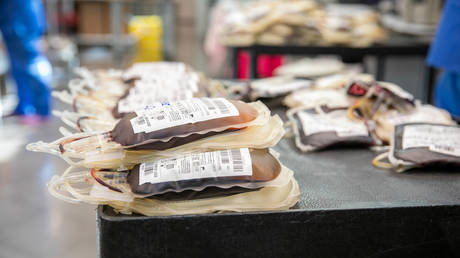
Modern blood banks manage tens of thousands of units across sprawling regional networks. Every donation—whole blood, platelets, fresh frozen plasma—has a wildly different shelf life and thermal requirement. Platelets must be kept at room temperature under constant gentle agitation, expiring in just five to seven days. Red blood cells require strict refrigeration between two and six degrees Celsius, lasting up to forty-two days. Plasma must be flash-frozen and held below minus-twenty-five degrees, where it can survive for up to three years.
To meet European regulatory standards without drowning staff in paperwork, blood services wired every single storage unit into centralized monitoring platforms. Think of these systems as the central nervous system of a building—tiny digital nerve endings inside every freezer sending continuous temperature readings over local networks and cloud dashboards to technicians' pagers and central control rooms. If a door seal fails at midnight, the system screams. If a compressor stutters, an engineer gets a text message before the internal temperature drifts half a degree.
That convenience created an invisible bridge between the open internet and the coldest rooms in medicine.
Consider What Happens Next
Let us step away from server logs for a moment and construct a hypothetical scenario—a clinical thought experiment grounded in real hospital logistics—to see what silent tampering actually looks like on a trauma floor.
Meet Claire, a fictional emergency surgeon working a Saturday night shift at a busy trauma center outside Paris. At 2:14 a.m., paramedics wheel in a twenty-six-year-old motorcyclist with a ruptured spleen and severe internal hemorrhage. He has already lost nearly forty percent of his blood volume on the asphalt.
Claire calls for O-negative packed red blood cells. Standard protocol. Routine muscle memory.
Down in the blood bank, the automated dashboard glows a reassuring, placid green. Every unit in the bank registers at exactly 4.2 degrees Celsius. The courier grabs four pouches, rushes them up the elevator, and hands them to the trauma team.
Except the dashboard is lying.
Three days earlier, an attacker compromised the remote management interface of the third-party vendor servicing the facility's thermal telemetry. Rather than shutting the freezers off—which would trigger physical backup alarms and send technicians sprinting down the corridor—the intruder spoofed the sensor telemetry, freezing the reported numbers at a steady 4.2 degrees while quietly disabling the compressor cycles for six hours overnight. By morning, the attackers restored cooling, erasing the spike from the digital audit log.
Inside those plastic pouches, red blood cells warmed to nineteen degrees Celsius. Bacteria that normally remain dormant in the cold multiplied exponentially. Cell membranes weakened and ruptured, spilling potassium and free hemoglobin into the plasma suspension.
When Claire hangs that first bag, she is not transfusing medicine. She is infusing a septic shock trigger directly into a dying man's subclavian vein. Within minutes, his blood pressure crashes irreversibly, his fever spikes, and the trauma team fights a ghost they cannot diagnose because the sticker on the bag says the cold chain never broke.
That is not science fiction. It is the exact mechanism of cold-chain spoofing that biomedical engineers and cybersecurity researchers have warned about since medical Internet-of-Things devices first flooded hospital basements in the late 2010s.
The Architecture of a Silent Intrusion
In the real French incidents—part of a broader wave of attacks hitting French healthcare infrastructure, including the high-profile breaches at Corbeil-Essonnes and Versailles hospitals, alongside targeted intrusions into blood bank cold-chain monitoring vendors—attackers exploited a vulnerability that plagues nearly every modern hospital system: third-party remote access.
Hospitals rarely build their own refrigeration monitoring software. They buy turnkey solutions from specialized industrial vendors. To maintain those systems without flying engineers across the country every time a sensor glitches, vendors install remote maintenance backdoors—Virtual Private Networks, remote desktop portals, or cloud-connected gateways—that bridge the vendor's corporate network directly into the blood bank's internal operational technology.
Here is where the analogy of the fortress breaks down completely.
We spend millions building ten-foot-thick castle walls around patient databases, encrypting electronic health records, and training doctors not to click on suspicious emails. Meanwhile, around the back of the castle, a plumbing contractor has propped open a steel service door with a brick because it makes carrying pipes easier.
When attackers breach the vendor's corporate network—often through something as mundane as a stolen employee password or an unpatched web server—they inherit the keys to every blood bank freezer that vendor services across the country.
In France, security researchers and health authorities discovered that attackers had gained access to systems monitoring blood storage temperatures, forcing administrators to scramble, isolate networks, and revert to manual verification protocols. Even when no blood units are physically destroyed, the psychological and operational damage is immediate.
Imagine being the lab director who has to look at four thousand units of donated blood—each one representing an hour of a volunteer donor's life, processed, tested, and typed—and ask a terrifying question: Can I trust the numbers on my screen?
If the answer is anything less than absolute certainty, medical ethics leave only one choice. You quarantine the supply. And if you cannot prove the thermal integrity of a perishable biological product, you incinerate it.
The Human Cost of a Quarantined Supply
We talk about blood shortages in abstract percentages, as if hemoglobin were crude oil sitting in a strategic reserve that can simply be pumped faster when prices rise.
It isn't.
France requires roughly ten thousand blood donations every single day just to meet routine surgical, oncological, and emergency needs. Unlike pharmaceuticals, you cannot manufacture blood in a chemical plant in Basel or New Jersey. Every single drop comes from a human arm, collected one pint at a time at mobile drives in town halls, university gymnasiums, and neighborhood clinics.
When a cyberattack forces a regional blood center to offline its automated monitoring or discard compromised stock, the ripple effects hit the most vulnerable people in society first—and they rarely make the evening news.
Think about a child with acute lymphoblastic leukemia waiting for a platelet transfusion before her next round of chemotherapy. Platelets only last a week. There is no deep stockpile to fall back on. If a regional distribution hub loses network visibility over its storage units for forty-eight hours while incident responders scrub malware from the servers, deliveries stall. Surgeries get postponed. Cancer treatments get pushed back by days that feel like lifetimes to families sitting in sterile waiting rooms.
I spoke once with a transfusion coordinator in Marseille who had lived through a major IT outage—not even a malicious hack, just a catastrophic server failure that knocked out automated inventory tracking. She described the exhaustion in her voice with a clarity that stayed with me for years. For three days, nurses walked the halls with paper slips, runners carried blood samples by hand between buildings, and senior hematologists stood over refrigerators with infrared thermometer guns, manually logging temperatures every thirty minutes on clipboards.
"You realize very quickly," she told me, "how thin the veneer of modern medicine really is. Beneath the screens and the barcodes, we are still just people trying to keep tissue alive until sunrise."
Why Hackers Target the Cold Chain
It is fair to ask what kind of person looks at a blood bank freezer and sees a target. I used to struggle to wrap my head around the psychology of healthcare cyberattacks. Ransomware gangs often claim in interviews on underground forums that they follow a "code of ethics"—that they avoid hospitals, ambulances, and life-support systems, sticking strictly to corporate targets with deep insurance pockets.
That code is a lie.
Sometimes, these intrusions are opportunistic accidents. An automated botnet scans the internet for exposed remote-access ports, compromises a refrigeration vendor's server, and drops ransomware across every connected client without the operator even knowing they just encrypted a blood bank in Bordeaux until the ransom note pops up on a lab monitor.
Other times, the targeting is entirely deliberate.
In an era of hybrid warfare and geopolitical instability, critical civilian infrastructure has become a primary theater of pressure. Disrupting a nation's blood supply does not require missiles or sabotage teams crossing a border. A quiet intrusion into medical logistics tests response times, sows public distrust in state institutions, and exposes fragile dependencies in emergency preparedness. Health systems are high-stress, low-margin environments where downtime translates directly into political pressure—making them uniquely attractive targets for both financially motivated extortionists and state-aligned disruptors.
And the attackers know a dirty secret about hospital cybersecurity: medical equipment runs on ancient software.
Walk into almost any hospital basement in Europe or North America and look behind the gleaming white panels of a diagnostic machine or a blood bank chiller. You will routinely find embedded computers running Windows 7, Windows XP, or unpatched Linux kernels from a decade ago. Manufacturers certify these devices with regulatory bodies like the FDA or European Medicines Agency as a single frozen hardware-software bundle. Updating the operating system to patch a security flaw can legally invalidate the medical certification, forcing the manufacturer to spend hundreds of thousands of dollars re-certifying the device.
So nobody patches it. They just plug it into the network and hope the firewall holds.
Rebuilding the Firewall Around Life
Hope is not an engineering strategy. And after a string of painful wake-up calls across French hospitals and blood services, biomedical engineers and cybersecurity architects have begun rethinking how we protect the cold chain from the ground up.
The solution does not lie in buying more expensive antivirus software. It lies in breaking the dangerous marriage between convenience and control.
First, physical air-gapping of critical life-safety controls is making a quiet comeback. Modern security architecture for medical refrigeration increasingly relies on unidirectional security gateways—often called data diodes. Picture a one-way valve in a water pipe. Temperature data can flow out of the blood bank freezer to a central monitoring dashboard so technicians can watch trends from afar, but digital commands cannot flow back in through that cable. Even if an attacker completely owns the hospital's administrative network or the vendor's cloud portal, physics prevents them from sending a command to alter a thermostat setpoint or silence a local alarm.
Second, hospitals are stripping third-party vendors of standing, always-on remote access. Instead of leaving a digital tunnel open twenty-four hours a day for convenience, remote maintenance now requires explicit, time-bound authorization—a digital equivalent of a security guard escorting a technician into the building, unlocking a specific cabinet, watching them work, and locking the door behind them the moment they leave.
Third, the smartest facilities are returning to analog truth as a fail-safe. Digital sensors are paired with independent, battery-backed, non-networked physical alarms and chemical temperature indicators fixed directly to blood bags—small irreversible tags that change color permanently if exposed to warmth, regardless of what a compromised computer screen claims.
The Quiet Vigil
Cybersecurity will always sound abstract until the day it touches something warm, fragile, and human.
We spend enormous energy worrying about our digital ghosts—our stolen passwords, our leaked addresses, our compromised bank accounts. Those things hurt, and they cost money, and they take months to untangle. Yet money can be refunded, and passwords can be reset in thirty seconds.
A unit of O-negative blood cannot be recovered once its temperature drifts past six degrees. It cannot be restored from a cloud backup. It represents a silent pact between a stranger who rolled up their sleeve on a Tuesday afternoon and another stranger whose heart will stop beating on a Friday night without it.
Somewhere in a basement in Paris or Lyon or Lille tonight, a compressor is humming in the dark, holding that pact together by two degrees of cold air. Everything we build around that machine—every cable, every server, every line of code—exists for one reason only: to make sure nobody turns off the dark.