The ground in the eastern Donbas region does not yield its dead easily. It guards them with layers of unexploded ordnance, active artillery zeroed in by enemy drones, and a terrifying web of anti-personnel mines.
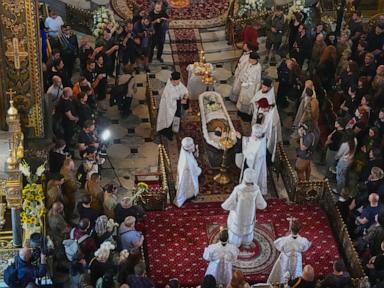
When Oleksiy Yukov stepped on a mine in the Donetsk region on August 5, 2026, he was doing the work that earned him the moniker of Ukraine's "collector of souls". Yukov, the 40-year-old founder of the volunteer search group Platsdarm ("Bridgehead"), spent more than two decades identifying and exhuming the fallen. His death during a routine recovery mission sent shockwaves through Kyiv, where thousands gathered at the Cathedral of Saint Volodymyr to honor a man who refused to let the forgotten remain nameless.
Yet, mourning his loss requires examining the grim, mechanical reality of what body recovery on a modern industrialized frontline actually entails. It is an operation defined by high-risk calculus, bureaucratic paralysis, and an ethical code that defies the primal urge for vengeance.
The Architecture of the Search
Most observers see war through the lens of kinetic exchange: missiles streaking across the night sky, armor clashing in fields, and infantry moving through tree lines. Few consider the aftermath left behind in the grey zone.
Yukov understood this landscape better than most. Long before the full-scale Russian invasion of 2014, he began tracking unburied remains from the Second World War as a teenager in Sloviansk. That historical hobby morphed into a harrowing vocation when modern conflict returned to his doorstep.
The mechanics of front-line recovery are precise and unforgiving. Platsdarm volunteers operate in areas where standard military engineers have not yet cleared paths, let alone sanitation crews.
- Reconnaissance begins at dawn using commercial drones to map crater fields and collapsed trench networks.
- The team divides contaminated terrain into strict metric grids.
- Every centimeter of topsoil must be probed manually for tripwires and bounding mines before a shovel touches the earth.
In 2022, a mine blast cost Yukov an eye and severely damaged his leg. Traditional logic dictates that such catastrophic injuries serve as a permanent discharge from front-line peril. Yukov treated it as a temporary inconvenience, returning to the fields while still undergoing physical rehabilitation. His persistence stemmed from a fundamental premise: a corpse left behind is an open wound for the living, a psychological weapon that prolongs national trauma.
The Ethics of the Unclaimed Dead
An uncomfortable truth defines modern humanitarian recovery operations on the Ukrainian frontline. Yukov and his team did not discriminate based on uniform. They recovered Ukrainian soldiers, civilians, and Russian combatants alike.
This policy drew sharp criticism from radical elements within a society exhausted by unending casualties. The prevailing public sentiment during total war frequently leans toward retribution. The refrain of "let them rot" echoed often in digital forums regarding fallen invaders.
Yukov rejected this completely. In his final weeks, he addressed his critics directly on social media, writing that abandoning the dead destroys the humanity of the living. Treating the enemy dead with basic forensic dignity was not an act of sympathy for the adversary. It was an assertion of moral superiority. If a nation lowers its standards to match the barbarism of its invaders, it loses the very identity it fights to preserve.
Recovering a Russian soldier also served a utilitarian purpose. In the brutal calculus of modern conflict, bodies are currency for prisoner exchanges and missing-in-action verification. Every identification brings closure to families across borders who would otherwise live in perpetual ambiguity.
The Institutional Vacuum
The tragedy of Yukov's death highlights a glaring vulnerability in national defense infrastructure. Independent volunteers shoulder the immense psychological and physical burden of human remains recovery because official state structures cannot scale fast enough to meet the catastrophic volume of casualties.
State-sanctioned retrieval teams face severe bottlenecks. Bureaucratic red tape, lack of specialized equipment, and the sheer velocity of ongoing engagements mean that frontline units often have to rely on informal networks of civil society groups to retrieve their fallen comrades.
When a civilian volunteer like Yukov steps on a mine, the state loses a critical asset that cannot be replaced by standard military deployment. These volunteers possess an intuitive, accumulated expertise in forensic archaeology under fire—skills acquired through years of trial and horrific error. They know how to read the distended soil of a mass grave, how to spot improvised explosive devices hidden beneath tactical gear, and how to preserve DNA evidence degraded by chemical weapons and artillery heat.
The Cost of Closure
Thousands filing past an open casket in Kyiv signify a nation's grief, but they also represent a warning. The machinery of war does not stop when the heartbeat ceases. It leaves behind a sprawling logistical nightmare of identification tags, bone fragments, and unexploded munitions buried inches beneath the surface.
As his widow Evhenyia Kaluhyna stood over his coffin and vowed to continue the mission, she articulated a bitter reality. The work is terrifying, lethal, and entirely necessary.
The collector of souls is gone, silenced by the very terrain he sought to redeem. Yet the grids he mapped remain, waiting for hands steady enough to lift the dead from the dirt without detonating the war they left behind.