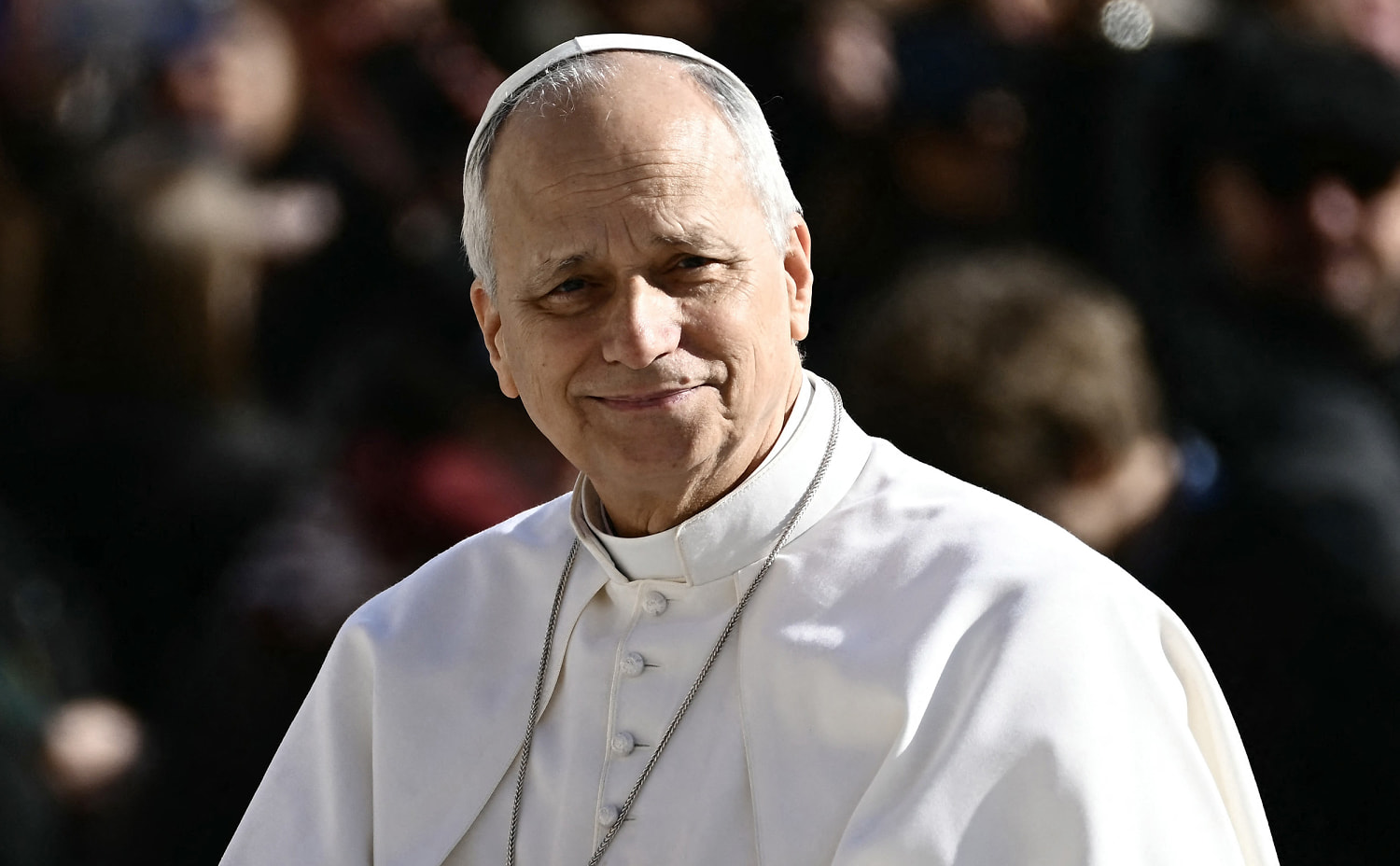
Donald Trump’s recent broadside against the papacy represents a profound escalation in the friction between nationalist populism and the moral framework of the Catholic Church. By labeling the pontiff "weak" and "terrible," Trump is not merely engaging in his trademark rhetorical combat; he is attempting to redefine the boundaries of religious influence in modern geopolitics. This is a strategic pivot designed to force a choice among a critical voting bloc that has historically balanced faith with party loyalty.
The friction is inevitable. While a political leader focuses on the immediate concerns of borders, trade deficits, and national sovereignty, the Vatican operates on a timeline measured in centuries. This clash highlights a fundamental disagreement over the role of a global moral authority in an era where "America First" is the primary governing philosophy for millions.
The Theology of Sovereignty
At the heart of this dispute is a disagreement over the definition of strength. For the populist movement, strength is physical, measurable, and transactional. It is found in high tariffs, reinforced borders, and the projection of military might. When Trump criticizes the Pope, he is judging a spiritual leader by the metrics of a CEO or a general.
The Vatican views strength through the lens of endurance and universal principles. This creates a natural tension. When the Pope speaks on migration or climate policy, he is speaking as a shepherd to a global flock of over a billion people. To a nationalist leader, those same statements look like interference in the internal affairs of a sovereign state.
The Catholic Voting Bloc Under Pressure
The strategy behind the attack is to drive a wedge. Roughly 22 percent of the American electorate identifies as Catholic. This group is not a monolith. It is split between traditionalists who prioritize social issues like abortion and more progressive practitioners who focus on social justice and the plight of the poor.
By framing the current Church leadership as "weak," Trump is signaling to the traditionalist wing that their spiritual leader has abandoned them in the "culture war." He is offering himself as a more effective protector of their values than the Vatican itself. It is a bold, some would say risky, attempt to secularize the religious right by making political identity the primary filter through which they view their faith.
Historical Precedents of Church and State Friction
This is not the first time an American leader has found themselves at odds with Rome, but the nature of the current conflict is unique. In the past, tensions were often rooted in anti-Catholic sentiment among the Protestant majority. Today, the conflict is internal to the movement itself.
Consider the 1980s. The relationship between the Reagan administration and Pope John Paul II was largely one of alignment, specifically regarding the dismantling of the Soviet Union. They shared a common enemy. Today, there is no such unifying external threat to mask the deep ideological differences between the Vatican’s globalist humanitarianism and the populist’s focused nationalism.
The Migration Flashpoint
Nothing illustrates this divide more clearly than the issue of borders. The Pope has consistently called for the compassionate treatment of migrants, viewing the movement of people as a humanitarian crisis that transcends legal status. Trump views the same phenomenon as a direct threat to the safety and economic stability of the nation.
When the Pope suggests that building walls is "not Christian," he is using his ultimate moral authority to invalidate a central pillar of the Trump platform. The response—calling the Pope "terrible"—is a counter-strike designed to invalidate the messenger before the message can take root in the minds of voters. It is a battle for the moral high ground where the definitions of "good" and "evil" are actively being contested.
The Risks of De-Sacralizing the Pope
There is a significant danger in this approach for the Republican party. While the base may cheer the defiance of any global figure, the "middle" of the Catholic electorate is sensitive to perceived disrespect toward the Holy See. Even for those who disagree with specific papal encyclicals, the office itself carries a weight that is difficult to dismiss without causing offense.
If the rhetoric goes too far, it risks alienating the suburban Catholic voters in swing states like Pennsylvania and Wisconsin. These are individuals who may appreciate Trump’s economic policies but find the personal attacks on a religious icon to be a bridge too far. The calculation is whether the enthusiasm gained from the hardest-core base outweighs the potential quiet exit of the moderates.
The Vatican Response Strategy
The Vatican’s typical response to such attacks is a studied silence. By not engaging directly in a war of words, they maintain the "moral distance" that is essential to their authority. They wait. They know that political leaders are temporary, while the Church is permanent.
However, this silence can also be interpreted as the very "weakness" that Trump is highlighting. In a media environment that rewards the loudest voice and the most aggressive stance, the Church’s preference for quiet diplomacy and long-term influence can seem outdated. This creates a vacuum that a charismatic political leader is more than happy to fill with their own narrative.
Global Implications of the Rhetoric
The impact of this feud extends far beyond the borders of the United States. In Europe, where populist movements are gaining ground in countries like Italy, Hungary, and France, the American president’s rhetoric provides a template. If the leader of the free world can openly criticize the Pope, it gives permission to other national leaders to do the same.
This leads to a fragmentation of Western moral consensus. For decades, the partnership between the U.S. and the Vatican was a stabilizing force in global affairs. If that partnership is replaced by open hostility, it complicates international efforts on everything from hunger relief to conflict resolution.
The New Moral Hierarchy
What we are witnessing is the construction of a new moral hierarchy. In this system, the "National Interest" sits at the top, and all other institutions—including the Church—are expected to subordinate themselves to it. If an institution doesn't help the nation "win," it is labeled as an obstacle.
This is a fundamental shift from the post-World War II era, where international institutions and religious bodies were seen as necessary checks on the power of the state. The populist movement views these checks not as safeguards, but as "shackles" placed on the will of the people by an unelected global elite.
The Role of Alternative Media in Fueling the Fire
The escalation of this conflict is fueled by a fragmented media ecosystem. Traditional Catholic media outlets are now competing with hyper-partisan digital platforms that often frame Church news through a strictly political lens. These platforms amplify the most controversial statements from both sides, creating a feedback loop of outrage.
A voter today is more likely to see a thirty-second clip of the Pope’s comments on TikTok, followed immediately by a pundit’s scathing critique, than they are to read the actual text of a papal address. This environment favors the aggressive, punchy rhetoric used by Trump. Complexity is the enemy of the viral clip, and the Vatican’s positions are almost always complex.
The Question of Authenticity
To his supporters, Trump’s willingness to attack the Pope is a sign of his authenticity. They see it as proof that he is not beholden to any "establishment," even a religious one. They value the fact that he says what he thinks, regardless of the target.
To his critics, it is the ultimate sign of hubris—a man with no formal theological training or history of deep religious practice attempting to lecture the head of one of the world's oldest religions on how to do his job. The divide is irreconcilable because it is based on two completely different understandings of what constitutes authority.
The End of the Religious "Truce"
For years, there was an unwritten rule in American politics that you did not attack the head of a major world religion, especially one with such a large domestic following. That rule has been discarded. We are entering a period where religious leaders are treated as just another category of political influencers, subject to the same vitriol and scrutiny as a senator or a cabinet member.
This secularization of the papacy in the eyes of the public has long-term consequences for how the Church will be able to operate in the public square. If the Pope is seen as just another partisan actor, his ability to act as a neutral mediator in times of crisis is severely diminished.
Economic Populism vs. Spiritual Globalism
The economic argument is the silent driver here. The Pope’s frequent critiques of "unfettered capitalism" and the "idolatry of money" sit in direct opposition to the wealth-centric rhetoric of the Trump movement. While Trump celebrates the stock market as the ultimate barometer of national health, the Pope often points to the people the market leaves behind.
This isn't just about personalities; it’s about two different visions for the future of the human race. One vision sees a world of competing nations, each looking out for its own, where success is measured in GDP and military dominance. The other sees a global family with a collective responsibility to the "least of these."
Defining the Future of the Movement
The decision to target the Pope indicates that the populist movement is moving into a new phase. It is no longer enough to win the political argument; they must now win the moral and cultural argument as well. By challenging the Vatican, they are asserting that their movement is the true home for people of faith, regardless of what the leadership in Rome says.
This creates a high-stakes environment for the next decade of American life. The tension between the national and the universal will continue to manifest in our schools, our courts, and our voting booths. It is a struggle for the soul of the country, played out through a series of increasingly bitter confrontations between the temporary power of the state and the enduring influence of the Church.
The labels "weak" and "terrible" are not just insults. They are the opening shots in a campaign to decouple religious identity from institutional loyalty. If the movement succeeds, it will have created a new kind of voter: one whose primary allegiance is to the nation and its leader, with faith serving as a secondary, supportive pillar rather than a guiding light. This is the transformation that is currently underway, and the attacks on the papacy are the most visible evidence of its progress.