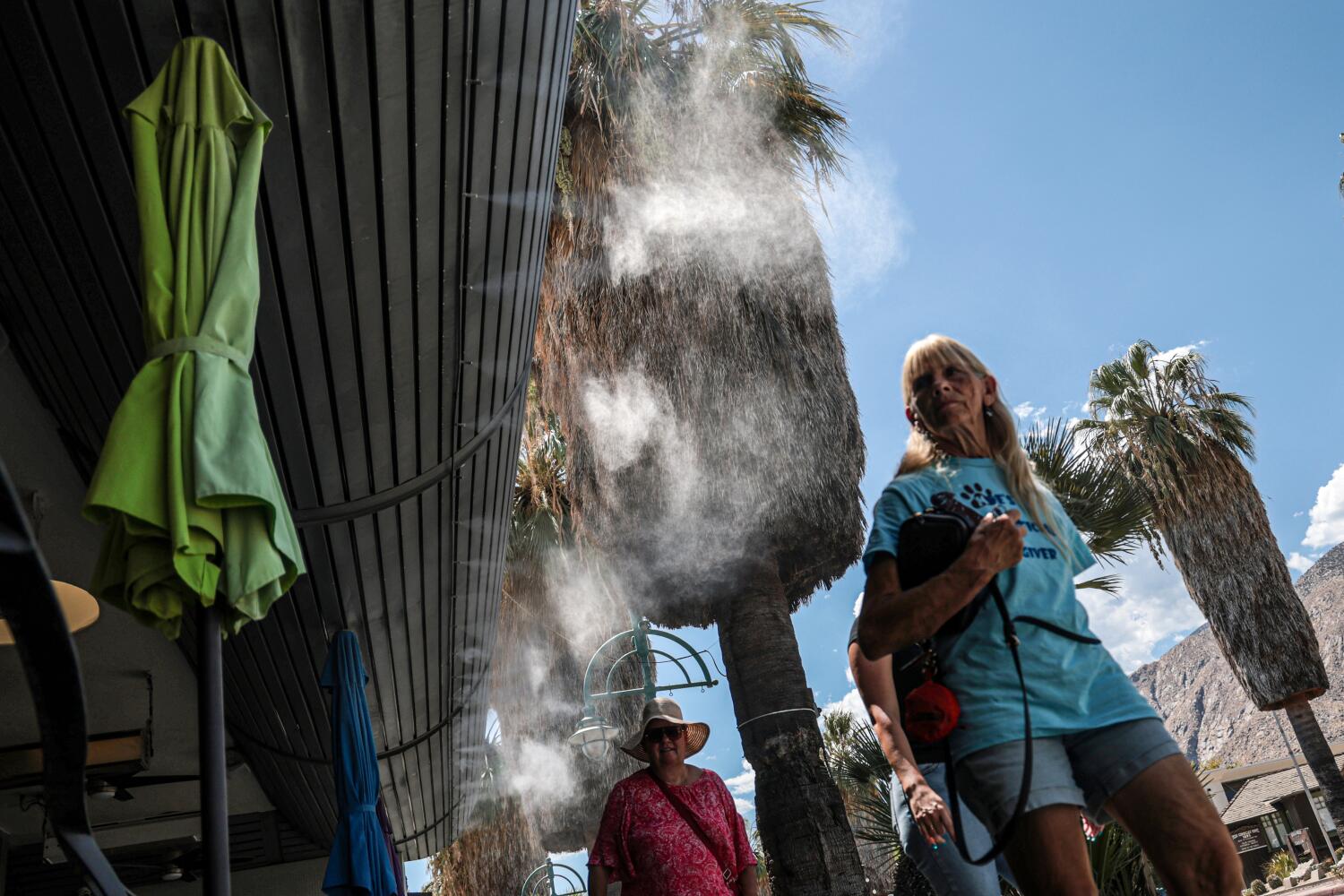
The air didn't move. That was the first warning.
At four in the morning in the San Fernando Valley, the asphalt should have been exhaling the day's accumulated heat, cooling down just enough to let the oleanders shiver in a predawn breeze. Instead, the night felt like standing inside a baker's oven with the door propped open. Thermometers on front porches blinked red at 92 degrees before the sun had even cleared the Verdugo Mountains.
By noon, Southern California was no longer just a place on a map; it was a closed-loop pressure cooker.
To understand what happened during that historic heat wave, you have to look past the scrolling ticker of records broken at LAX and Palm Springs. You have to look at Elena, who runs a small plant nursery in Sylmar. By Tuesday afternoon, the leaves on her prized Japanese maples were curling inward, crisping at the edges like bacon in a skillet. She stood with a hose in her hand, watching the water evaporate before it even kissed the dirt.
"You can't fight this kind of heat," she told me, wiping sweat from her brow with a flour-sack towel. "You can only hide from it."
And hide we did. But the modern grid has its limits.
The numbers tell a brutal story. Across Los Angeles, Riverside, and San Diego counties, the mercury didn't just climb; it shattered ceilings that had stood since the mid-twentieth century. Downtown Los Angeles scorched at 111 degrees, while the inland valleys pushed past 118, turning concrete driveways into radiant heating plates. Power demand surged past historical peaks as millions of air conditioning units roared to life simultaneously, humming a low, desperate bass note of strain across the electrical grid.
Yet, cold statistics miss the human friction. They don't capture the sound of window units rattling in apartment complexes where central air is a luxury of the past. They don't measure the quiet panic of parents keeping toddlers indoors for five straight days, turning living rooms into makeshift daycare camps while ceiling fans whip hot air in circles.
Meteorologists called it a strong mid-tropospheric ridge of high pressure—a stubborn atmospheric dome trapping hot air right against the coastal plain and pushing desert heat westward. We can talk about millibars and high-pressure anomalies all day long. But down on the pavement, it felt like an invisible weight pressing down on your chest.
Consider what happens next.
When a dome like this settles over a region laced with concrete, asphalt, and millions of combustion engines, it creates an urban heat island effect on steroids. The heat doesn't dissipate when the sun goes down because the built environment absorbs it all day and radiates it all night. Your house becomes a thermal battery. Your bedroom stays at 85 degrees at midnight.
This is where the invisible stakes reveal themselves. Heat is the deadliest of all weather-related hazards, outstripping floods, hurricanes, and tornadoes combined. It doesn't announce itself with the dramatic fury of a flash flood or the tearing metal of a tornado. It creeps in through open windows, steals sleep, dehydrates cells, and quietly taxes the cardiovascular system until something gives.
We watched delivery drivers wrap wet towels around their necks. We saw construction workers start their shifts at four in the morning, racing the clock against a sky that promised violence by noon. We checked on elderly neighbors whose swamp coolers gave out under the sheer humidity of the inland drift.
And then, the inevitable question hung in the heavy air: What comes next?
The meteorological models will tell you about the jet stream shifting, about a trough moving down from the Pacific Northwest that will eventually punch a hole in the atmospheric dome and drag temperatures back down to seasonal norms. They will talk about cooling trends and marine layers returning to scrub the coast with fog.
That relief is coming. It always does.
But anyone who has spent a decade in this basin knows better than to think the story ends when the thermometer drops. Because the baseline has shifted. The summers are longer, sharper, and less forgiving than they used to be. The heat wave is no longer an anomaly to be checked off the calendar and forgotten; it is a preview of the operating manual for the future.
When the sun finally sets on the last day of the heat dome, and the first cool breath of ocean air slips through the canyons, the temptation will be to simply exhale and forget. To turn off the AC, open the windows, and pretend the asphalt isn't still holding onto the memory of a hundred and twelve degrees.
Don't.
Listen to the silence of the night air as it finally begins to cool. Feel the sudden, fragile grace of a breeze that actually feels like air instead of breath. That is the moment to remember how vulnerable our concrete empire really is, sitting right here at the edge of the continent, waiting for the next sky to clear.