Smokestacks used to be the architecture of ambition. They poured soot into industrial towns, and people called it progress because they could see the jobs rising in the smoke. Today, ambition leaves no residue in the air. It leaves metal tubes descending vertically onto autonomous drone ships in the middle of a restless ocean, catching themselves with hydraulic precision while the world sleeps.
For decades, space was a graveyard of government budgets and expensive hardware that burned up on re-entry. It was a playground for nations, not ledgers. But ledgers have finally arrived in orbit.
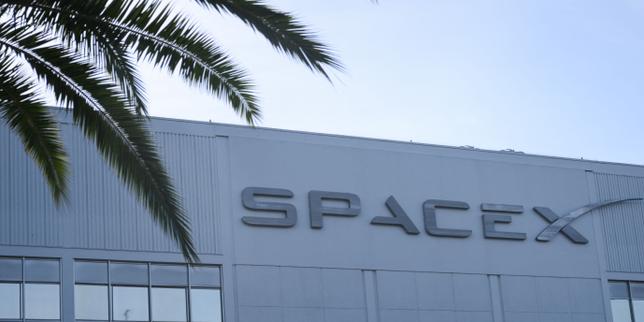
When financial disclosures for SpaceX first materialized in public view, revealing a profitable operation built on the back of reusable rockets and global satellite broadband, Wall Street analysts blinked. They had spent years modeling aerospace as a capital-burning furnace. Instead, they found a cash generator disguised as a rocket factory.
Let us be honest about what this actually means.
Imagine standing in Hawthorne, California. Inside a sprawling former mattress factory, robotic arms weld titanium fuel tanks while young engineers with tired eyes and cheap coffee cups pace the floor. They are not chasing stock options with the urgency of Silicon Valley app developers. They are trying to beat physics. Every pound of payload sent skyward is an argument against gravity, and for a long time, gravity won every financial debate.
The traditional aerospace model was simple: build a massive rocket, launch it once, and let millions of dollars sink into the Atlantic Ocean. It was the equivalent of driving a commercial airliner from New York to London and then setting it on fire upon landing, forcing airlines to buy a new Boeing 777 for the return trip. No industry could survive those economics. Yet, for space exploration, it was accepted doctrine.
Then came the shift.
It did not happen overnight. It happened through dozens of explosions off the coast of Texas. Metal debris rained down on marshes. Cameras captured fiery failures that mainstream media outlets labeled as costly embarrassments. But inside the hangars, those craters were data points. Each failure shaved millions off the cost of the next attempt.
When the financial numbers finally broke cover, showing a rare and startling quarter in the black, the shockwaves were not just monetary. They were philosophical. The math of the cosmos had changed. By proving that rockets could return, land, and fly again, the cost of reaching low Earth orbit plummeted by orders of magnitude.
Consider a hypothetical logistics manager named Marcus, working in a mid-sized agricultural firm in rural Nebraska. Five years ago, Marcus could not get reliable internet connection to monitor his autonomous tractors during harvest season. Satellite internet meant clunky, geostationary dishes with latency so high that data arrived like it was traveling by stagecoach. Now, hundreds of miles above his head, a mega-constellation of low-earth orbit satellites moves in silent coordination, beaming high-speed data directly to a small white terminal mounted on his barn roof.
Marcus does not care about rocket equations. He cares that his machinery talks to the cloud while he harvests corn. But his ability to do that is entirely subsidized by the fact that the company launching those satellites figured out how to balance its checkbook while doing it.
This is where the broader economic reality hits home.
Traditional defense contractors and legacy space agencies operated on cost-plus contracts. If a project went over budget, the government paid the difference plus a guaranteed profit. There was zero incentive for frugality. Why build a cheaper engine when your revenue increases the longer you take to build it?
SpaceX inverted that incentive structure. Operating with private capital for much of its early survival forced a radical internal discipline. If the money ran out, the rockets stopped. Period. That existential dread is a powerful motivator. It turns out that fear of bankruptcy is a better engineer than bureaucracy.
The debut of these profitable figures triggered a scramble in boardrooms across Europe and Asia. Space agencies that once looked at reusable rocketry as a theoretical novelty are now desperately trying to reverse-engineer landing algorithms. Telecom giants that ignored satellite broadband are rushing to secure launch slots for their own orbital constellations.
Yet, there is a darker side to this glittering frontier.
Night skies, once pristine canvases of stars and mythology, are increasingly cluttered with moving streaks of white light. Astronomers point their telescopes through a thickening shell of artificial satellites, mourning the optical pollution of the cosmos. The commercialization of orbit brings immediate earthly utility at the quiet expense of our view of the infinite. We are paving the highway to the stars, and like every highway humanity has ever built, it comes with traffic, billboards, and light pollution.
Furthermore, the concentration of so much orbital infrastructure in the hands of a single private entity creates unprecedented geopolitical leverage. When wars break out, communication lines depend not on sovereign undersea cables alone, but on the whims of private satellite operators. We have outsourced the high ground of human civilization to a balance sheet.
We stand now at a peculiar crossroads. The earnings report that stunned the financial world is not merely a corporate milestone. It is the closing argument for a new epoch. The era of space as a purely scientific endeavor funded by taxpayers is over. The era of space as a commercial marketplace, complete with profit margins, quarterly targets, and competitive monopolies, has begun.
The rockets will keep launching. The boosters will keep landing on drone ships named after science fiction starships. And somewhere out there in the dark, caught between the pull of the earth and the promise of the void, our species is quietly learning how to pay its own way into the stars.