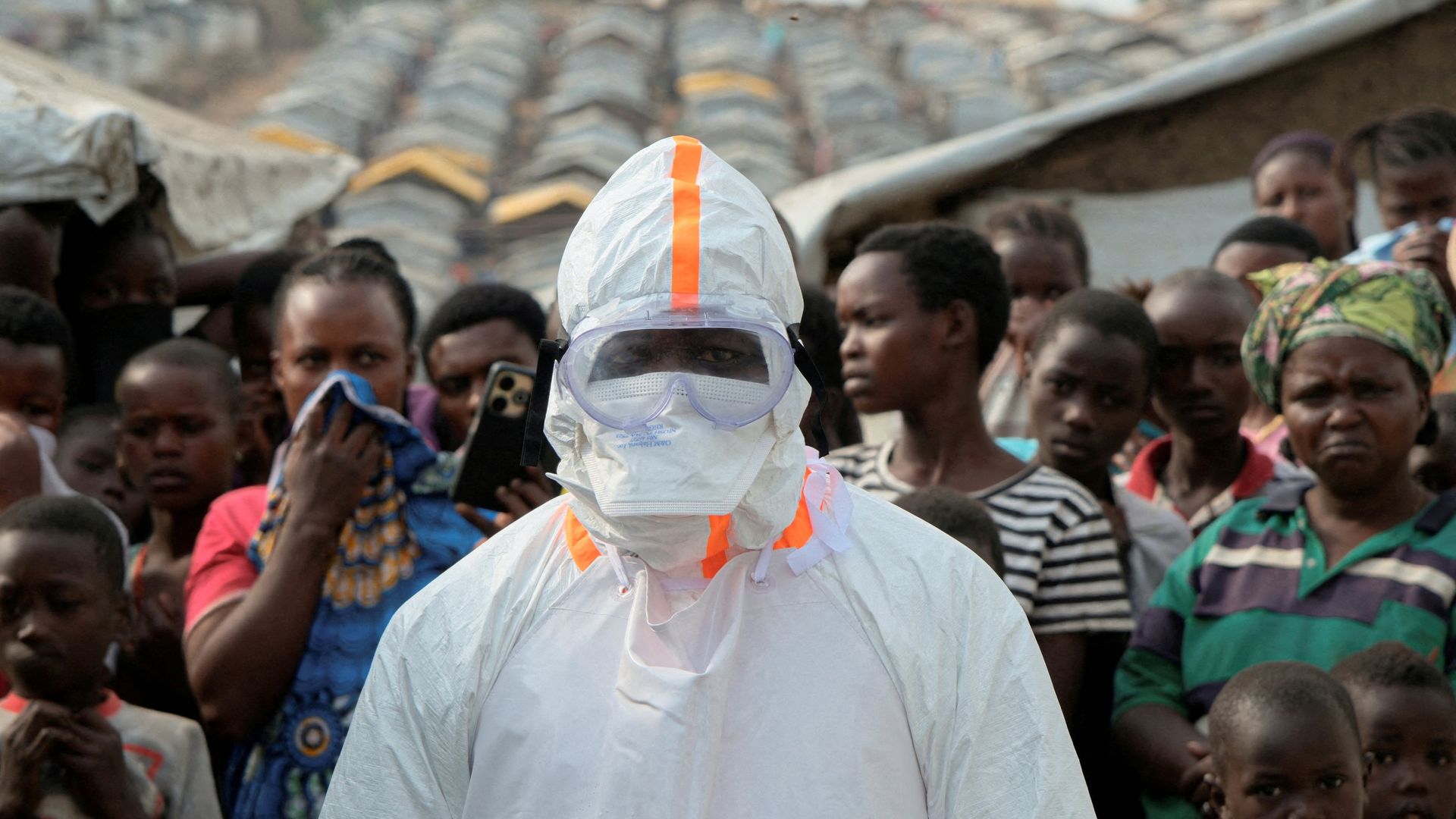
Over three thousand. Let that number sink in.
When tracking public health disasters, statistics often blur into abstract noise on a screen. Numbers lose their weight. But behind every single digit in that grim total lies a human life, a fractured community, and a medical system buckling under unbearable strain. The Democratic Republic of Congo didn't just cross a tragic milestone; it crossed a threshold into an active emergency zone where treating the sick has become a dangerous political battleground. You might also find this similar article insightful: Stop Blaming The System For Medical Student Suicides.
If you think a disease outbreak is purely a biological problem, you're missing the entire picture. It's about trust. It's about infrastructure. And right now, in the middle of a brutal epidemic, the people holding the front lines have put down their stethoscopes and walked out the door.
Health workers are on strike. Why? Because they aren't getting paid. They're expected to walk into isolation wards, face a hemorrhagic fever that kills up to ninety percent of untreated victims, and do it without hazard pay, basic protective gear, or job security. As highlighted in detailed articles by World Health Organization, the results are widespread.
The Breaking Point of a Medical Workforce
Imagine showing up to work every single day knowing you might bring home a deadly virus that kills your children. Now, imagine doing that for months without seeing a paycheck.
That's the reality for nurses, doctors, and sanitation crews in the eastern provinces of the DR Congo. Local health authorities have struggled for years to maintain a steady flow of resources from the capital. Bureaucratic bottlenecks swallow emergency funds. Corruption siphons away supplies. By the time medical kits reach the clinics in places like Beni and Butembo, they are already running on empty.
Doctors and nurses didn't strike out of malice. They struck because desperation beats compliance every time. When you can't buy food for your family, standing in an Ebola treatment center for free stops looking like a noble sacrifice and starts looking like a slow suicide.
This strike creates an immediate vacuum. Who monitors the contact tracing? Who manages the safe burials? Without a functioning workforce, the virus moves faster than the response teams can track. Every single day the strike continues, the contagion wins ground.
Why Public Trust Crumbled Long Ago
Viruses don't spread in a vacuum. They surf on top of social tension.
Decades of armed conflict, government neglect, and exploitation have left eastern Congo deeply suspicious of outsiders. When international aid organizations roll in with high-tech gear and armed escorts, local residents don't feel protected. They feel invaded.
Mistrust fuels violence. Treatment centers have been firebombed. Epidemiologists have been attacked. People hiding sick family members at home because rumors claim the hospitals are where you go to die. This is the hardest part of epidemic response. Medicine is easy compared to psychology.
You can have the most advanced vaccines in the world, but if the community thinks you're the enemy, those vaccines stay in the freezer.
Health ministries and international bodies like the World Health Organization have tried community engagement strategies. They hold town halls. They hire local leaders. But trust takes years to build and seconds to shatter. When promises of hazard pay fail, the community sees the cracks in the official narrative instantly. If the government can't take care of its own nurses, why should citizens believe it can protect them from an invisible killer?
The Anatomy of an Underfunded Response
Let's look at the financial architecture of global health responses. Billions get pledged on paper during high-level summits in Geneva or New York. Headlines celebrate massive funding packages.
Then reality hits the ground.
Logistics in eastern Congo are a nightmare. Roads wash out during rainy seasons. Militia groups control vast stretches of territory. Transporting ultra-cold chain storage for vaccines requires fuel, generators, and security escorts. Each layer of logistical friction bleeds resources dry.
By the time the emergency response hits the local clinics, the funds have thinned out. Staff shortages turn into burnout. Burnout turns into strikes.
You can't solve a systemic structural crisis with temporary band-aids. Sending in a surge of foreign doctors for two weeks doesn't fix a broken healthcare system. It just masks the symptoms until the foreigners leave and the local staff are left holding an empty bag again.
What Needs to Happen Right Now
Fixing this mess requires hard choices and immediate accountability. We need to stop pretending that logistics and politics are separate from medicine.
First, direct financing must bypass corrupt bureaucratic layers. Pay the frontline workers directly through mobile money or independent international oversight. Guarantee hazard pay that arrives on time, every single time. If nurses can feed their families, clinics stay open.
Second, security for healthcare facilities must be handled with extreme cultural sensitivity. Heavy-handed military guards alienate local communities. Protection needs to be subtle, community-led, and integrated with local civil society groups rather than imposed from above.
Third, transparency is non-negotiable. Aid organizations must publish exact allocations of where every dollar goes down to the district level. When communities see real investment in their local infrastructure, skepticism starts to recede.
The three thousand mark isn't just a number. It's a flashing warning light. If we keep ignoring the economic survival of the people fighting the disease, the disease will win.