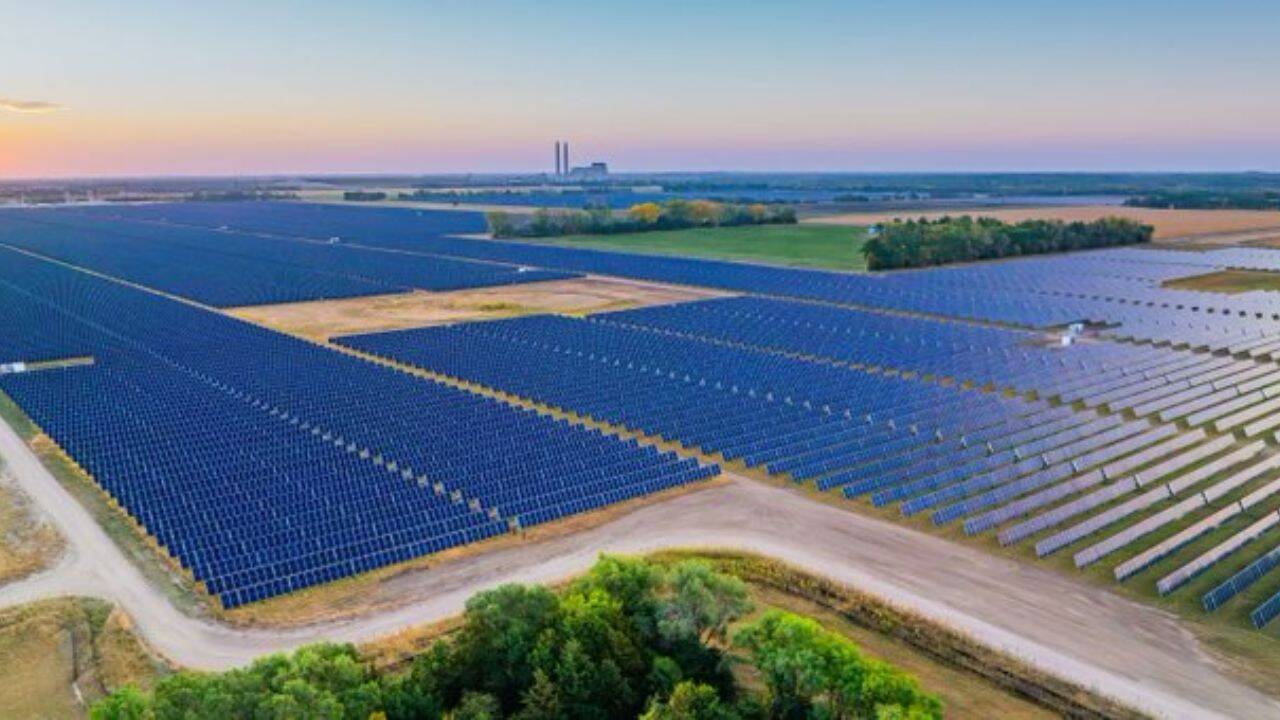
Everyone is popping champagne because a retired coal plant in Minnesota is getting paved over with 1.7 million solar panels. The headlines write themselves. Greener pastures. Industrial redemption. Turning a monument of carbon into a temple of clean electrons.
It is a fairy tale for people who do not understand balance sheets or thermodynamic reality.
I have watched corporate boardrooms flush tens of millions of dollars down the drain chasing green optics while ignoring the structural economics of the grid. Putting solar panels on a decommissioned coal site feels poetic, but poetry does not power a smelting plant at midnight. What we are actually looking at is a masterclass in regulatory arbitrage and asset life extension disguised as environmental progress.
Let us dismantle the lazy consensus.
The Grid Interconnection Mirage
The single biggest bottleneck in energy transition math is not how fast you can bolt aluminum racks to the dirt. It is the queue to plug into transmission lines.
The standard narrative tells you that using an old coal site is a genius shortcut because the high-voltage transmission lines are already there. The substation is built. The right-of-way is cleared. Just unplug the coal turbine, plug in the inverter, and call it a day.
If only engineering worked like a power strip.
I have sat in meetings with grid operators where utility executives act shocked that their legacy interconnects cannot handle the intermittency profile of utility-scale photovoltaic generation. A coal plant operates with massive synchronous inertia. It pushes heavy, predictable, phase-locked alternating current into the system.
An inverter-based solar farm does the exact opposite. It introduces harmonics, demands massive reactive power support, and floods the local substation with peak capacity during hours when the regional transmission organization might already be drowning in negative pricing.
Re-engineering a thermal interconnection for intermittent solar requires millions in synchronous condensers, static var compensators, and substation overhauls. By the time you upgrade the switchyard to handle a massive photovoltaic array, you have spent nearly as much as you would building an interconnection from scratch in an optimal wind or sun corridor.
You are trapping capital in suboptimal geography just to tell a good marketing story.
The Capacity Factor Fallacy
Let us talk about the math that the press releases conveniently omit.
A standard coal plant in the Upper Midwest ran at a capacity factor often exceeding sixty to seventy percent. It burned fuel when fuel was cheap, stored piles of sub-bituminous coal on site to buffer against supply chain shocks, and hummed along through sub-zero polar vortexes.
Now, swap that out for solar panels in Minnesota.
At best, you are looking at a capacity factor hovering around twenty percent. On a cloudy, freezing January afternoon when heating demand spikes and the snow has piled four feet deep over your 1.7 million panels, your multi-million-dollar installation drops closer to absolute zero.
To bridge that capacity gap, utilities do not magic up battery storage for every single megawatt. That would bankrupt the ratepayer base overnight. Instead, they keep fossil-fueled peaker plants spinning or lean harder on natural gas baseload to cover the shortfall.
You haven't replaced the coal plant. You have built an expensive, weather-dependent hobby farm next to a fossil backup system that has to cycle up and down inefficiently to catch the solar slack. It is an engineering compromise born of PR necessity, not grid optimization.
The Sunk Cost Fallacy of Brownfield Redevelopment
Why do utilities love brownfield solar conversions? Because they are brilliant at extracting ratepayer-guaranteed returns on stranded assets.
When a coal plant gets retired early due to market pressures or emission caps, the utility still has billions in remaining book value that ratepaying customers are legally obligated to pay off through their monthly electric bills. This is known as a regulatory asset.
By slapping solar panels on the same parcel of land, the utility gets to rebrand a financial liability as an innovation hub. They bundle the land remediation costs, the interconnection reuse credits, and the new capital expenditure into a neat little rate-case package. They get their guaranteed return on equity approved by state regulators because it checks the decarbonization box, while quietly extending the life of their depreciating real estate portfolio.
Imagine a scenario where a utility built that exact same solar capacity out in open, high-irradiance agricultural or marginal land with zero shading constraints and optimized tilt angles. The energy yield would be fifteen to twenty percent higher per dollar spent.
Instead, they choose the coal site because the transmission footprint is already tied into the rate base. You are paying twice: once for the retired coal plant you can't use, and twice for the suboptimal solar plant built on top of its ashes to justify the real estate.
The Real Cost of Intermittency Arbitrage
Let us address the elephant in the room that every clean energy zealot refuses to quantify: marginal grid degradation.
When you inject massive tranches of non-synchronous generation into a regional grid without adequate inertia, frequency stability degrades. Grid operators have to pay exorbitant ancillary service fees to keep gas turbines idling at minimum load just to provide spinning reserves.
Who pays for those ancillary services? You do, through higher transmission rider fees on your monthly bill.
The public relations machine celebrates the gigawatts of solar capacity installed, but they never publish the ledger showing the escalating cost of grid stabilization. We are building a system that requires a matching dollar of balancing infrastructure for every dollar of cheap solar steel we anchor to the dirt.
If we were serious about decarbonization, we would stop trying to retrofit nineteenth-century industrial real estate footprints to fit twenty-first-century intermittent generation profiles. We would build dense, high-capacity nuclear baseload or invest in multi-day storage tech that actually decouples power generation from weather patterns.
Instead, we keep playing the same game. We dress up old coal yards in green paint, pat ourselves on the back for hitting a renewable portfolio standard, and pass the inefficiency bill down to the consumer.
Stop celebrating the recycling of dead coal sites. It is bad engineering, lazy capital allocation, and expensive theater.