The Myth of the Unprepared Elite
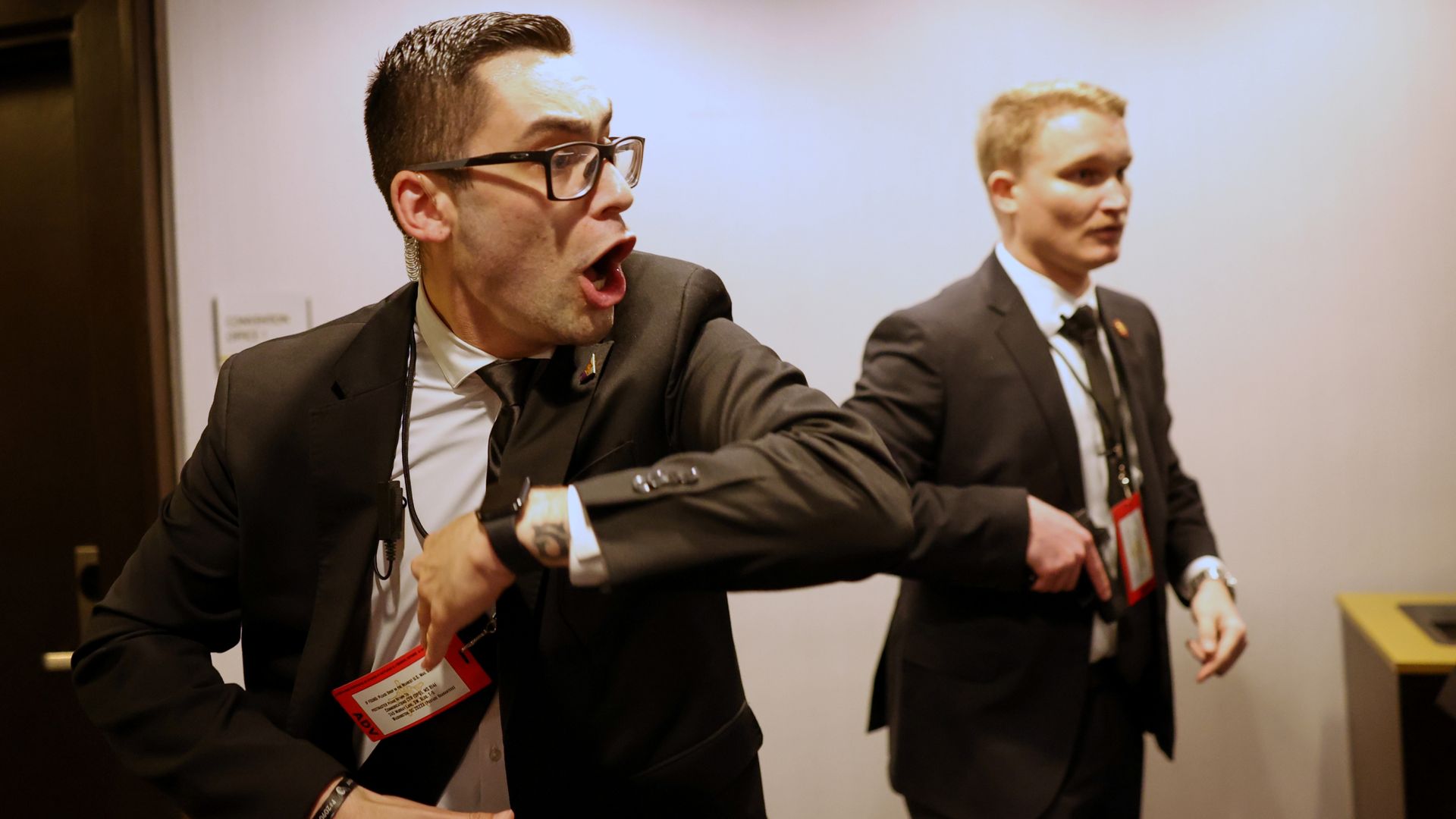
The footage from the Hilton ballroom is being sold as a portrait of sudden, visceral chaos. We see the tuxedo-clad panic, the overturned chardonnay, and the high-heeled sprints toward the kitchens. The mainstream narrative is already set: this was a "loss of innocence" for the Washington social circuit.
That narrative is a lie.
If you’ve spent five minutes in the DC greenroom circuit, you know that the "innocence" of the media-political complex died decades ago. What we witnessed wasn't just a security failure; it was the ultimate collision between the performative reality of the American elite and the brutal, unscripted reality of the modern world. The media is obsessed with the mechanics of the panic because it allows them to avoid discussing the hypocrisy of the event itself.
The Security Industrial Complex Failed on Purpose
We are told that the White House Correspondents' Association (WHCA) dinner is one of the most secure events on the planet. Secret Service details, magnetometers, and a literal army of private security. Yet, the moment a threat materialized, the system didn't just bend—it evaporated.
Why? Because security at these events is designed for theatrical deterrence, not actual kinetic response.
When you spend millions on "layers of protection," you aren't buying safety. You are buying the feeling of being important enough to protect. I’ve watched agencies burn through budgets on perimeter checks while ignoring the most basic logistical bottlenecks inside the room. The panic in that ballroom wasn't caused by the shooter alone; it was caused by a design philosophy that prioritizes optics over egress.
- The Bottleneck Reality: The Hilton ballroom is a subterranean bunker. It is a fire marshal’s nightmare dressed in velvet.
- The VIP Blind Spot: Security is concentrated on the President and the "Head Table." The other 2,000 guests—the journalists who claim to hold power to account—are effectively treated as an afterthought or, worse, as human shields.
Stop Calling it a Tragedy and Start Calling it a Reality Check
The "Panic in the Ballroom" headlines are designed to elicit sympathy for a class of people that the rest of the country increasingly views with suspicion. There is a cold, hard truth that nobody in the press corps wants to admit: the WHC dinner is a grotesque display of proximity to power.
When you spend your year pretending to be an adversarial watchdog, then put on a gown to laugh at the President’s jokes, you lose the right to act surprised when the world’s ugliness follows you into the room.
The shooter didn't just attack a dinner; they attacked a symbol of the "Inner Circle." The visceral fear captured in those viral photos isn't just fear of a bullet. It’s the terror of realizing that the "High Table" offers no actual protection from the volatility of the country these people supposedly cover.
The Physics of Panic: Why Your Training is Useless
Most corporate safety seminars tell you to "Run, Hide, Fight." In a ballroom filled with 2,500 people, a three-course meal, and $5,000 tables, that advice is a death sentence.
The photos show people diving under tables. This is a classic "Expert Fallacy." Tables in a ballroom are made of plywood and linen. They provide zero ballistic protection. Yet, because we are conditioned to seek "shelter," the best-educated people in the world spent the crisis hiding behind laundry.
If you want to survive a high-density event, you have to ignore the "orderly" instructions of security personnel who are often as confused as you are.
- Identify the Service Exits: The front doors are where everyone goes. The front doors are where the crush happens. The kitchens are where the survivors go.
- Weaponize the Decor: If you can't run, you need mass. Not a table—a pillar. Not a chair—a server's tray.
- Reject the Groupthink: The "Panic" photographed at the Hilton was a chain reaction. One person screams, ten people run, a thousand people stampede.
The Media’s Addiction to Victimhood
The coverage of this event has shifted from "What happened?" to "How do we feel about what happened?" within record time. This is a deliberate pivot. By focusing on the "trauma" of the reporters in the room, the industry avoids a much more uncomfortable conversation about their own role in the national temperature.
We live in a feedback loop. The media reports on polarization, which increases polarization, which eventually manifests as violence. Then, when that violence reaches their doorstep, they use their platform to center themselves as the primary victims of the very climate they helped cultivate.
It’s a masterclass in self-preservation.
I’ve seen this play out in boardrooms and newsrooms alike. When a crisis hits, the leadership doesn't look for a solution; they look for a narrative that absolves them of responsibility. The "Panic in the Ballroom" is being framed as a random act of madness, but in reality, it is the logical conclusion of a society where the gatekeepers have moved from reporting the news to becoming the entertainment.
The Illusion of "Going Back to Normal"
There are already calls for "increased security" and "more stringent checks" for next year. This is the wrong answer.
Adding more magnetometers is like putting a band-aid on a gunshot wound. The problem isn't the guest list; the problem is the event itself. The WHC dinner is a relic of a time when the press and the presidency could maintain a polite fiction of friendship. That time is over.
If the press wants to regain its soul—and its safety—it needs to stop pretending that being a "Washington Insider" is a badge of honor. It’s a target.
The terror captured in those images is the sound of a bubble popping. You can’t build the bubble back. You shouldn't want to.
The most "professional" thing the WHCA could do isn't to hire more guards; it’s to cancel the party. But they won't. The vanity is too high. The lure of the red carpet is stronger than the fear of the floor. They will go back next year, they will hire a more expensive security firm, and they will tell themselves they are "brave" for eating rubbery chicken in a basement.
True bravery would be admitting that the dinner is a circus, and the clowns are no longer safe in the tent.
Stop looking at the pictures of the panic. Look at the people who organized the event and ask why they thought a high-profile, high-density target in the middle of a national identity crisis was a good idea in the first place.
The chardonnay is gone. The tuxedoes are ruined. The truth is out: the walls aren't high enough to keep the world away anymore.
Walk away from the ballroom.