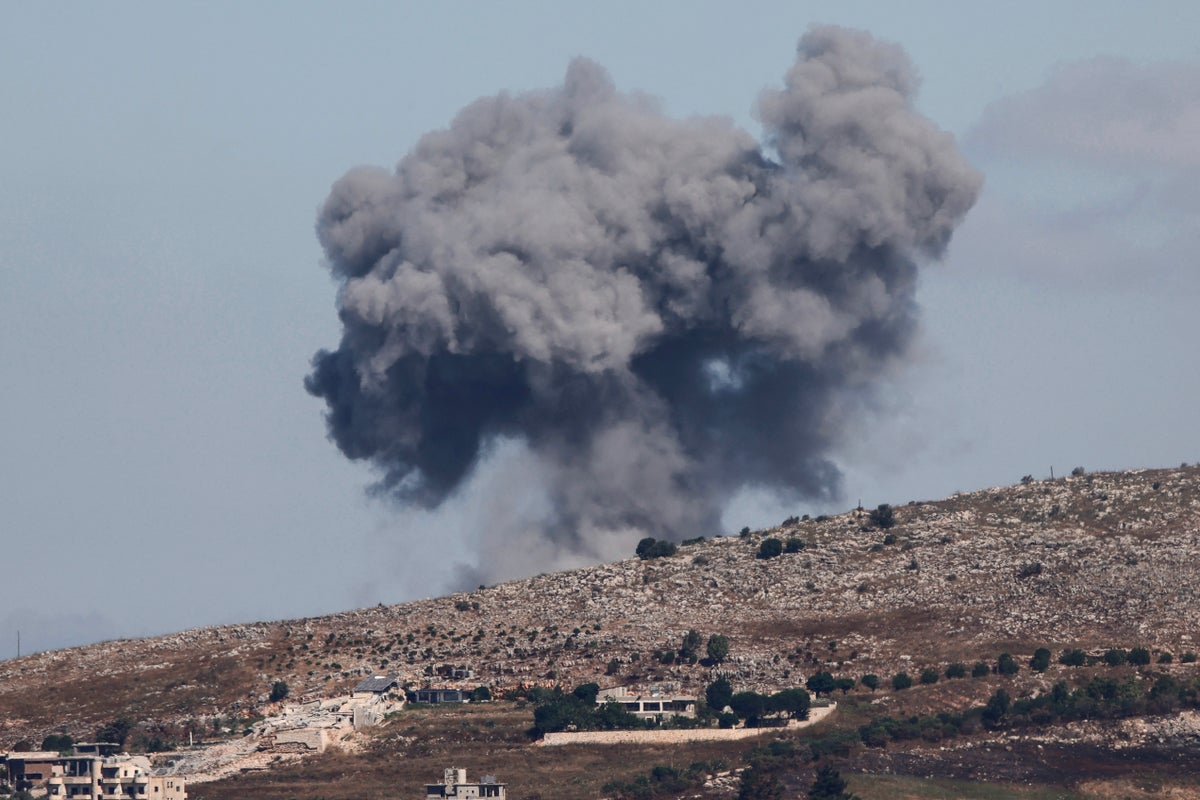
The air in northern Israel carries the scent of charred pine and dry earth. It is a smell that stays in the back of your throat, a constant reminder that the horizon is burning. For months, the hills along the Blue Line—the volatile frontier separating Israel and Lebanon—have been swallowed by black smoke. Sirens wail at irregular intervals, sending families sprinting into concrete shelters. On the other side of the border, in the ancient villages of southern Lebanon, the view is mirrored. Olive groves that took generations to tend are reduced to ash in seconds.
War is often measured in artillery shells, drone strikes, and troop movements. But the most destructive force in a conflict can sometimes be the human voice. When political rhetoric escalates to the point of demanding total annihilation, the abstract chess game of geopolitics crashes brutally into the living rooms of ordinary people.
The latest spark in this tinderbox did not come from a missile, but from a microphone. Far-right Israeli Heritage Minister Amichai Eliyahu stood before the cameras and uttered a phrase that sent a chill through the region: "All of Lebanon must burn."
Words like these do not vanish into the ether. They cross borders instantly. They reshape reality for millions of people who are already living on the edge of catastrophe.
The Anatomy of an Echo Chamber
To understand how a single sentence can alter the course of a conflict, you have to look at the fragile ecosystem of the northern border. Consider a hypothetical resident of Kiryat Shmona, a town nestled right against the hills of Lebanon. Let’s call him David. For decades, David has run a small bakery. He knows the sound of Katyusha rockets the way city dwellers know the rumble of a subway. Since October, his shop has been shuttered. His family is displaced, living out of a cramped hotel room in Tel Aviv. He wants to go home. He is angry, exhausted, and terrified that his life’s work has been destroyed.
When a government minister says a neighboring country must burn, David might feel a surge of fierce validation. It sounds like strength. It sounds like a promise of safety through absolute victory.
But cross the border. Travel just a few miles north into the Lebanese village of Dhayra. Meet another hypothetical civilian, Fatima. She is a schoolteacher whose classroom has been shattered by artillery fire. She is sheltering in Beirut, watching the news on her phone with a racing heart. When she hears an Israeli official demand the destruction of her entire country, her fear hardens into something else. Certainty. The certainty that the enemy does not just want to defeat a militant group—they want to destroy her, her children, and everything she has ever known.
This is the psychological trap of extremist rhetoric. It feeds the grievances of one side while confirming the worst fears of the other. It leaves no room for diplomacy, no space for de-escalation. It turns a complex geopolitical conflict into an existential fight to the death.
The Weight of the Matches
Politicians often use inflammatory language as a tactical tool. It rallies the base. It secures headlines. In the fiercely competitive arena of Israeli coalition politics, ministers from ultranationalist factions constantly jockey for position, trying to outdo one another in demonstrations of ideological purity.
But hot rhetoric has cold, hard consequences.
The conflict between Israel and Hezbollah is not a localized skirmish. It is a highly volatile proxy war with global implications. Hezbollah, the heavily armed Shiite militant group backed by Iran, possesses an arsenal of over 150,000 rockets and missiles. They are not the disorganized militia of the 1980s; they are a disciplined, battle-hardened military force.
When an Israeli minister calls for the total destruction of Lebanon, it provides immediate propaganda fuel for Hezbollah’s leadership. It allows them to frame their rocket attacks not as an act of aggression, but as a preemptive defense of the Lebanese state. The rhetoric justifies the violence. The violence justifies the rhetoric. The wheel spins faster.
Consider what happens next on the international stage. Israel relies heavily on diplomatic backing and intelligence sharing from Western allies, most notably the United States. When members of the Israeli cabinet openly advocate for actions that resemble collective punishment, it severely strains those alliances. Diplomats in Washington, London, and Paris are left trying to douse fires that were lit in television studios in Jerusalem. They are forced to ask a grueling question: Is this the official policy of the state, or is it just political theater?
The Boundary Between Words and Actions
In any democracy, the distinction between a rogue minister's opinion and official state policy is vital. Israeli Prime Minister Benjamin Netanyahu’s office has frequently had to distance itself from the pronouncements of far-right coalition partners like Eliyahu or National Security Minister Itamar Ben-Gvir. The official military strategy of the Israel Defense Forces is focused on degrading Hezbollah’s infrastructure and pushing their forces back from the border, not destroying the state of Lebanon.
But to the outside world, and to the people in the crosshairs, that distinction feels entirely academic.
When you are sitting in a bomb shelter, you do not analyze the nuances of parliamentary coalitions. You hear the word "burn," and you look at the sky.
The reality of modern warfare is that public statements are tracked by artificial intelligence algorithms, analyzed by intelligence agencies, and weaponized on social media within seconds. A statement made to appease a domestic audience can become the justification for a retaliatory drone strike an hour later. The line between political posturing and military command has never been thinner.
The Human Cost of a Blazing Horizon
The true tragedy of this escalation is measured in the quiet moments away from the cameras. It is found in the thousands of hectares of nature reserves in Galilee, reduced to blackened stumps by Hezbollah rockets. It is found in the ghost towns of southern Lebanon, where the silence is broken only by the buzz of surveillance drones.
More than 150,000 people on both sides of the border have been driven from their homes. They are living in limbo, watching their lives drift away like the smoke from the fires. They are the ones paying the price for the uncompromising words spoken by leaders who sleep in secure villas far from the front lines.
The language of total destruction creates an illusion of simplicity. It suggests that a complex, decades-old conflict can be solved by a match. It promises a definitive end through total victory. But history suggests otherwise. Fires in the Middle East rarely stay contained. They spread, consuming the innocent, burning bridges that took generations to build, and leaving behind a landscape of ash where nothing new can grow.
The sirens are sounding again in the north. The sky is turning a dark, bruised orange as another ridge catches fire. Down in the valleys, people are waiting, holding their breath, wondering if the words spoken in the halls of power will finally become their reality.


