Cold. That is the first thing you notice in Winnipeg when November settles its heavy thumb over the Red River. It is not a polite cold. It creeps beneath wool coats, stings the inside of your nostrils, and turns breath into tiny, frantic clouds that disappear before they reach your chin.
Walk past a bus shelter along Main Street at four in the morning, and you might see someone tucked into the corner, cardboard pressed against the glass like a shield made of wishful thinking. A passerby glances down, looks away quickly, and keeps walking. We have practiced that look for years. It carries a quiet, uncomfortable weight: a mixture of sorrow, helplessness, and the nagging fear that staring too long might turn a stranger into a mirror.
For a long time, cities have treated homelessness the way you treat a leaking roof when you do not have the ladder. You put a bucket underneath it. You argue about the bucket. You count how many buckets you own, or how full they get during a storm, while the water keeps coming through the ceiling.
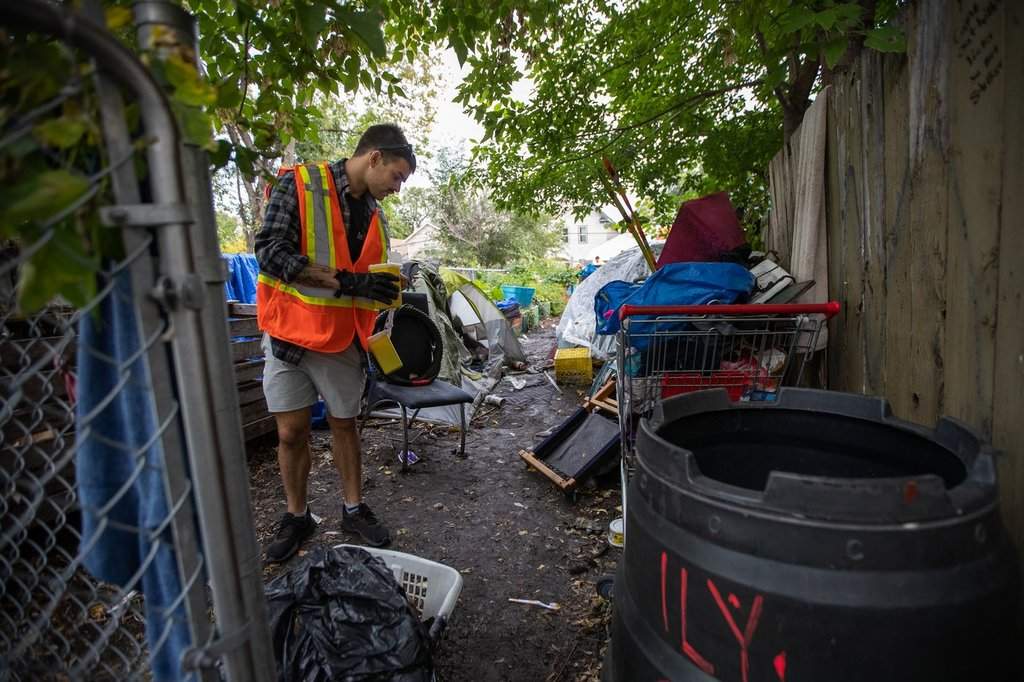
Now, End Homelessness Winnipeg is out counting people on the streets as new funding begins to ramp up. On paper, a street census sounds like municipal paperwork—clipboards, tally marks, spreadsheets, and press releases. In reality, it is an attempt to stop looking away long enough to learn names, corners, and truths that spreadsheets usually flatten.
Why Counting People Feels Like Counting Water
Ask anyone who has spent time near downtown Winnipeg or the surrounding neighborhoods what is missing from the conversation, and you will hear two things at once: there are not enough homes, and nobody truly knows the full scope of who is slipping through the cracks.
Shelters can tell you who walked through their doors on a Tuesday night. Hospital emergency rooms can tell you who arrived frostbitten or exhausted. Outreach workers can tell you who they saw near a bridge or an encampment last week. Yet none of those numbers tell the whole story by themselves. Someone sleeping in a stairwell, couch-surfing from one cramped apartment to another until the welcome runs out, or staying awake all night in a twenty-four-hour spot because sleeping outside feels too dangerous does not always show up cleanly on a chart.
I have stood in winter wind tunnels near the forks of rivers and felt how quickly time loses its ordinary shape when you are trying to stay warm. Minutes stretch. Your toes go numb first, then your fingers, and suddenly your entire brain narrows down to one basic command: keep moving, find heat, survive until morning. Try explaining long-term housing policy to someone whose body is screaming for warmth right now. The gap between policy language and street reality is wide enough to swallow whole committees.
To make sense of why a headcount matters right now, imagine (a hypothetical scenario) a town where the fire department only records houses that burn all the way to the ground. If a dozen kitchens smoke every week and get put out early, the town's official report says, "Zero fires this month." Anyone living on that street knows the report is a lie, yet the budget stays frozen because the numbers look calm. A street census tries to record the smoke before the whole house goes up.
Still, I will admit something that makes some advocates squirm and some critics nod too quickly: counting people can feel deeply unsettling. There is something awkward, even intrusive, about tallying human beings like inventory. What if someone feels exposed? What if a count happens and nothing changes fast enough afterward? Those doubts are real. If a census becomes a substitute for action, it is worse than useless—it is a distraction dressed up as progress.
The Money Arrives, and the Real Test Begins
Funding ramping up is good news, full stop. Nobody fixes a housing shortage with good intentions and spare change. Money pays for supportive housing units, outreach teams who show up consistently rather than once in a blue moon, mental health and addiction care that meets people where they are, and the unglamorous daily operations that keep doors open.
Yet money without a clear map is like pouring fuel onto frozen ground—it makes a splash, pools in the wrong spots, and leaves the roots untouched.
Consider what happens next: when governments and agencies commit new dollars to ending chronic homelessness, everyone suddenly wants proof of impact. Politicians want metrics. Boards want deliverables. Taxpayers want to know their money is not vanishing into administrative fog. A street census gives a city a baseline—a clearer picture of where unsheltered people actually are, what supports they lack, and how urgent the need is across different parts of Winnipeg.
Let us bring in two hypothetical characters to see how this plays out on the ground. They are fictional, built from patterns outreach workers and residents see every day, not real individuals.
Meet Sam, who has been bouncing between temporary beds and unheated spaces for nearly two years after losing work and a lease in the same harsh winter. Sam does not trust forms easily. Every intake sheet feels like another promise that ends with a waitlist. When a census volunteer approaches with a warm coffee, a calm voice, and a simple question about where Sam slept and what help might actually stick, Sam weighs whether speaking up is worth the effort.
Now meet Elena, a housing coordinator staring at a spreadsheet with new funding allocated for transitional and supportive units. Elena knows that putting someone into an apartment is only step one. Without follow-up, culturally responsive support, food security, and a way to handle loneliness once the street noise stops, people can feel stranded inside four walls. Elena needs accurate street-level data so units go where they are needed most, paired with real wrap-around care.
Neither Sam nor Elena can solve this alone. Sam needs reliability that does not evaporate after a photo op. Elena needs resources that stay steady long after the ribbon-cutting.
What People Really Ask When the Headlines Hit
Whenever a city announces a street count alongside new funding, the same sharp questions surface around kitchen tables and coffee shops.
People ask whether a census actually finds everyone. The honest answer is no—no street count catches every single person, especially those hiding from cold, danger, or past trauma. Hidden homelessness—people staying temporarily with relatives or friends, or cycling through unstable rooms—is notoriously hard to capture in a single snapshot. A good census treats its numbers as a floor, not a ceiling, and pairs street counts with shelter and service data so blind spots shrink rather than get ignored.
People also ask why we need to count if we already know homelessness is visible. Knowing something exists is different from measuring its scale and distribution. Think of it like blood pressure: you might feel dizzy or tired, but a cuff tells you whether you are dealing with a mild dip or a crisis that needs immediate intervention. Data does not replace compassion; it gives compassion direction.
And then comes the hardest question of all: does counting people end homelessness?
No. A clipboard never built a single apartment or healed a single fracture. Homelessness ends when a community treats housing as foundational rather than a reward you have to earn after fixing every other part of your life. Housing First approaches—grounded in years of research and real-world trials—show that stability comes much faster when people get a safe place to live first, backed by voluntary support for health, income, and recovery.
The Quiet Mechanics Behind Every Street Corner
History has a way of repeating its mistakes whenever cities treat poverty as a character flaw instead of a structural failure. Rising rents, stagnant wages for entry-level work, shortages of deeply affordable housing, gaps in healthcare, and the lasting scars of systemic inequities all feed into the same current. By the time someone is sleeping rough in Winnipeg's sub-zero air, ten smaller safety nets have already failed quietly behind them.
That is why the emotional core of this moment matters so much. When we reduce homelessness to statistics, we accidentally make it easier to tolerate. Oh, it's just a few hundred people. Just. Say that word out loud while standing outside in minus-fifteen weather. Just a few hundred human beings trying to keep their toes from freezing. Just a few hundred neighbors with mothers, kids, memories, jokes, and plans that got knocked sideways.
Metaphorically speaking, a city's housing system is like a bridge built out of rope and timber. Every time you let one strand fray without replacing it, the bridge still holds—until too many people cross at once or a heavy gale hits. Counting the people standing on the frayed sections does not weave new rope on its own, yet it tells the builders where the wood is rotting before the whole span gives way.
And let's be candid about the friction ahead. Ramping up funding in a major city rarely goes smoothly on day one. Permits take time. Renovations hit snags. Staffing shortages slow down new programs. Disagreements flare over neighborhood locations, service models, and accountability. Anyone promising instant miracles is selling snake oil. Real change is slower, messier, and far more human than a headline suggests.
Why This Moment Carries Real Weight
There is a particular kind of fatigue that sets in when a problem lasts for years. People grow cynical. They stop reading past the first paragraph. They assume the money will get tied up in red tape, the count will be debated endlessly, and next winter will look just like this one.
Cynicism is easy. It protects you from disappointment. It also lets you off the hook.
What makes End Homelessness Winnipeg's street census alongside rising funding worth paying attention to right now is the collision of two necessary forces: visibility and investment. One without the other stalls out. Visibility without investment breeds frustration; investment without visibility risks guesswork. Together, they create leverage—not the boardroom kind, but the quiet, stubborn leverage a community builds when it decides a status quo is no longer acceptable.
Imagine walking past that same bus shelter on Main Street next winter. Picture the glass clear, the wind still biting, and the corner empty not because people were chased away with sirens and ordinances, but because they had keys in their pockets, heat humming behind a locked door, and people checking in who actually knew their names.
A count is just the start of paying attention. What happens after the numbers are written down is where a city proves who it really is.
Look up from your screen for a second and think about the last time you walked past someone out in the cold—and ask yourself what changes when a whole city finally decides to count every single soul instead of looking past them.