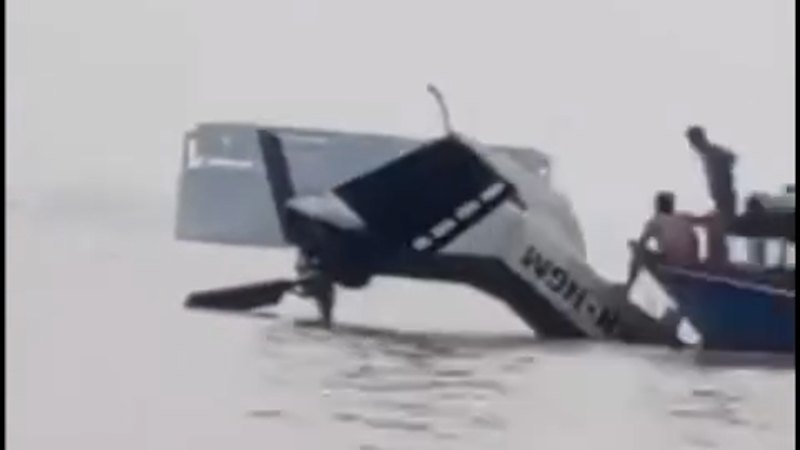
When an Australian-registered waterbombing chopper goes down in Indonesia, the initial news alerts usually tell you half the story. You get a tail number, a rough location in Sumatra or Kalimantan, and a brief note on whether the crew walked away.
Then the coverage stops.
That's a massive oversight. Because behind every single one of these incidents sits a complex web of cross-border aviation contracts, brutal tropical microclimates, and heavy-lift engineering that pushes aircraft to their absolute mechanical limits. If you want to understand why Australian helicopters end up fighting Indonesian peat fires—and why things occasionally go sideways—you have to look past the breaking news ticker.
Why Australian Helicopters Are Flying Over Indonesia
You might wonder why an aircraft carrying a Victorian or New South Wales registration is dropping water thousands of kilometers north of Darwin. The answer comes down to seasonal economics and specialized hardware.
Australia and Indonesia have opposite fire seasons. When winter hits southern Australia, heavy-lift firefighting fleets—think Sikorsky S-61s, Bell 214STs, or Kamov Ka-32s operated by private contractors—suddenly lose their local contracts. Leaving a multi-million-dollar aircraft sitting in a hangar in Moorabbin or Bankstown burns cash. Fast.
Meanwhile, Indonesia's dry season ramps up. Peatland and forest fires across Sumatra and Kalimantan create massive smoke hazes that choke the entire Southeast Asian region. Indonesia's National Board for Disaster Management (BNPB) regularly leases foreign heavy-lift helicopters to supplement its own fleet. Australian operators have the exact machines, the experienced bush-fire pilots, and the maintenance crews ready to deploy on short notice.
It's a logical business arrangement. Until you factor in the environment.
The Brutal Reality of Tropical Aerial Firefighting
Fighting fires in the Australian bush is no walk in the park, obviously. But flying heavy rotary-wing operations in Indonesia introduces a completely different set of aerodynamic and mechanical headaches.
First, there's the air itself. Helicopters hate high temperatures and high humidity. Aviation experts call it "high density altitude." Basically, hot, wet air is thin air. Your rotor blades have to work significantly harder to generate the exact same amount of lift they would produce on a crisp morning in Victoria. When you're hauling a Bambi Bucket slung underneath the fuselage holding 2,000 to 4,000 liters of water, your power margins shrink to almost nothing.
Then comes the visibility. Or lack of it.
Peat fires don't burn like standard timber fires. They smolder underground, pumping out thick, acidic, blinding smoke that hangs low over flat terrain with zero natural horizon references. Pilots end up flying in brownout or smoke-out conditions where spatial disorientation becomes a constant threat.
Add in remote operating bases. Unlike a well-equipped Australian regional airfield, forward operating bases in rural Kalimantan might be a patch of cleared dirt near a river. Dust, moisture, and limited ground support equipment put relentless stress on turbine engines and tail rotor assemblies.
How Cross-Border Crash Investigations Actually Work
Whenever an Australian-registered aircraft suffers an accident or forced landing overseas, a very specific set of international rules kicks in. Most people assume Australia's transport safety cops immediately fly in and take over. They don't.
Under Annex 13 of the International Civil Aviation Organization (ICAO) convention, the country where the crash happens owns the investigation. In Indonesia, that's the National Transportation Safety Committee, known locally as the KNKT.
Because the chopper carries an Australian VH- registration, the Australian Transport Safety Bureau (ATSB) gets invited to appoint an Accredited Representative. The ATSB doesn't run the show, though. They act as technical advisors, helping gather maintenance records from the Australian operator, analyzing black box data if the airframe carried a flight data recorder, and liaising with engine manufacturers like General Electric or Pratt & Whitney.
Here's the catch with international investigations. They take forever.
Recovering a wrecked airframe from a flooded peat swamp or dense jungle canopy is a logistical nightmare. Sometimes heavy-lift recovery isn't even possible without building temporary access roads. Because of that, preliminary reports from the KNKT might take months, and final safety recommendations can stretch out well past a year.
Common Misconceptions About Waterbombing Incidents
When news breaks that a firefighting chopper went down, armchair experts on social media immediately jump to conclusions. Usually, they're wrong.
- Misconception 1 "The pilot ran out of fuel." Modern firefighting contracts require strict fuel-burn monitoring, especially because weight management is critical for lift. Fuel exhaustion is rare. Mechanical failure, engine flameouts from ingesting heavy smoke, or tail-rotor strikes in tight hover zones are far more common culprits.
- Misconception 2 "The aircraft was old and unsafe." Many heavy-lift firefighting helicopters are legacy airframes—some designs date back to the 1960s and 1970s. Age doesn't equal danger in commercial aviation. Under Civil Aviation Safety Authority (CASA) rules in Australia, these machines undergo obsessive, hour-by-hour component tracking and heavy maintenance checks. An older Bell or Sikorsky with rebuilt transmissions and fresh turbines is often tougher than a brand-new light helicopter.
- Misconception 3 "The water bucket dragged the chopper down." Every external load system used in aerial firefighting features both an electrical and a manual mechanical emergency release. If an engine loses power, the pilot can punch off the bucket and thousands of liters of water in a split second to shed weight and enter an autorotation.
What Happens to the Crew and the Contract Next
Surviving a forced landing in remote Indonesia is only step one for the flight crew and engineers on the ground.
Australian operators running international deployments carry specialized medevac insurance and emergency response protocols. Local Indonesian military and BNPB search-and-rescue teams typically handle the immediate extraction, moving injured crew members to regional hospitals before air-ambulances transfer them to major hubs like Singapore or back to Australia.
Financially, losing an airframe mid-season hits a private operator hard. Replacing a heavy-lift helicopter on an active Indonesian contract isn't as simple as pulling a spare off the shelf. You need CASA export clearances, Indonesian Directorate General of Civil Aviation (DGCA) validation, and specialized shipping or long-range ferry flights just to get a replacement machine into the theater.
If you're following updates on an Australian-registered waterbombing crash in Indonesia, skip the sensationalized local tabs and go straight to the primary sources. Check the ATSB active investigations database to see if an Accredited Representative has been assigned, monitor the Indonesian KNKT official portal for preliminary factual reports, and cross-reference the aircraft's VH- registration on the CASA aircraft register to verify the exact airframe type and registered operator. That's where the real story lives.


