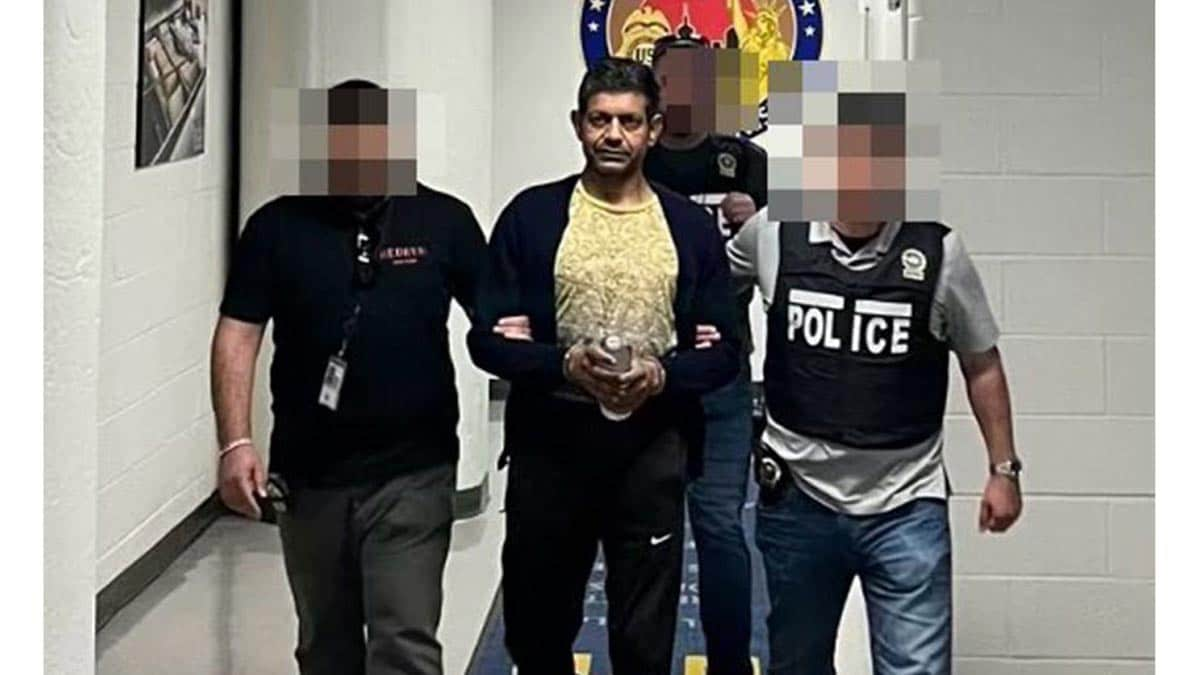
Mainstream reporting on the sentencing of Indian national Nikhil Gupta to 235 months in a United States federal prison treats the case like a routine organized crime thriller. A man is hired to arrange a hit on Sikh separatist Gurpatwant Singh Pannun in New York City, he accidentally hires an undercover DEA agent, he gets arrested in Prague, extradited to Manhattan, and handed nearly two decades behind bars. The headlines frame this as a straightforward triumph of American law enforcement over a rogue transnational assassination plot.
That framing is lazy. If you view the Nikhil Gupta sentencing merely as a criminal justice story about a botched murder-for-hire scheme, you miss the far more consequential reality playing out between Washington and New Delhi. The real story is not that an amateurish middleman got caught in an FBI and DEA sting; it is how two major strategic partners quietly absorbed an unprecedented intelligence crisis without allowing it to derail their broader geopolitical alignment. Learn more on a similar topic: this related article.
The Myth of the Rogue Operator vs. Institutional Containment
A common narrative in cable news commentary suggests that the indictment and sentencing prove either total diplomatic rupture or complete operational incompetence on the part of Indian intelligence. Both interpretations are flawed.
According to unsealed court filings from the U.S. Department of Justice in the Southern District of New York, Gupta—who had prior involvement in international narcotics and weapons trafficking—was recruited by an Indian government employee, later identified in U.S. indictments as Vikash Yadav, to orchestrate the killing of Pannun, a dual U.S.-Canadian citizen and general counsel for Sikhs for Justice. Prosecutors laid out digital trails, wire transfers, and recorded calls showing Gupta communicating with a confidential source who introduced him to an undercover federal agent posing as a hitman. Further reporting by Reuters highlights similar perspectives on this issue.
The lazy consensus assumes that when a foreign intelligence operation is exposed on American soil, bilateral relations collapse into public sanctions and diplomatic expulsions, much like the aftermath of Russian or Iranian plots in Europe. Yet that did not happen here. Why?
Because modern statecraft operates on compartmentalization. Washington needed to enforce a non-negotiable red line: foreign governments cannot conduct lethal operations on U.S. territory, period. At the same time, the White House and the Pentagon view India as an indispensable counterweight in the Indo-Pacific. Publicly humiliating New Delhi or tearing up defense and technology agreements over an aborted plot would have handed a strategic gift to Beijing.
How Washington and New Delhi Managed the Fallout
Instead of an open diplomatic war, both capitals executed a textbook exercise in quiet crisis management. Analysts at the Carnegie Endowment for International Peace and the Council on Foreign Relations have noted how carefully the Biden administration calibrated its response—leveraging the legal system to impose accountability while keeping high-level diplomatic channels open.
Look at the mechanics of how this played out:
- Legal Accountability Without Diplomatic Breakage: By letting the Department of Justice prosecute Gupta through standard federal channels—and later unsealing charges against Vikash Yadav—the U.S. government signaled to domestic audiences and international observers that sovereignty violations carry severe penalties. A 235-month sentence sends an unmistakable deterrent message to any intermediary considering taking a contract from a foreign state actor.
- Quiet Internal Reckoning in New Delhi: Officially, the Indian government distanced itself from the plot, stating that such actions run counter to government policy. Behind closed doors, however, New Delhi established a high-level inquiry committee to investigate the security lapses and organizational rogue elements flagged by U.S. intelligence. Reports from Washington confirmed that India took steps to hold individuals within its apparatus accountable and overhaul oversight mechanisms.
- Preserving Strategic Momentum: Throughout the legal proceedings, extradition battles in the Czech Republic, and eventual sentencing in New York, U.S.-India cooperation on semiconductor supply chains, jet engine manufacturing, and intelligence sharing in the Indian Ocean continued largely uninterrupted.
What People Get Wrong About Transnational Repression and Tradecraft
When observers ask, "How could a major intelligence service use an alleged drug trafficker to hire a hitman on American soil?" they are asking the wrong question. They are assuming state-backed operations always resemble cinema—flawless, untraceable, and executed by elite operatives.
In reality, intelligence services frequently rely on criminal cutouts precisely to maintain plausible deniability. The logic is simple: if a professional intelligence officer is caught in New York, it is an undeniable act of state aggression. If a known criminal intermediary with murky international ties is caught, the sponsoring state can plausibly claim the operation was unauthorized, freelance, or the result of rogue actors operating outside chain-of-command protocols.
The flaw in that tradecraft—and the reason Gupta is now serving nearly twenty years in federal prison—is that criminal cutouts lack operational discipline. According to federal prosecutors, Gupta discussed sensitive operational details over unencrypted channels, rushed timelines to coincide with high-level diplomatic visits, and trusted a narcotics contact who was already cooperating with U.S. law enforcement. When you outsource sensitive statecraft to the criminal underworld, you inherit the vulnerabilities of that underworld.
The Uncomfortable Reality of Double Standards in Geopolitics
To look at this case honestly, you have to acknowledge the friction between legal absolutism and realpolitik. Critics of the U.S. response, including Sikh advocacy groups and human rights organizations, argue that prosecuting a middleman like Gupta while maintaining warm ties with New Delhi amounts to a slap on the wrist for the actual architects of the plot. They point out that had a rival nation attempted to assassinate an American citizen in Manhattan, the response would have involved sweeping economic sanctions and diplomatic isolation.
That criticism has merit. There is an undeniable asymmetry in how Washington enforces international norms depending on whether the offender is an adversary or a strategic partner. Pretending otherwise insults the intelligence of anyone paying attention.
Yet from the perspective of national security practitioners, consistency is rarely the primary objective—leverage is. By holding the threat of broader political fallout in reserve while letting the federal courts deliver a harsh sentence to Gupta, Washington extracted behavioral changes from New Delhi without destroying a vital partnership. India learned that the U.S. intelligence community has deep visibility into its covert networks and will not look the other way on American soil.
The Real Lesson of the 235-Month Sentence
If you want to understand what Nikhil Gupta’s prison term actually represents, stop looking at it as the final chapter of a crime story. Look at it as a boundary marker in twenty-first-century geopolitics.
Rising powers often test the limits of extraterritorial reach as their global confidence grows, adopting aggressive tactics against diaspora dissidents whom they view as national security threats. The Pannun case proved that when those tactics cross into U.S. jurisdiction, the legal and intelligence pushback is swift, public, and unforgiving—even for a close partner.
Gupta is spending nearly two decades in a federal penitentiary not just because he conspired to commit murder, but because he became the public cautionary tale in a quiet war over sovereignty between two nations that still need each other too much to walk away.