History rarely announces itself with a thunderclap. More often, it arrives as a low, dry rustle—the sound of brittle parchment splitting down the middle, or the quiet click of a heavy iron bolt sliding backward in the dark.
Stand on a balcony in Tehran at dusk, and the city looks deceptively ordinary. The silhouette of the Alborz mountains cuts a jagged line against an orange sky. Traffic crawls along Vali-Asr Street, a dense river of headlights. From a distance, the pulse of daily life beats with a familiar, stubborn rhythm. People buy bread, haggle over the price of pistachios, and hurry home before the night air turns biting.
Yet underneath that asphalt, beneath the surface calm of a society exhausted by decades of economic vertigo, something structural is giving way.
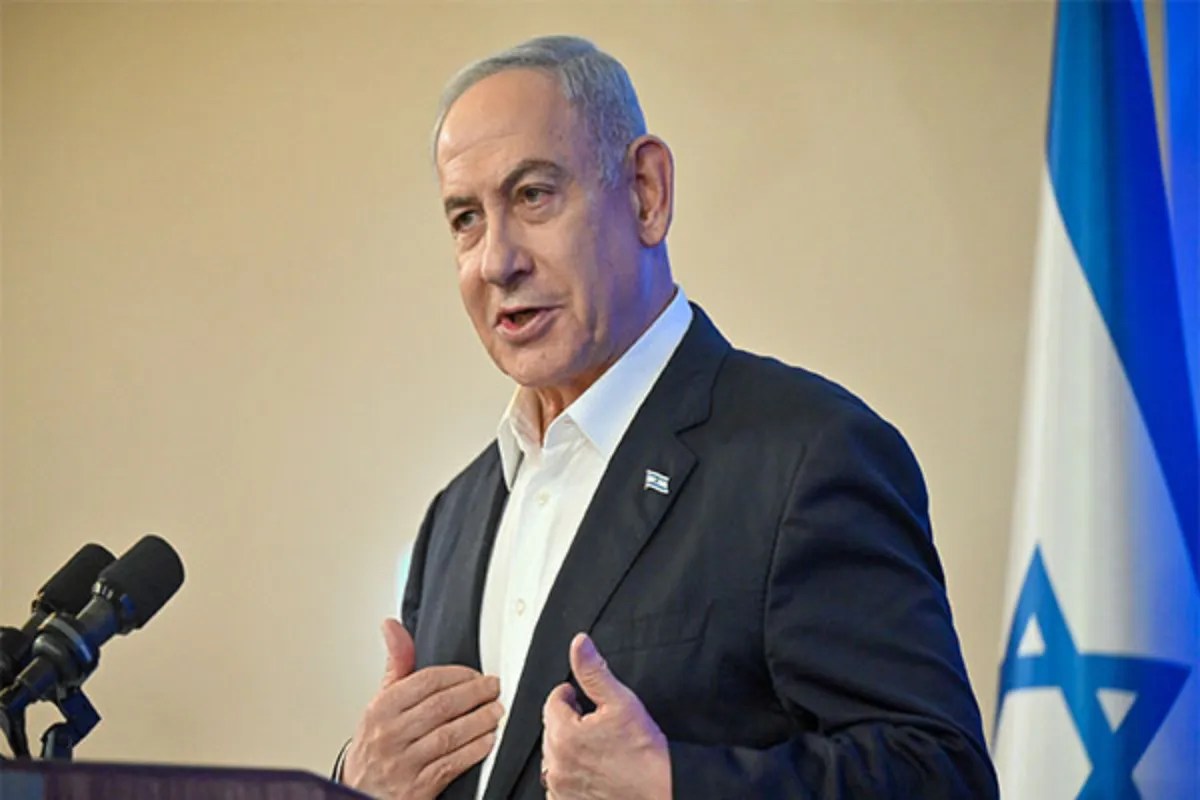
Benjamin Netanyahu leaned toward a bank of microphones and laid out a thesis that has quietly occupied intelligence briefings from Washington to Jerusalem for months. The Iranian government, he claimed with absolute conviction, is standing on the precipice of collapse. It is a bold declaration, dripping with geopolitical intent. But strip away the political theater, remove the speeches meant for international broadcast, and look at the raw human mechanics beneath the claim.
To understand why a regime that has weathered forty-plus years of internal dissent, international isolation, and localized revolts might finally be fracturing, you have to look at the kitchen table of an ordinary family in Isfahan.
Let us call him Reza. Reza is fifty-two years old, an accountant who spent his youth believing in the grand promises of the revolution, and his middle age watching those promises evaporate beneath the weight of hyperinflation. When Reza goes to the market now, his wallet feels lighter before he even opens it. The currency, the rial, has lost its anchor. It drifts through the global economy like a ghost ship. Eggs, medicine, heating fuel—every basic necessity requires a complicated mathematical calculation of survival.
Reza is not a revolutionary. He does not want chaos in the streets. Like most people, he wants quiet. He wants to pay his rent, buy his mother her heart medication, and watch his daughter finish her university degree without wondering if her future will be cancelled by tomorrow's exchange rate.
That desire for quiet, multiplied by eighty-plus million souls, is the most dangerous explosive force known to statecraft.
When a government loses its economic legitimacy, it has two choices. It can reform, or it can tighten the grip. Tehran chose the grip. It funded regional proxies, poured billions into subterranean missile silos, and maintained an expensive, sprawling security apparatus designed to project power outward. But power projected outward requires immense internal gravity. When the core starts to hollow out, the heavy armor begins to crush the body wearing it.
Consider the physics of authoritarian stability. It relies on a fragile three-legged stool: economic patronage, ideological fervor, and the monopoly on fear.
For decades, the patronage system kept the loyalists fed. The state doled out subsidies, jobs, and contracts to those who kept the machinery humming. But when the oil revenues hit sanctions and bureaucratic rust, the supply lines dried up. The loyalists are looking around, calculating whether their allegiance still pays dividends, or if it is merely chaining them to a sinking hulk.
Ideological fervor, meanwhile, has aged poorly among the young. Walk down a side street in Shiraz, away from the official murals and state loudspeakers, and you hear a different soundtrack. You hear underground hip-hop. You hear young women discussing philosophy, technology, and personal freedom with a fierce, quiet defiance that no morality patrol can entirely scrub away. They are not waiting for a foreign leader to declare their government vulnerable; they experience that vulnerability every time they are told how to dress, how to think, and how to live.
They have already seceded mentally. Physical secession usually follows shortly after.
When Netanyahu points to the fraying edges of the Iranian state, he is looking at these economic and psychological fault lines. But predicting the exact moment of collapse is a fool's errand. Empires and authoritarian regimes do not fall on a predictable calendar. They linger, bruised and desperate, until they don't. They look indestructible right up until the second they shatter.
Think of ice on a frozen lake in late winter. To the casual observer walking across the surface, the sheet looks solid, white, and unyielding. The cold has been there for months. It feels permanent. But underneath, water is moving. Currents are eating away at the underside, thinning the barrier grain by grain. Then, with no warning, a single footstep breaks the crust, and the entire expanse goes under in seconds.
The Iranian state apparatus is currently standing on that thinning ice.
The protests that swept the country after the death of Mahsa Amini were not just isolated riots; they were tectonic tremors. They crossed ethnic, class, and generational lines. When university students, bazaar merchants, and oil workers find themselves shouting the same slogans into the night air, the social contract is dead. And a government that rules purely by fear has nothing left to offer its people once the fear loses its sting.
When you beat a population long enough, a strange psychological shift occurs. Fear turns into numbness, and numbness turns into a cold, dangerous clarity. People realize they have already lost everything that makes life worth living: their savings, their security, their future. Once you have nothing left to lose, the police batons lose their terrifying weight.
This is the invisible variable that foreign capitals calculate in secret rooms, and it is the variable that regimes always underestimate until it is too late.
The claims coming out of Jerusalem are not operating in a vacuum. They are part of a high-stakes psychological and strategic chess match. Israel sees an adversary bogged down by its own contradictions, overextended across multiple proxy fronts from Lebanon to Yemen, and buckling under the weight of domestic rage. By vocalizing the vulnerability, leaders like Netanyahu are trying to accelerate the process—sending a signal to the dissidents inside Iran that they are seen, that their struggles are registered on the global stage, and that the monolith is not as invincible as it pretends to be.
Yet, external pressure alone rarely topples a regime. It acts as the wind against a dead tree, but the rot must already be deep inside the trunk.
And the rot in Tehran is profound. It is institutional corruption that skims the wealth of a petroleum-rich nation into the pockets of a shielded elite. It is ecological devastation, with dried-up lakes, mismanaged water tables, and choking smog that turns the air into a physical hazard. It is the brain drain of brilliant engineers, doctors, and artists who board flights to Toronto, Berlin, and Los Angeles because they refuse to watch their potential suffocate in a bureaucratic cage.
A country cannot export revolution forever while importing misery at home without breaking its own spine.
What happens if the prediction holds true? What happens if the facade actually collapses?
The answer is not a neat, Hollywood-style sunrise of instant democracy. Transitions out of tyranny are messy, violent, and agonizingly complex. Power vacuums suck in ambition, fear, and foreign interference. A fractured Iran would send shockwaves across the Middle East, altering energy markets, neutralizing proxy networks, and rewriting the security architecture of the entire hemisphere. It would be a moment of profound liberation for millions, paired with the terrifying vertigo of an unknown tomorrow.
For now, the people of Iran continue their daily choreography of endurance. Reza goes back to his ledger, balancing numbers that refuse to make sense. A university student in Tehran slips a banned book into her backpack. A mother in Tabriz shares a meager meal with her children, whispering stories of a past they can barely remember and a future they are determined to claim.
The speeches will continue in the parliaments and the press rooms. Analysts will dissect every syllable, measuring the odds of survival against the momentum of decay. But the final verdict will not be written by politicians in foreign capitals. It will be written in the quiet, crowded rooms where ordinary human beings decide they are simply done being afraid.
The ice is groaning. The water underneath is rising. And somewhere in the dark, the last bolt is slipping out of the lock.