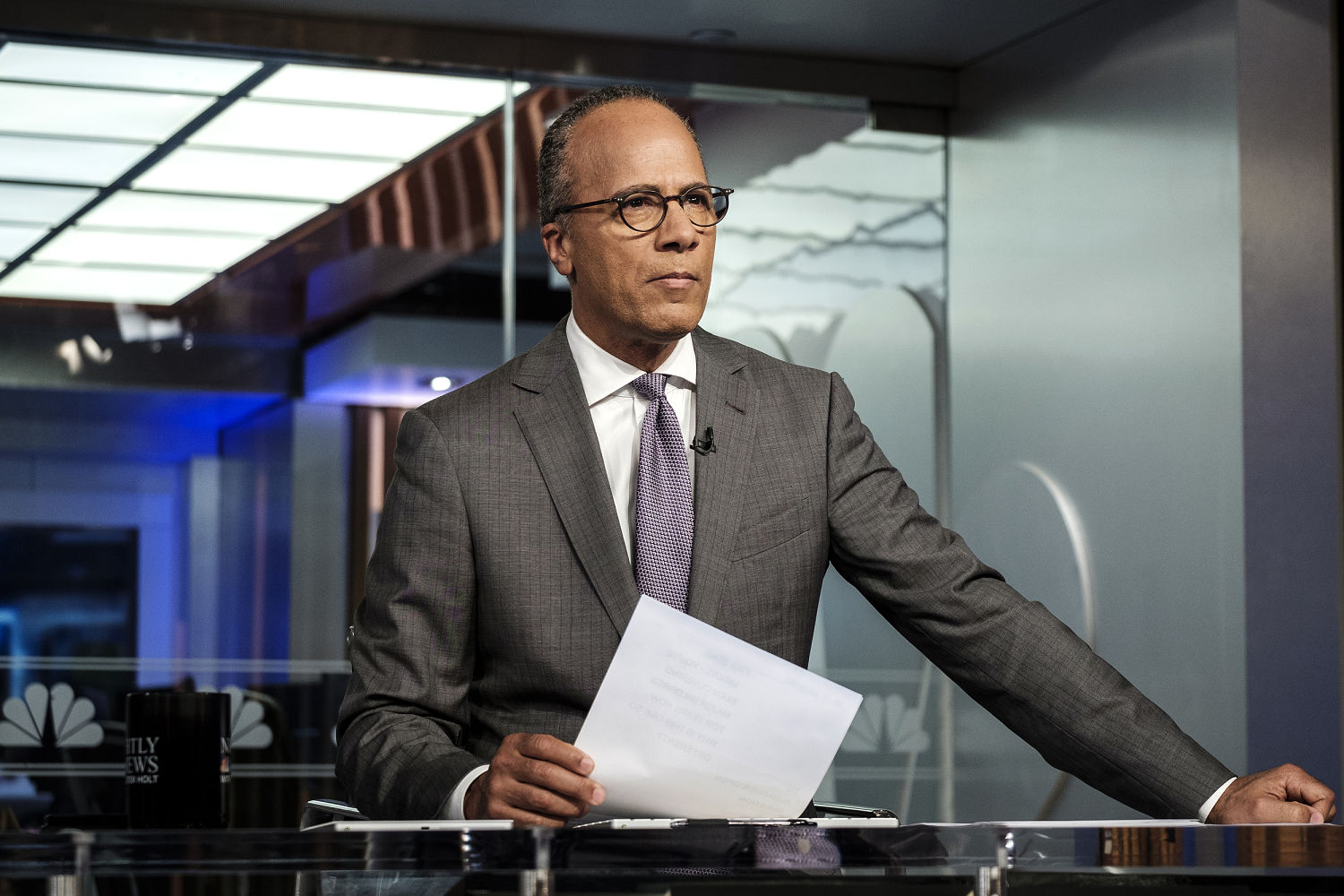
The traditional evening broadcast is losing its grip on the American public. When network news divisions solicit questions from the public for an anchor like Lester Holt, they frame it as an exercise in democratic participation. It sounds noble. It promises a bridge between the powerful and the ordinary citizen. But this crowdsourcing of journalism is largely an illusion designed to manufacture engagement for a medium suffering from a profound crisis of trust.
Viewers do not need another opportunity to submit questions that will be sanitized by a committee of producers. They need answers to the structural failures that keep vital stories off the airwaves. The standard nightly news broadcast has become a highly polished, predictable product that frequently mistakes access for accountability. Don't forget to check out our earlier article on this related article.
The Mirage of Interactive Journalism
Mainstream networks frequently deploy the audience-prompt tactic. They invite viewers to write in, tweet, or submit videos asking about inflation, foreign policy, or climate change. This strategy serves a dual purpose for media corporations. It provides free content while creating a veneer of accessibility.
The reality behind the scenes is entirely different. Editorial teams filter thousands of submissions, inevitably selecting the most generic, non-threatening inquiries. A question about rising food prices is approved because it allows the anchor to pivot to a pre-packaged segment on inflation metrics. A pointed question about defense contractor lobbying or network ownership boundaries is quietly discarded. To read more about the context here, Al Jazeera provides an informative breakdown.
This process fundamentally alters the relationship between the journalist and the audience. Instead of acting as an independent proxy who interrogates power on behalf of the public, the anchor becomes a mediator who tames the public's anxieties into palatable, fifteen-second soundbites.
Why Network Anchors Can No Longer Interrogate Power
The position of the network anchor has evolved from a crusading reporter into a corporate brand ambassador. Decades ago, figures like Walter Cronkite or Edward R. Murrow possessed the editorial leverage to challenge institutions directly. Today, the nightly news operates within a hyper-consolidated corporate media framework.
Networks are no longer independent news gathering organizations. They are small subsidiaries of massive entertainment and telecommunications conglomerates. The primary directive is not to disrupt, but to maintain a stable environment for advertisers.
When an anchor conducts a high-profile interview, the parameters are negotiated weeks in advance by public relations armies. Hard-hitting follow-up questions are a rarity. If a politician or a corporate executive evades a query, the anchor rarely presses the point. They move on. They have a commercial break to hit. The strict format of a 22-minute broadcast leaves no room for genuine, adversarial journalism. The clock is the ultimate censor.
The Fractured Audience and the Death of the Shared Reality
For generation after generation, the nightly news provided a baseline of shared facts. Whether you agreed with the editorial stance or not, the country watched the same broadcast. That era is dead.
The fragmentation of the media environment has left traditional broadcasts scrambling for relevance. Young demographics do not watch linear television. They consume news via fragmented clips on social platforms, where algorithms prioritize outrage over nuance. In a desperate bid to claw back these viewers, networks adopt the language of digital interactivity.
The effort fails because it misunderstands what the modern audience actually wants. Viewers do not want to participate in a performative Q&A session. They want transparency. They want to know why certain stories dominate the broadcast while systemic issues like corporate monopolies, regulatory capture, and local government corruption are completely ignored.
The Disconnect Between Newsgathering and the Public Need
Step inside any major network newsroom and you will find incredibly talented, dedicated field reporters and producers. They want to do deep investigative work. They want to expose wrongdoing.
The bottleneck exists at the executive level. The evening news has been reduced to a digest of the day's most easily digestible events. It features weather disasters, viral videos, consumer interest fluff pieces, and a brief, superficial glance at Washington politics.
Consider how the industry handles economic reporting. A typical segment focuses on the rise and fall of the Dow Jones Industrial Average. This metric is largely irrelevant to the millions of Americans living paycheck to paycheck who do not own significant stock portfolios. By framing economic health through the lens of Wall Street, the network alienates the very audience it claims to serve.
Reclaiming the Watchdog Role
If legacy news programs want to survive the next decade, they must abandon the gimmickry of crowdsourced audience participation. They must return to the foundational principles of investigative reporting.
This transformation requires a deliberate rejection of access journalism. Networks must be willing to lose access to politicians who refuse to answer direct questions. They must stop treating political campaigns like sports matches and start analyzing the policy decisions that impact daily life.
True journalism does not ask the audience to do the work of formulating the questions. It demands that the journalist already knows the questions that need to be asked, possesses the courage to ask them, and refuses to back down when the powerful refuse to answer. The future of the medium depends on whether networks choose to remain corporate bulletin boards or choose to become aggressive watchdogs once again.
The public is tired of being managed. They are tired of the glossy graphics, the dramatic music cues, and the scripted warmth of the anchor desk. They are looking for a relentless pursuit of the truth, even when that truth is inconvenient to the network's own bottom line. Until legacy news institutions realize that trust cannot be bought with an interactive hashtag, the slow drain of their audience will continue unabated.