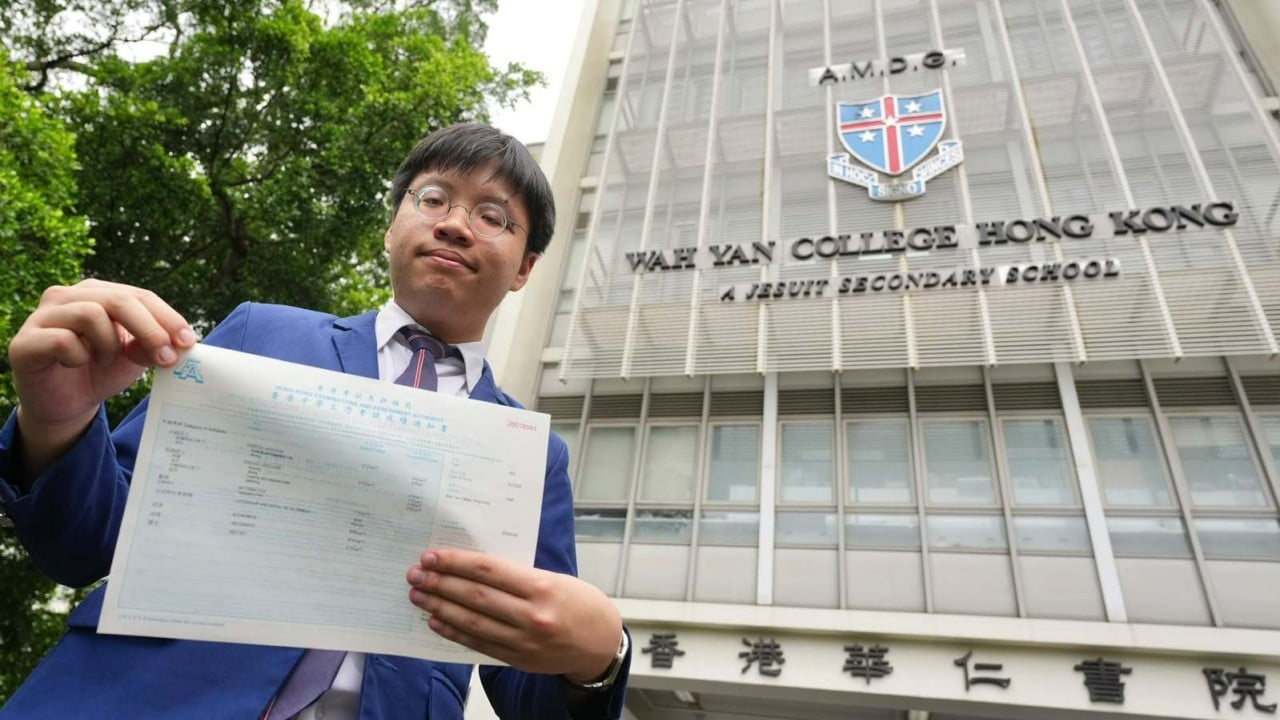
Every summer, Hong Kong plays out a familiar, highly choreographed media ritual. The release of the Diploma of Secondary Education (DSE) exam results brings a flood of headlines celebrating the "super scorers" who achieved straight level 5** grades. Among these triumphant profiles, none capture the public imagination quite like the student who overcame a severe physical disability. Stories of visually impaired teenagers scoring near-perfect marks and announcing plans to study medicine or law are presented as ultimate proof of the human spirit.
These narratives are deeply moving. They are also an administrative shield. Meanwhile, you can read related stories here: The Border Gate is Closing and Europe is No Longer Looking Away.
By framing these rare, heroic triumphs as the natural outcome of determination, Hong Kong’s educational establishment avoids a painful truth. The city’s hyper-competitive academic system does not support students with Special Educational Needs (SEN). It subjects them to an administrative obstacle course so grueling that only those with extraordinary personal stamina and significant family wealth can survive it. Celebrating these outliers as proof that the system works is a profound distortion of reality. It ignores the thousands of disabled students who are quietly filtered out of the academic pipeline long before the results are published.
The Anatomy of an Inspiration Trap
The media’s obsession with disabled overachievers serves a specific social function in Hong Kong. It reinforces a brutal meritocratic myth. The underlying message is simple: if a nearly blind student can score top marks through sheer hard work, then anyone can. If you failed, you simply did not try hard enough. To explore the full picture, we recommend the recent article by USA Today.
This narrative is a form of inspiration porn. It reduces complex systemic barriers to a simple test of personal character.
In reality, the DSE is an exam designed for a standardized, neurotypical, able-bodied student body. It is a high-stakes, memory-heavy pressure cooker where a few percentage points determine a student's entire economic future. For a student with visual impairment, the exam is not just a test of academic knowledge. It is a grueling endurance trial that taxes their physical health in ways their sighted peers will never experience.
To understand the scale of this achievement, one must understand what the exam actually demands of a visually impaired candidate.
The Administrative Obstacle Course of the DSE
The Hong Kong Examinations and Assessment Authority (HKEAA) does offer accommodations for SEN students. These typically include extra exam time, supervised breaks, braille question papers, and the use of speech-to-text software.
But these accommodations are often dry concessions on paper rather than effective equalizers in practice.
Consider the physical reality of taking a four-hour English or Chinese language exam using braille or screen-reading software. The cognitive load is immense. Reading a passage of text visually takes seconds. Processing the same passage through a refreshable braille display or a text-to-speech voice synthesizer takes significantly longer and requires intense, uninterrupted concentration.
Even with a 25% or 50% time extension, the physical toll is exhausting. A standard three-hour exam becomes a five-hour marathon. During these extended hours, the student must maintain peak cognitive performance while dealing with eye strain, headaches, and physical fatigue.
Furthermore, the bureaucracy required to secure these accommodations is a second curriculum in itself.
Families must navigate a maze of medical assessments, psychological evaluations, and school reports. These assessments are expensive. In Hong Kong's public healthcare sector, the waiting time for a child psychiatry or clinical psychology assessment can stretch to over a year. Wealthier families can bypass this bottleneck by paying thousands of dollars for private evaluations. Low-income families are left stranded in the waiting room, watching their children fall further behind.
The system assumes that every disabled student has a highly educated, financially stable family capable of acting as full-time advocates. Those who do not are left to navigate the system alone, often with disastrous results.
The Failure of Integrated Education Policies
Hong Kong introduced its "Whole School Approach to Integrated Education" in the late 1990s. The goal was noble: integrate SEN students into mainstream schools so they could learn alongside their peers.
The execution, however, has been compromised by a chronic lack of resources and a rigid school culture.
Mainstream schools receive government funding based on the number of SEN students they enroll. But this funding rarely translates into specialized, hands-on support. Teachers in Hong Kong are already among the most overworked in the world, burdened with heavy teaching schedules, administrative duties, and pressure to maintain high school averages.
A typical secondary school teacher might receive a few hours of basic training on how to handle SEN students. This is woefully inadequate for managing a classroom of thirty students that includes individuals with autism, ADHD, visual impairments, and dyslexia.
The result is a compromise where SEN students are physically present in the classroom but academically segregated.
Schools often lack the specialized equipment or staff needed to adapt learning materials in real-time. A visually impaired student might receive their textbook in a digital format weeks after their classmates have already finished the chapter. They are constantly playing catch-up, reliant on the goodwill of individual teachers rather than a structured system of support.
The Professional Cliff After Graduation
The triumph of the DSE is short-lived. The real crisis begins when these students transition to university and, eventually, the job market.
A top scorer might secure a coveted spot in a prestigious law or business program. But the university environment is far less structured than a secondary school. Accommodations are no longer centralized; they must be negotiated department by department, professor by professor.
The physical environment of Hong Kong’s universities, often built on steep hillsides with winding pathways, presents immediate mobility challenges. More importantly, the academic material becomes vastly more complex. The volume of reading in a professional degree is overwhelming. A visually impaired student who relied on braille or screen readers in secondary school may find that academic journals and legal texts are not formatted for accessibility.
Then comes the transition to employment.
Hong Kong's job market is notorious for its long hours, high pressure, and lack of diversity. Employers are rarely eager to accommodate disabled candidates, viewing them as potential liabilities or productivity drains.
Statistics show a stark drop in employment rates for university-educated people with disabilities compared to their able-bodied peers. The system is happy to celebrate a blind teenager on the front page of the newspaper, but it is remarkably quiet when that same teenager, now a university graduate, struggles to secure a basic entry-level position because human resources departments refuse to install screen-reading software on office computers.
The desire of these top scorers to enter helping professions like social work, counseling, or medicine is telling. They want to reform the very systems that nearly broke them. But without systemic changes to how Hong Kong views disability and employment, many of these brilliant minds will find their potential artificially capped by a society that prefers them as inspirational symbols rather than professional peers.
Dismantling the Performance of Inclusion
If Hong Kong wants to be a truly world-class city, it must stop treating the success of disabled students as a heartwarming miracle. It must start treating it as a standard expectation.
This requires a fundamental shift in how educational success is measured and supported.
First, the HKEAA must modernize its accommodation processes. Standardizing the use of digital exam formats and modern assistive technology would reduce the physical strain on visually impaired candidates. Extra time should not be treated as a generous concession, but as a basic requirement for equity.
Second, the government must reform the funding model for integrated education. Funding should be directed toward hiring permanent, qualified special education professionals in every school, rather than dumping cash into generalized school budgets. Teachers need real, practical support, not just more seminars on inclusion.
Finally, the city needs to address the professional pipeline. Intellectual ability is not the problem. The bottleneck is a rigid corporate culture that equates productivity with physical conformity and endless overtime.
Until these structural failures are addressed, the annual celebration of disabled DSE heroes remains a hollow exercise. It is a distraction that allows a wealthy city to feel good about itself while ignoring the quiet exclusion of the majority of its disabled youth. We should applaud the students who beat the system. But we must also interrogate the system that required them to become superheroes just to survive.