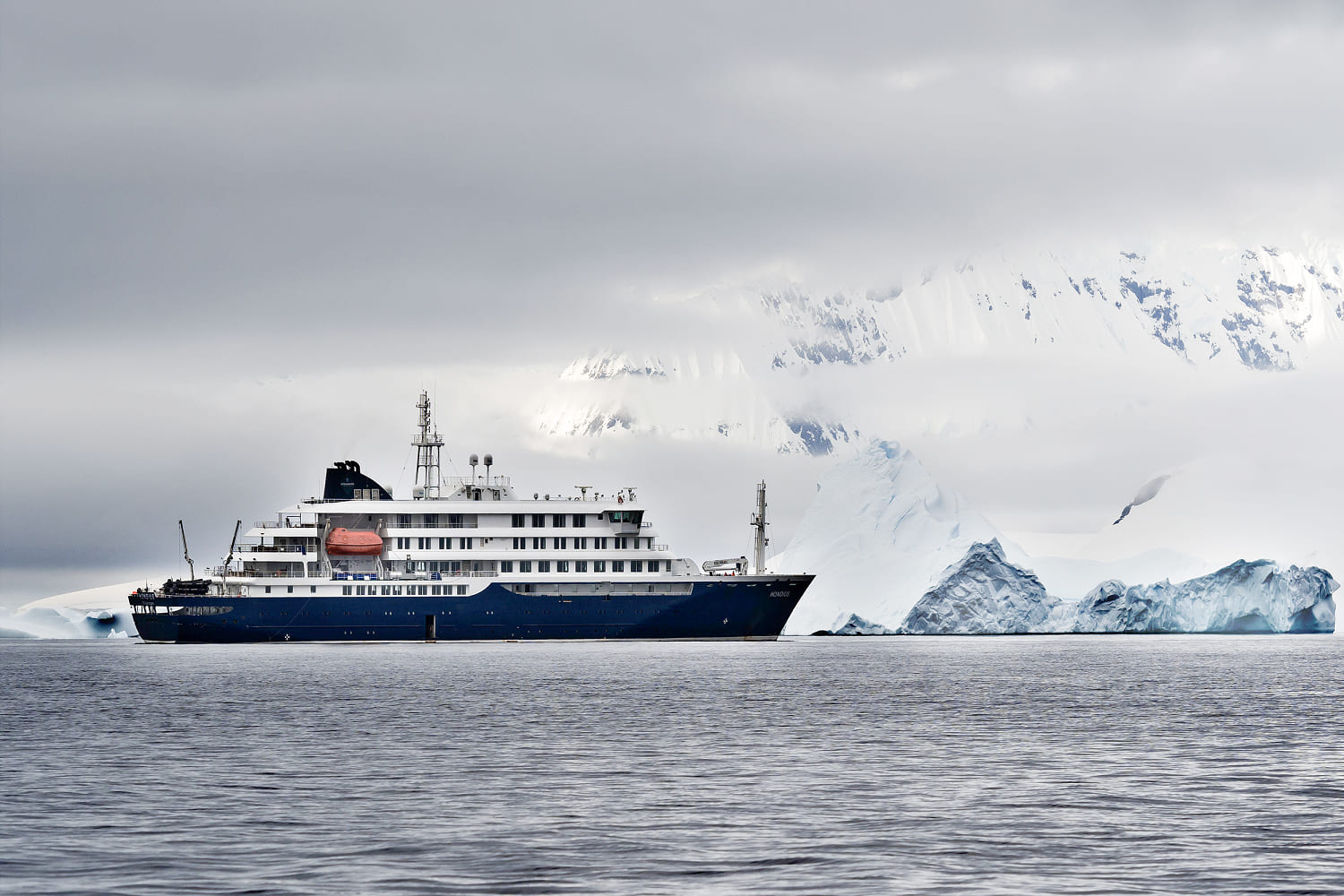
The death of three passengers and the hospitalization of three more on a mid-sized luxury liner marks a grim evolution in maritime health risks. Initial blood panels point toward hantavirus, a pathogen typically associated with dusty barns and rural cabins, not the buffets and white-linen service of a vacation vessel. While the cruise line scrambles to contain the PR fallout, the reality is that this isn't a freak accident. It is a failure of modern supply chain oversight and the physical aging of the global fleet.
Hantavirus is not a standard "cruise ship bug." Unlike the common norovirus that sweeps through galleys via human contact, hantavirus requires a specific vector: rodents. Specifically, the aerosolized droppings, urine, or saliva of infected mice and rats. For three people to die, they didn't just walk past a stray mouse; they were likely breathing air circulated through a nesting site or touching surfaces heavily contaminated during a deep-seated infestation in the ship’s internal infrastructure.
The Hidden Anatomy of a Floating Hotzone
Most passengers see the marble foyers and the glass elevators. They don't see the miles of cable runs, the dark voids between cabin walls, or the massive HVAC plenums that breathe life into the ship. These are the "interstitial spaces," and in an aging ship, they are perfect corridors for vermin.
When a ship docks in tropical or sub-tropical ports, it isn't just taking on fuel and pineapples. It is an open invitation for local wildlife. If a ship’s Integrated Pest Management (IPM) system slips even slightly, a single pair of deer mice or rice rats—known hantavirus carriers—can establish a colony within the insulation of the ventilation system. Once there, the ship’s forced-air system becomes a delivery mechanism for viral particles.
The "why" here is simple and terrifying. Over the last five years, cruise operators have slashed turnaround times to maximize revenue. The "deep clean" that used to take place between voyages has, in many cases, been reduced to a superficial wipe-down of visible surfaces. The deep recesses of the ship—where the hantavirus-carrying rodents actually live—go uninspected for months at a time.
Why Standard Health Screenings Failed
Customs and Border Protection, along with various international health agencies, focus their inspections on the galley and the medical center. They look for temperature-controlled storage and handwashing stations. They are looking for E. coli and Salmonella. They are not pulling back ceiling panels in the crew quarters or checking the air intake filters for rodent nesting materials.
Hantavirus has an incubation period of one to eight weeks. This creates a "lag effect" that is a nightmare for investigators. By the time the first passenger feels the fatigue and muscle aches, they might already be home. By the time they develop the dreaded Hantavirus Pulmonary Syndrome (HPS)—where the lungs fill with fluid—the ship has already set sail with a new manifest of two thousand unsuspecting victims.
The three fatalities in this latest incident likely experienced a rapid onset of respiratory failure. In the confined environment of a ship, medical bays are equipped for fractures, heart attacks, and stomach flu. They are rarely stocked with the advanced ventilators or the specialized isolation equipment needed to manage a hemorrhagic fever or acute pulmonary distress of this magnitude.
The Supply Chain Breach
There is a second, more insidious possibility being whispered about in maritime insurance circles: the "Trojan Horse" pallet. Modern cruise ships rely on just-in-time delivery for everything from linens to dry goods. These items are often stored in regional warehouses that do not meet the same sanitary standards as the ships themselves.
If a pallet of decorative pillows or bulk flour is stored in a mainland warehouse infested with infected rodents, the virus travels in the shrink-wrap. Once the pallet is broken down in the ship’s hold, the particles are released. This would explain how a virus usually confined to the American Southwest or rural Asia ended up in the middle of the Caribbean or the Mediterranean.
It’s a gap in the "HACCP" (Hazard Analysis Critical Control Point) protocols. We track the temperature of the meat, but we don't track the rodent-proof integrity of the cardboard boxes it comes in.
The Cost of Silence
The industry’s response to these six infections has been a masterclass in obfuscation. They call it a "respiratory event." They cite "preexisting conditions." This is a defensive crouch designed to protect the stock price, but it ignores the fundamental biology of the threat. Hantavirus is not contagious between humans. You cannot "catch" it from the person coughing in the cabin next to you. You catch it from the ship itself.
This distinction is crucial for the legal fallout. If the ship is the source, the cruise line is liable for a "vessel unseaworthiness" claim under maritime law. By framing this as a mysterious illness, they attempt to buy time to scrub the evidence—literally.
A Failure of Design
We are seeing a collision between 21st-century pathogens and 20th-century ship design. Newer "mega-ships" are built with modular cabins that are supposed to be more sanitary, but they actually create more "dead air" spaces where moisture and dust collect. If the humidity sensors in these gaps fail, they become a breeding ground for both mold and the pests that carry hantavirus.
To truly fix this, the industry needs to move beyond the "mop and bucket" mentality of the CDC’s Vessel Sanitation Program (VSP). We need:
- Real-time air quality monitoring that detects biological particulates in the HVAC system.
- Mandatory thermal imaging of interstitial spaces during dry-dock to identify nesting heat signatures.
- A total overhaul of warehouse-to-hull logistics that treats every cardboard box as a potential biohazard.
The current system relies on the hope that the ocean air is enough to keep passengers healthy. It isn't. The sea is a harsh environment, and the ships we build to navigate it are becoming increasingly complex, cramped, and difficult to sanitize.
The Industry’s Breaking Point
The cruise industry is currently riding a wave of record bookings, but it is built on a foundation of fragile trust. Passengers board these ships under the assumption that the environment is as controlled as a hospital or a high-end hotel. The reality is that a cruise ship is a massive, vibrating machine that spends its life in salt water, moving through ports with varying levels of sanitation.
When three people die from a rodent-borne virus on a luxury vacation, it suggests that the internal systems of the ship have decoupled from the polished image on the brochure. The maintenance crews are overworked, the inspections are predictable, and the pests are winning.
The next time you walk into a stateroom, don't just look at the view from the balcony. Look at the air vents. Look for the fine layer of dust that shouldn't be there. That dust is the byproduct of a ship's hidden life, and in this recent case, that dust was lethal.
The investigation will likely drag on for years, buried in the Admiralty Courts of Florida or the Bahamas. The cruise line will settle quietly with the families, and the ship will be repainted and renamed. But the mice in the walls don't care about the name on the hull. They only care about the warmth of the insulation and the crumbs from the midnight buffet. Until the industry acknowledges that its "floating cities" are also massive, mobile ecosystems, these "mysterious" outbreaks will continue to claim lives.
Don't wait for the official report to tell you what the industry already knows. The risk isn't in the water; it's in the air you're breathing while you sleep. Check the CDC's VSP scores, but look deeper—look for the ships that have been flagged for "repeat pest violations" in the last twenty-four months. Those are the vessels where the barrier between a dream vacation and a biological nightmare has already worn thin.