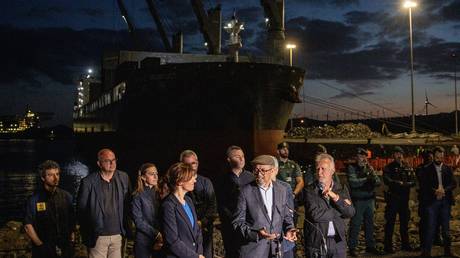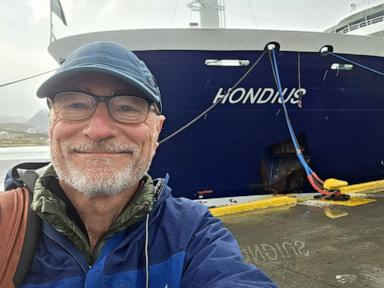
When a luxury cruise ship transforms into a floating isolation ward, the glossy brochures and midnight buffets vanish. They are replaced by a raw, clinical desperation that most travelers never expect to see. This is exactly what happened when an American oncologist, trained to battle cellular decay in state-of-the-art hospitals, suddenly found himself the primary medical authority on a vessel gripped by a suspected Hantavirus outbreak. While the cruise industry markets itself as a sanitized escape from reality, the incident reveals a terrifying gap in maritime safety protocols and the fragile nature of high-seas healthcare.
The core of the crisis rests on a single, uncomfortable truth. Most cruise ships are medically equipped to handle minor trauma, seasickness, or the occasional cardiac event, but they are fundamentally unprepared for a localized outbreak of a high-mortality respiratory virus. Hantavirus is not a common guest on the open ocean; it is typically associated with rodent droppings in rural, terrestrial settings. When symptoms began appearing among passengers and crew, the transition from leisure to life-support happened in hours, not days. Expanding on this topic, you can find more in: Operational Mechanics and Biohazard Risk Mitigation in Post-Quarantine Maritime Disembarkation.
The Illusion of Maritime Medical Security
The American oncologist involved did not ask for the job. He was a passenger, a man looking for a reprieve from the grueling cycles of chemotherapy and radiation he administered back home. However, when the ship’s own medical staff became overwhelmed and stretched thin by a cluster of rapidly deteriorating patients, the "Good Samaritan" clause of his conscience kicked in. He stepped into a makeshift infirmary that lacked the diagnostic tools necessary to differentiate between a standard flu and the far more lethal Hantavirus Pulmonary Syndrome (HPS).
HPS has a mortality rate of roughly 38 percent. It is a brutal, unforgiving disease. It begins with fatigue, fever, and muscle aches, but quickly shifts into a nightmare of fluid-filled lungs and shortness of breath. On land, a patient with these symptoms is rushed to an ICU and placed on a ventilator. At sea, you have a limited supply of oxygen and a doctor who might be more accustomed to treating sunburns than acute respiratory distress. Observers at WebMD have shared their thoughts on this matter.
The oncologist discovered a system built on the assumption of proximity. The assumption is that the ship is always close enough to a port to medevac the truly ill. When weather, distance, or port authorities—fearing a quarantine—block that path, the ship becomes an island. The oncologist had to prioritize care using nothing but a stethoscope and raw clinical intuition.
Why Hantavirus on a Cruise Ship Defies Logic
Public health officials were baffled by the initial reports. Hantavirus is almost exclusively transmitted through the inhalation of aerosolized urine, droppings, or saliva from infected rodents. It does not spread person-to-person. This fact created a secondary wave of panic. If the virus was on the ship, it meant the ship had a significant, hidden infestation, or the point of entry was a contaminated supply shipment that had been distributed throughout the galley.
Investigation into the ventilation systems and dry-storage lockers became the priority. While the oncologist was busy trying to keep lungs from collapsing, the ship’s engineers were hunting for nests. This duality of crisis management—the clinical and the mechanical—is rarely discussed in cruise line earnings calls.
The Mechanics of Infection at Sea
- Aerosolization: Modern HVAC systems on ships are designed for comfort, not bio-containment. If a rodent dies in a duct, the fans can spray viral particles across multiple decks.
- Vector Entry: Port facilities in developing regions often lack the stringent pest control measures found in major hubs. A single pallet of grain or linens can carry the stowaways that trigger a shutdown.
- Delayed Response: Because Hantavirus has an incubation period of one to five weeks, passengers might not show symptoms until they are halfway through a trans-oceanic crossing.
The oncologist noted that the ship’s medical records were archaic. There was no real-time data sharing with the CDC or international health bodies during the first 48 hours of the cluster. He found himself acting as a bridge between the ship’s captain, who was concerned about the company’s liability and the schedule, and the terrified families of the sick. It was a collision of corporate interests and Hippocratic duty.
The Failure of Standard Operating Procedures
Standard operating procedures (SOPs) for cruise ships usually focus on Norovirus. We have all seen the hand sanitizer stations and the "wash your hands" signs. Norovirus is a nuisance; it ruins a vacation. Hantavirus kills. The SOPs for a Level 4 pathogen are essentially non-existent for the commercial cruise industry.
When the oncologist asked for specific antiviral medications or high-grade filtration masks, he was met with blank stares. The infirmary was stocked for the likely, not the catastrophic. This raises a massive red flag for the millions of people who board these vessels every year. You are betting your life on the hope that the person in the cabin next to you didn't bring something back from a shore excursion in a high-risk zone.
The oncologist’s intervention was the only reason several passengers survived the transit to a mainland hospital. He implemented a makeshift triage system that focused on aggressive fluid management and early oxygen intervention, even when the ship’s official protocols suggested a "wait and see" approach. He ignored the corporate chain of command to save the people in the beds.
Corporate Liability Versus Public Safety
Following the event, the cruise line's primary focus shifted from health to optics. There is a reason you haven't seen this story plastered across every major news network with the ship's name in the headline. Non-disclosure agreements and quiet settlements are the industry standard. The oncologist himself faced significant pressure to downplay the severity of what he witnessed.
He described a scene where the crew was instructed to deep-clean public areas with standard bleach solutions while the real source of the problem—the internal guts of the ship—remained untouched for days. This "hygiene theater" is designed to soothe passengers, but it does nothing to stop a viral pathogen that has already found its way into the lungs of the vulnerable.
The investigative reality is that cruise ships operate in a jurisdictional gray area. They fly flags of convenience from countries like the Bahamas or Panama to avoid stringent US labor and safety laws. When a medical crisis occurs, they are often judge, jury, and executioner regarding how much information is released.
The Logistics of a Floating ICU
To understand the scale of the failure, one must look at the equipment. A modern ICU requires blood gas analyzers, portable X-ray machines, and a constant supply of electricity that cannot flicker. During the height of the Hantavirus scare, the oncologist had to deal with equipment that hadn't been calibrated in months. He was forced to use manual blood pressure cuffs because the digital monitors were giving erratic readings due to the ship’s vibration.
He spent thirty-six hours straight in the infirmary. He watched as a previously healthy forty-year-old man turned blue because the ship's suction machine was clogged and there were no replacement parts. This isn't just a story about a virus; it is a story about the systematic underfunding of maritime medical facilities. The revenue goes to the casinos and the water slides, not the ventilators.
Crucial Deficiencies Identified
- Staffing Ratios: One or two doctors for 3,000 passengers is an impossible ratio during an outbreak.
- Diagnostic Limitations: The inability to run a simple PCR test on-board means the medical team is flying blind for days.
- Pharmacy Stock: Ships carry an abundance of sea-sickness meds and painkillers but almost no specialty antivirals or advanced cardiac drugs.
The oncologist’s testimony serves as a warning. He argues that any ship carrying more than a thousand passengers should be required to have a board-certified emergency medicine physician on staff, not just a general practitioner with a few years of experience. He also advocates for mandatory viral screening capabilities that can identify high-risk pathogens within an hour.
The Human Cost of Negligence
Beyond the clinical data and the corporate maneuvering, there is the human element. The oncologist spoke of the silence in the infirmary. It wasn't the silence of a hospital; it was the heavy, salt-aired silence of a ship that felt like a tomb. Passengers who were unaware of the crisis were dancing on the decks above, while beneath their feet, people were fighting for every breath.
The disconnect is jarring. The oncologist recalled looking out a porthole at a sunset while holding the hand of a woman whose husband was likely going to die before they reached port. The cruise line’s "fun ship" atmosphere felt like a sick joke in that context.
There is a psychological toll on the medical professionals who find themselves in these situations. They are stripped of the resources they have spent decades learning to use. They are reduced to the medicine of the 19th century, watching helplessly as preventable deaths occur because of a lack of a five-dollar piece of plastic or a specific gallon of disinfectant.
Necessary Shifts in the Maritime Industry
The industry cannot continue to rely on the luck of having a specialist passenger on board when things go wrong. If a ship can afford a three-story theater and a fleet of jet skis, it can afford a properly equipped medical suite. The incident with the oncologist wasn't a fluke; it was a proof of concept for a disaster.
Regulatory bodies need to move past the "recommendation" phase. We need mandatory international standards for shipboard viral containment. This includes integrated HEPA filtration in all cabins and mandatory reporting of any "influenza-like illness" clusters to international authorities within twelve hours.
The oncologist has since returned to his practice, but he no longer takes cruises. He knows too much about what lies behind the bulkhead. He knows that the "all-inclusive" price of a ticket doesn't include a guarantee of modern medical care if a rare virus decides to board at the next port.
The next time a cluster of symptoms appears on a ship in the middle of the Atlantic, there might not be a veteran oncologist in cabin 402. The ship will be on its own, and the passengers will realize too late that the most expensive suite on the ship is worthless if the infirmary is out of oxygen. This isn't a hypothetical risk. It is a mathematical certainty in an age of global travel and evolving pathogens.
Pack a high-quality N95 mask in your luggage. It might be the only piece of medical equipment on the ship that actually works.