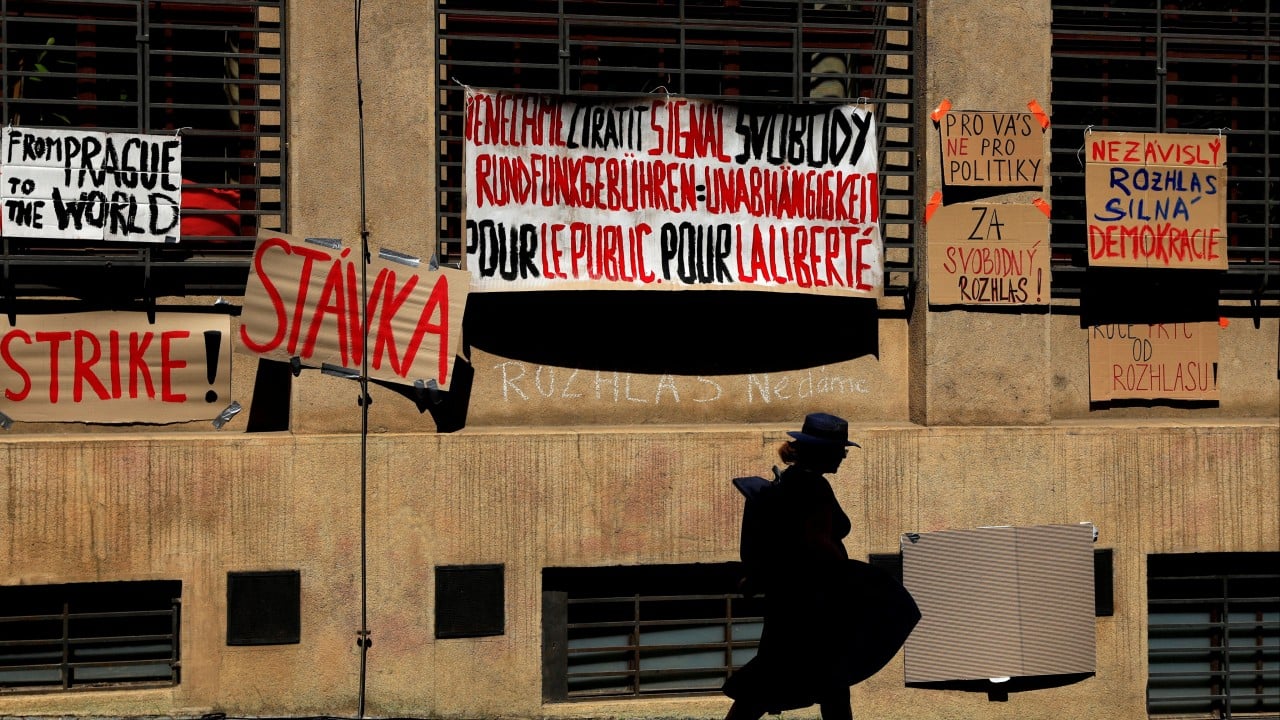
Czech lawmakers just handed the prime minister's office a massive lever over public broadcasting, and the fallout is already reshaping Central European politics. When a populist Czech government pushes through media funding changes, it rarely stops at simple bookkeeping. It hits the core of how citizens get their news.
If you've followed media policy in Prague over the last few years, you know this fight has been brewing for a long time. For decades, Czech Television (Česká televize) and Czech Radio (Český rozhlas) relied on mandatory household license fees to pay their bills. That model wasn't glamorous, and plenty of people grumbled about paying a monthly fee just for owning a TV or a smartphone. Yet it created a vital buffer between the newsroom and the ruling coalition.
Now, that buffer is vanishing. By replacing direct household license fees with allocations from the state budget, the government has effectively turned independent public broadcasters into line items that politicians can haggle over every single autumn.
Why Shifting to State Budget Funding Changes Everything
On paper, scrapping the television and radio fee sounds like a populist win for regular families. Nobody likes paying an extra bill every month, especially when inflation has already squeezed household budgets across the Czech Republic. Politicians championing the reform framed it as common-sense tax relief for working people and seniors.
They're leaving out the catch.
When a public broadcaster gets its money directly from millions of individual households, no single politician can threaten to turn off the tap. Sure, parliament still sets the fee rate, which led to years of political stalling where inflation ate away at the broadcasters' real purchasing power. Even so, the cash flowed straight to the institutions without passing through the Ministry of Finance.
Moving that money into the general state budget changes the power dynamic overnight. Suddenly, the directors of Czech Television and Czech Radio have to negotiate their survival with the very cabinet ministers their investigative reporters are supposed to hold accountable. You don't need an explicit censorship law to soften critical coverage. All it takes is a subtle hint during budget season that next year's allocation might shrink if certain investigative programs keep asking uncomfortable questions.
I've watched this exact playbook unfold across Central Europe over the past fifteen years, and the pattern is always the same. First comes the financial squeeze disguised as administrative efficiency or consumer relief. Then comes the quiet self-censorship inside newsrooms where editors start weighing the cost of running a hard-hitting story against the risk of losing funding for an entire documentary department.
How the Czech Model Compares to Its Neighbors
You don't have to guess where this road leads because we have real-world examples right next door. Look at Hungary under Viktor Orbán or Slovakia under Robert Fico's coalition.
In Hungary, the consolidation of public media funding under a centralized state body turned what used to be a pluralistic broadcasting sector into a dependable megaphone for the ruling Fidesz party. Independent journalists didn't disappear overnight; they were simply starved of resources, pushed out through restructuring, and replaced by loyalists who understood who signed the checks.
Slovakia followed a eerily similar script more recently. Lawmakers there dismantled the existing public broadcaster RTVS and replaced it with a new entity, STVR, tightening state control over both leadership appointments and financial oversight. The European Broadcasting Union and media watchdogs like Reporters Without Borders raised alarms immediately, warning that direct state financing strips away institutional autonomy.
The Czech Republic has long stood out as the regional exception. Despite fierce verbal attacks on Czech Television from populist leaders over the years—including repeated accusations of bias during election cycles—the country's media institutions held firm. Strong legal protections, combined with that independent fee structure, kept Prague from sliding down the same path as Budapest or Bratislava.
That's why this legislative push matters so much. It breaks the firewall that kept Czech public media resilient even during periods of intense political polarization.
The Real Math Behind Public Media Independence
Let's look at the actual numbers, because politicians love throwing around vague claims about bloated public broadcasters.
Before the latest overhaul, the Czech television fee sat at 135 CZK per month, while the radio fee was 45 CZK. Those rates hadn't changed since 2008 and 2005, respectively. Think about what happened to prices in the Czech Republic between 2008 and the mid-2020s. Everything from studio equipment and electricity to journalist salaries doubled or tripled, while the broadcasters' primary revenue stream stayed frozen in time.
Instead of indexing those fees to inflation—a boring, technical fix that would have preserved independence—the government opted to abolish the fee system altogether and fold financing into the state treasury. Proponents argued that collecting fees from millions of households was administratively wasteful and outdated in an era of streaming platforms and smartphones.
There's a grain of truth in the collection argument. Enforcement was clunky, and younger Czechs who never watched traditional linear TV resented paying for a service they didn't consume. Earlier attempts to modernize the system by expanding the fee to cover anyone with an internet connection sparked fierce pushback from opposition lawmakers and telecom companies alike.
Still, fixing a clunky collection mechanism doesn't require handing the purse strings to the prime minister's cabinet. Countries like Germany and Finland redesigned their public media levies to make them fairer and easier to collect without routing the money through annual parliamentary budget votes. Prague had options. It chose the one that maximizes political leverage.
What Critics and Defenders Are Saying Behind Closed Doors
If you talk to media law experts in Prague, you'll hear a mix of frustration and dark humor about how quickly the narrative shifted. For years, the debate centered on whether Czech Television was too big, too Prague-centric, or too critical of certain political movements.
Supporters of the funding change insist that state budget allocations actually stabilize public media. Their argument goes like this: instead of chasing down households that refuse to pay, broadcasters get a guaranteed percentage of GDP or a fixed statutory transfer, freeing them up to focus on programming. They also point out that other European nations fund public broadcasting out of general taxation without descending into authoritarianism.
That argument sounds reasonable until you examine the institutional safeguards—or lack thereof—built into the Czech reform. In countries where tax-funded public media works well, multi-year funding commitments are locked in by supermajority laws, and independent commissions set the budget levels far outside the reach of sitting ministers.
In the Czech Republic, political polarization makes long-term consensus almost impossible. What one coalition promises as a "guaranteed" budget formula can be rewritten by the next parliament with a simple majority. Worse yet, critics point out that combining budget control with changes to how broadcasting councils are elected creates a double vulnerability. If politicians control both who sits on the oversight board and how much money reaches the bank account, editorial independence exists only on paper.
Even commercial media outlets in the Czech Republic are watching nervously. While private broadcasters sometimes complain that public television competes unfairly for viewers and advertising, most serious publishers recognize that a weakened, state-dependent public broadcaster distorts the entire market. When public media loses credibility, public trust in journalism drops across the board, hurting private newsrooms too.
Common Misconceptions About the Czech Media Overhaul
A lot of commentary around this story gets bogged down in partisan talking points, so it helps to clear up a few things people routinely get wrong.
First, this isn't about shutting down Czech Television or Czech Radio. The channels will keep broadcasting, the evening news will still air at 7:00 PM, and popular crime dramas or sports coverage won't vanish tomorrow. Populist governments rarely destroy public institutions outright; they hollow them out from the inside while keeping the familiar brand intact so viewers barely notice the shift in tone.
Second, private oligarch-owned media won't fill the gap if public journalism is compromised. The Czech media market is already heavily concentrated in the hands of a few wealthy domestic business groups, including Agrofert's former holdings and other industrial conglomerates. Independent investigative outlets like Deník N, Seznam Zprávy, and Respekt do vital work, yet none of them have the nationwide reach of public television and radio, particularly in smaller towns and rural regions where local newspapers have largely disappeared.
Third, European Union rules won't automatically reverse this decision. The European Media Freedom Act (EMFA), which came into force across the EU to protect editorial independence and require transparent, adequate funding for public service media, sets clear standards. However, Brussels moves slowly. Infringement procedures take years, and by the time the European Court of Justice issues a ruling, the damage to a newsroom's culture and leadership is usually irreversible.
How Journalists and Audiences Can Respond Right Now
Watching a major democratic guardrail weaken is frustrating, especially when the changes happen through dry legislative amendments rather than dramatic street protests. Still, neither newsrooms nor regular citizens are powerless here.
If you're a journalist or editor working in Central Europe, the immediate priority is diversifying where and how investigative reporting gets published. Cross-border collaborations with networks like the Organized Crime and Corruption Reporting Project (OCCRP) or regional investigative hubs make it much harder for domestic politicians to bury a story by pressuring a single newsroom. When a major investigation publishes simultaneously in Prague, Vienna, and Berlin, local budget threats lose their sting.
For everyday readers and viewers in the Czech Republic, the best defense against state-captured media is putting your money directly behind independent journalism. Subscriptions to reader-funded outlets—whether that's Deník N, Voxpot, or independent investigative podcasts—create a revenue model that no finance minister can touch. Even a small monthly contribution keeps independent reporters in the field when public institutions are forced to play it safe.
Pay close attention to who gets appointed to the Czech Television and Czech Radio councils over the coming months, and track whether investigative programs quietly lose prime-time slots or production budgets during the next fiscal cycle. Those boring administrative details will tell you far more about the health of Czech democracy than any speech on the floor of parliament.