Saltwater does not care about borders. It does not read decrees, nor does it check passports before filling the lungs of those who tumble into its depths.
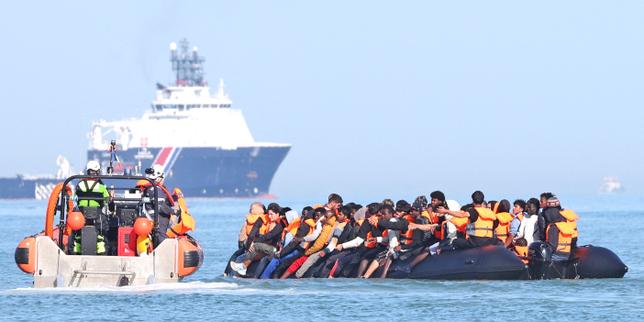
It is pitch black at two in the morning off the coast of northern France. The air smells of diesel, salt, and raw, trembling fear. If you have never stood on a rubber dinghy straining against the weight of fifty desperate souls while the freezing spray of the English Channel whips across your face, you can only imagine the cold. But imagination is a coward’s tool. It doesn't bite your skin. It doesn't make your teeth chatter until your jaw aches.
Nearly one hundred and sixty.
That is the dry, administrative tally pushed out by the prefecture after another frantic night of sirens and rescue lights. One hundred and sixty human beings pulled from the grip of the sea in a single sweep. Numbers are neat. Numbers fit nicely into morning news briefings and official press releases. They allow politicians to argue percentages in air-conditioned rooms while the salt crusts on the boots of the coast guard.
Step closer. Strip away the bureaucratic geometry of the statistic.
Imagine a mother holding a toddler wrapped in three layers of damp cotton, praying that the rhythmic thrum of a failing outboard motor holds out for just a few more miles. Imagine the math they must do in their heads. Behind them lies a life of impossible constriction, of fractured economies, of roads that led only to dead ends. Ahead of them lies the grey line of the horizon, hiding a country that does not want them, guarded by grey water that wants to swallow them whole.
This is not a political debate from where the water laps against the cheap plastic hull. This is physics and desperation.
The Anatomy of a Crossing
Why do they keep coming?
It is the question hurled by pundits from safe shorelines. To understand the pull of the Channel, one must understand what is pushing from behind. These are not tourists seeking an adventure or opportunists looking for a softer bed. They are the survivors of systemic fractures. They are accountants, teachers, farmers, and students whose worlds caught fire.
Consider the vessel itself. These are not sturdy fishing vessels capable of weathering the world's busiest shipping lane. They are overloaded inflatable rafts, sold at exorbitant prices by ruthless operators who treat human life as disposable inventory. The tubes bulge dangerously under too much weight. The floors are flimsy plywood that flexes with every wave.
When the French gendarmerie or British border cutters finally intercept these vessels, the relief is rarely clean. It is complicated. For the passengers, interception means the end of a harrowing gamble, but it also means detention, uncertainty, and the crushing realization that their money—borrowed, begged, or stolen to pay for the crossing—has vanished into the pockets of smugglers.
Yet, night after night, the boats go down to the water.
The sea remains indifferent. The currents shift constantly, driven by fierce winds and treacherous tides that can flip a heavy raft in seconds. Commercial container ships tower over these fragile crafts like floating skyscrapers, throwing wakes that can easily swamp a dinghy. To venture out here in the dark is an act of profound, terrifying agency. It is choosing the high-stakes gamble of drowning over the slow, certain suffocation of staying behind.
The Weight of the Rescuers
On the other side of the rescue equation are faces we rarely see in the headlines. The crew members of the rescue vessels.
They do not wear capes. They wear heavy thermal suits and flotation vests that smell of sweat and brine. They know these waters intimately. They know the exact temperature at which hypothermia stops being a medical condition and starts becoming a predator.
When a rescue boat pulls alongside an overloaded raft, the noise is deafening. Shouts in Arabic, Pashto, French, and English blend into a chaotic roar. Children are screaming. Adults are pleading for help, hands outstretched in the dark, desperate to grab anything stable.
One veteran rescue worker, speaking anonymously because policy forbids public commentary, once described the sound of pulling people from the water: "It is the sound of absolute exhaustion. When they grab your arm, they don't just hold on for safety. They transfer all their weight, all their years of running, right into your grip. You feel the gravity of their entire life in that single handshake."
These frontline workers live in the crossfire of a broken international conscience. They are humanitarian actors executing a maritime duty, caught between state policies designed to deter arrivals and the fundamental, ancient law of the sea that dictates you must save a drowning soul.
Beyond the Horizon
The 160 rescued souls from this latest operation will be processed, cataloged, fed, and sheltered temporarily. Their names will enter databases. Their fingerprints will be scanned. Their legal fates will be debated by courts and committees thousands of miles away from the cold spray of the Channel.
Some will be sent back. Some will find a crack in the fortress walls to build a new life, speaking a new language under a grey, unfamiliar sky.
The boats will be slashed and thrown into dumpsters. The smugglers will count their cash in hidden corners of Calais or Dunkirk, preparing the next batch of rafts for the next moonless night.
The water will smooth over where the drama happened. The container ships will keep moving. The statistics will be written, read, and forgotten by tomorrow afternoon.
Out on the dark water, the tide turns again. The wind whispers through the rigging of docked ships, waiting for the next quiet movement in the dark.

.png?itok=1mb05mKJ)

