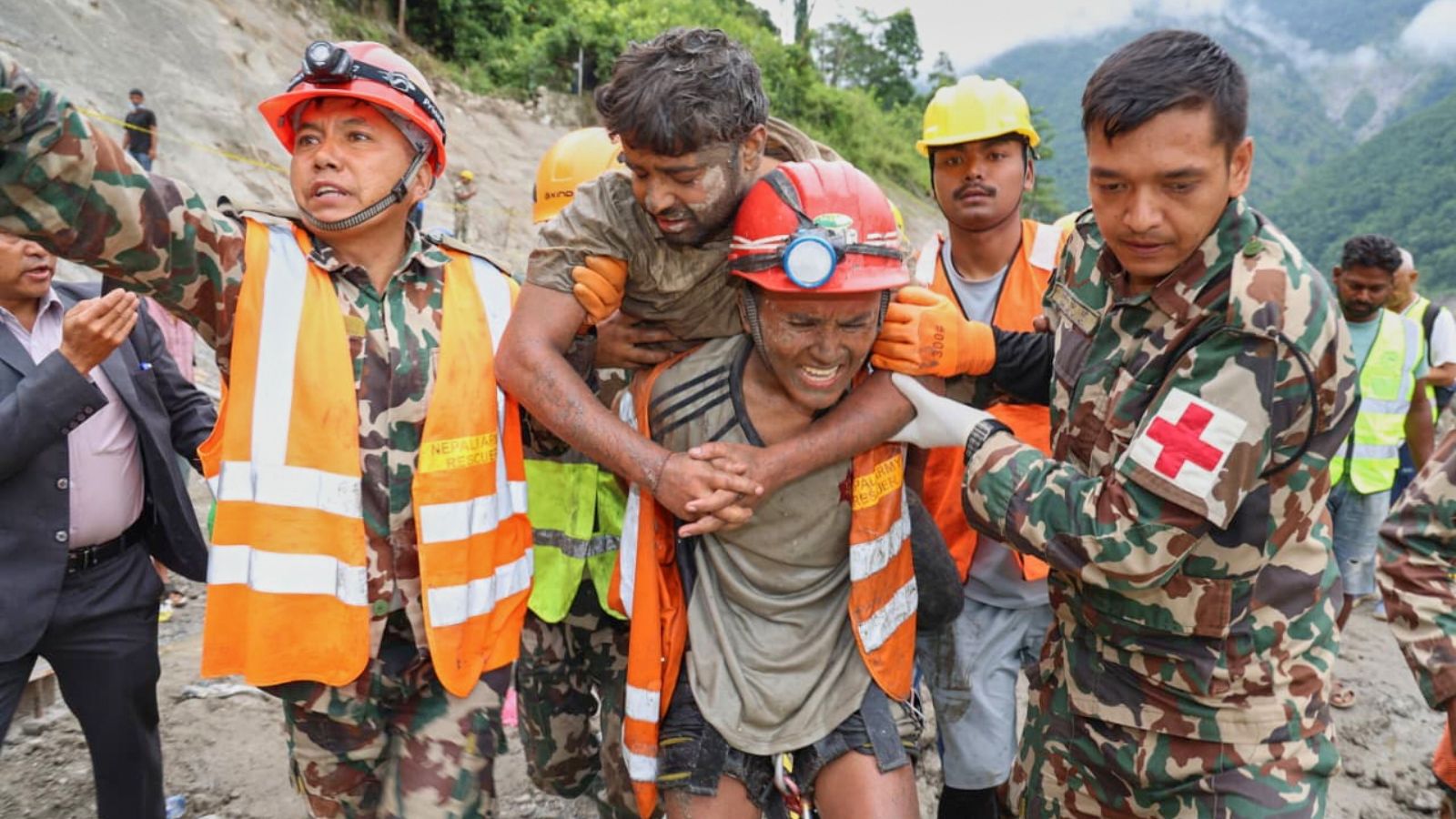
Two workers trapped inside the subterranean passages of the Trishuli 3A hydropower project in Nepal were pulled alive from the mud nine days after catastrophic flash floods tore through the river corridor.
Sanjay Shah and Kabir Maharjan survived at a depth of 170 meters underground, defying standard survival curves that typically mark the forty-eight-hour window as the absolute threshold for post-disaster extraction in confined spaces. Their recovery on a Friday morning shattered conventional wisdom regarding human endurance during subterranean entrapments. Yet, their extraction is merely a fragile bright spot against a wider canvas of administrative failure, ecological vulnerability, and thousands still missing following the August 26 disaster triggered by an apparent glacier collapse near the border.
The math of survival underground defies easy logic. When a wall of water, glacial silt, and debris races down a mountain valley, it does not simply flood a structure; it seals it like a vault. At the Trishuli site, millions of tons of slurry choked the tunnel portals, locking air pockets inside pockets of the expansive four-kilometer network.
The Anatomy of Subterranean Entrapment
Medical professionals and disaster response veterans often point to the critical window rule. Dehydration usually kills faster than starvation, but darkness brings an insidious psychological decay long before organ failure sets in. Disorientation begins within the first day. Sensory deprivation breaks down the mind's internal clock. Panic accelerates oxygen consumption, sealing a trapped worker's fate far quicker than a calm, measured conservation of breath.
Shah and Maharjan managed to endure two hundred and sixteen hours in total blackness. How they found breathable air pockets and managed their hydration remains a subject of medical curiosity, but their survival highlights a glaring vulnerability in high-altitude industrial expansion.
Hydropower development in the Himalayas has accelerated at a breakneck pace over the past two decades. Foreign investment, local energy demands, and rapid construction schedules have turned river valleys in Nepal and northern India into sprawling civil engineering zones.
Safety margins are calculated for normal seasonal variances, not for catastrophic glacial lake outburst floods. When the mountain lets go, subterranean infrastructure transforms into an airtight tomb.
The Logistics of Hope
Rescue operations at Trishuli 3A required brute force mixed with extreme delicacy. Specialist teams, aided by international experts, had to bore through densely packed mud and blast through structural obstructions without triggering secondary collapses that would crush any remaining pockets of life.
When rescuers finally heard human voices echoing through a drill hole, the mission shifted from recovery to extraction. Shouts of reassurance pierced the gloom, prompting answering responses from deep within the stone.
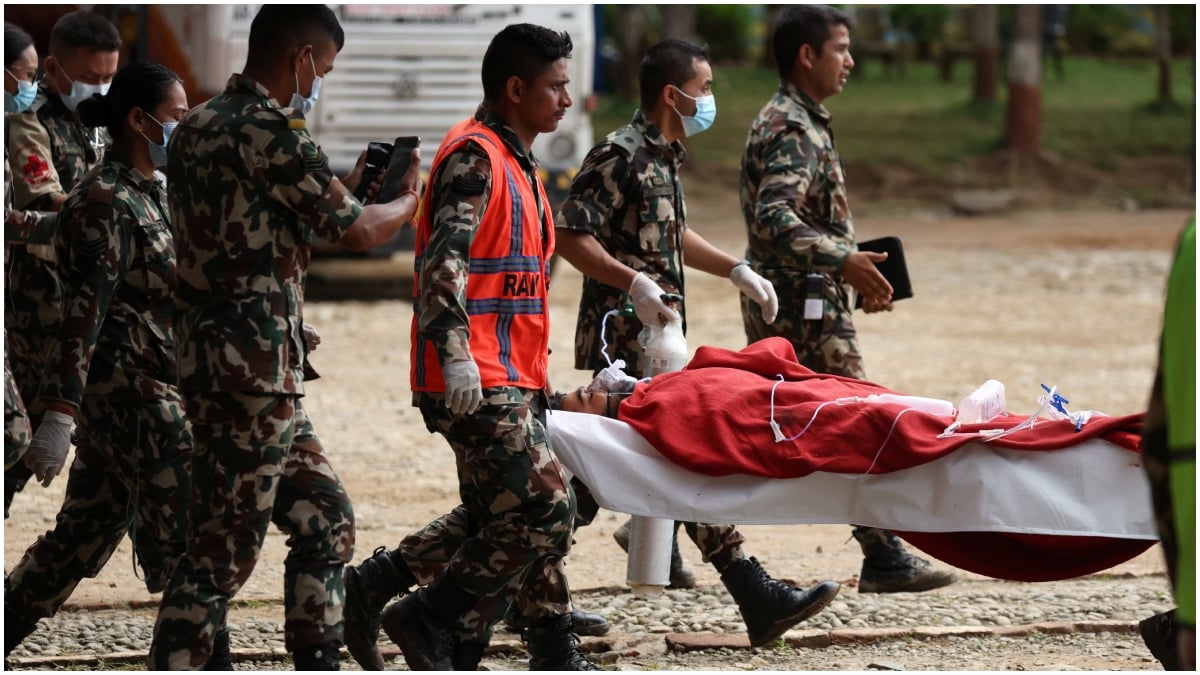
The physical toll on the survivors was absolute. Covered in thick gray silt, carried out on the shoulders of exhausted soldiers, Shah and Maharjan were immediately prepped for emergency transport to Kathmandu. Their accounts, once they are well enough to speak fully, will provide critical data for disaster management agencies trying to locate the roughly five hundred workers still believed to be trapped across multiple hydropower tunnels in the region.
The Broader Reckoning
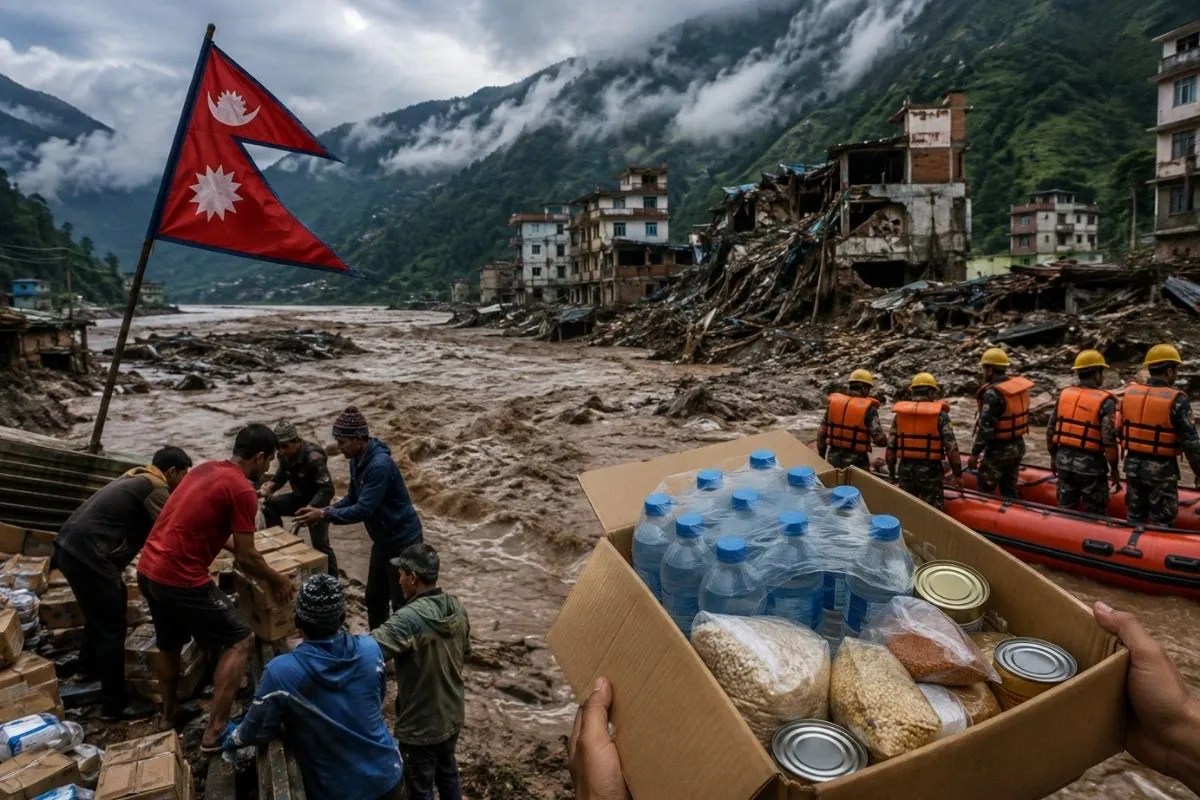
The broader crisis extends far beyond a single tunnel project. Official figures place the death toll past twelve hundred, with thousands more unaccounted for. Entire communities have been erased from riverbanks, and multiple major hydropower installations have suffered structural devastation.
Critics of regional development policies point out that warning systems remain rudimentary. Glacier-fed river basins are warming at unprecedented rates, increasing the frequency of ice-rock avalanches. Building multi-megawatt stations without advanced, automated early-warning telemetry directly ties economic ambition to preventable mass casualties.
The successful extraction of two men proves that miracles occur in the rubble. But reliance on miracles is a poor substitute for rigorous engineering standards. As heavy machinery continues to clear the remaining blocked portals along the Trishuli corridor, the families waiting at the barricades are not looking for poetry. They are waiting for answers, for accountability, and for bodies to bury if the mountain refuses to give back anyone else.