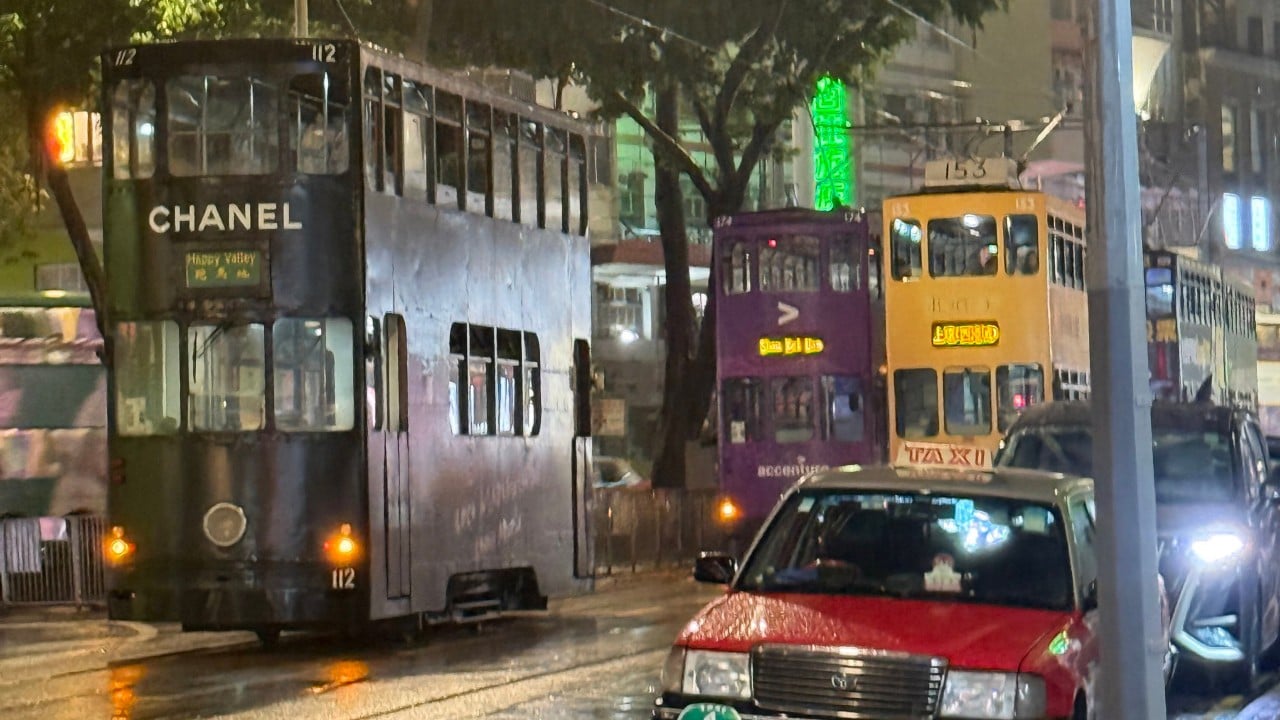
The rhythm of Hong Kong is defined by iron and electricity. Beneath the humid neon glare of Wan Chai and the towering corporate monoliths of Admiralty, life moves on tracks. For over a century, the double-decker trams have provided the steady, metallic pulse of the city—a comforting, low-frequency hum of wheels gripping grooved rails, carrying exhausted office workers, chatty school children, and daydreaming tourists through the dense urban canyons.
Then, the power died.
It happened without warning. One moment, the electric green-and-white carriages were gliding down Des Voeux Road East, their bells clanging a cheerful warning to distracted pedestrians. The next, the overhead catenary wires went cold. The motors hummed down to an abrupt, breathless silence. Inside the cabin, the fluorescent lights flickered once, gasped, and plunged into darkness.
For the passengers, a strange suspension of time began.
Consider the hypothetical commuter, let us call him Raymond, standing shoulder-to-shoulder on the lower deck. He is clutching a lukewarm paper cup of milk tea, his mind already racing toward a morning presentation in Admiralty. When the tram jolts to a sudden, uncharacteristic halt, a collective murmur ripples through the carriage. People check their watches. They sigh. They assume it is a minor delay—a stalled delivery van blocking the tracks, or a momentary blip in the city's notoriously hyper-efficient grid.
Minutes bleed into half an hour. The tropical heat inside the stalled metal box begins to press down like a physical weight. The air-conditioning units wind down, leaving behind a thick, humid stillness. Outside, the world does not stop for the stranded trams. Taxis honk furiously, buses belch diesel fumes while squeezing around the immobilized rail cars, and thousands of pedestrians stream past on the narrow sidewalks, their umbrellas bobbing like a sea of colorful beetles under the grey sky.
A power failure on the tramway is never just an electrical glitch. It is a fracture in the city's nervous system.
The root cause, as transit authorities later confirmed, was a localized power supply failure disrupting the high-voltage distribution feeding the tracks between Wan Chai and Admiralty. To the engineers huddled over schematics in control rooms, it was a technical puzzle of substations, circuit breakers, and load balancing. To the thousands caught in the midday rush, it was a sudden, jarring reminder of how fragile our engineered dependencies truly are. We build monolithic cities that scrape the clouds, powered by invisible currents racing through copper and air, and we stake our entire daily existence on the assumption that the current will never, ever stop.
When it does stop, the illusion of seamless modernity shatters.
Walking the stretch between Wan Chai and Admiralty during the outage revealed a fascinating shift in urban behavior. Without the trams to swallow up the crowds, the pavements instantly overwhelmed capacity. People spilled off curbs into the bus lanes. Office workers in crisp linen suits and high heels found themselves marching side-by-side with wet market vendors and backpackers, all united by a single, burning question: How do I get to where I need to be?
There is a distinct kind of vulnerability that comes with being stranded in a metropolis. You are surrounded by millions of people, yet entirely isolated by your inability to move. The MTR underground stations swallowed the overflow like hungry dragons, turning turnstiles into bottlenecks of frustration. Buses surged past already crammed to capacity, their drivers offering apologetic shrugs to the long, despairing queues forming at every stop.
Yet, amid the friction, small acts of human resilience emerged. A shopkeeper rolled open his metal gates and began handing out small plastic cups of water to strangers stranded outside his storefront. A group of young students figured out an alternative walking route through the labyrinthine elevated pedestrian walkways, beckoning confused commuters to follow them. In micro-doses, the community patched the hole that the power failure had ripped through their afternoon.
By the time engineers isolated the fault, rerouted the load, and coaxed the overhead wires back to life, the sun had begun its slow descent toward Victoria Harbour. The first test tram rolled down the line at a cautious crawl, its bell ringing softly—a tentative heartbeat returning to a paralyzed limb. A cheer went up from the tired crowd gathered on the platform.
We romanticize our cities as indestructible, eternal machines of glass and steel. But the tram lines of Hong Kong remind us that they are actually living, breathing organisms, sustained by a delicate, invisible web of energy and human trust. When the power fails, the machines fall silent. But the people remain, stepping out into the sudden quiet, waiting for the spark to return.