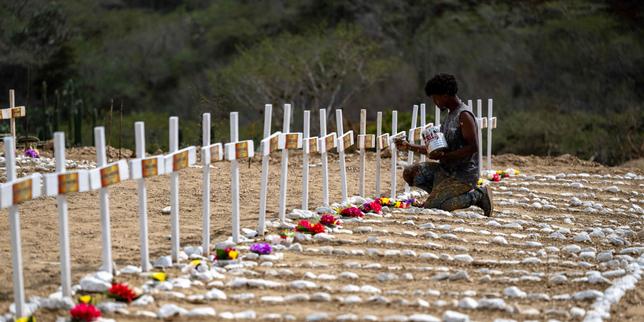
The international media is running its standard post-disaster playbook on the recent Venezuela earthquake. The headlines are predictably obsessed with a singular, escalating metric: the death toll. 3,300 dead. Mass graves. Unidentified bodies. Journalists drop these numbers into their copy to shock the conscience, wrap a neat narrative arc around human tragedy, and then move on to the next breaking news cycle.
They are measuring the wrong thing.
By focusing almost exclusively on the body count and the immediate, visceral horror of unidentified casualties, the mainstream press is masking the structural rot that makes these events fatal in the first place. A rising death toll in a major seismic event isn't just an act of God. It is an indictment of failed infrastructure, corrupted logistics, and an international aid apparatus that operates on reactive sympathy rather than proactive engineering.
Stop looking at the body count as an isolated tragedy. Start looking at it as a lagging indicator of systemic collapse.
The Body Count Fixation Misleads Public Policy
When a major earthquake strikes, the immediate media consensus defaults to a simple equation: bigger Richter scale number equals more inevitable deaths. This lazy framing implies that nature is the sole culprit. It excuses the human decisions that turned a natural hazard into a catastrophic slaughter.
Consider the reality of seismic engineering. A magnitude 7.0 earthquake hitting a region with strictly enforced, modern building codes—think Tokyo or Los Angeles—results in disrupted commutes, shattered windows, and highly contained casualties. The same magnitude hitting an area with unreinforced masonry, lack of concrete code enforcement, and dense, informal settlements results in thousands of deaths.
The 3,300 deaths in Venezuela are not an inevitable consequence of tectonic movement. They are the direct result of a built environment that was effectively a trap. For decades, urban planning in vulnerable zones has been ignored in favor of short-term political expediency. When the ground shook, the buildings did exactly what poorly mixed concrete and unengineered rebar always do: they pancaked.
Crying over the rising numbers without dissecting the construction supply chain and municipal corruption that allowed those buildings to exist is a form of journalistic malpractice. It treats the symptom while ignoring the terminal illness.
The Identity Crisis in Mass Graves is a Supply Chain Failure
The reports highlight the horror of dozens of bodies being buried without identification. The narrative implies this is a tragic, unavoidable consequence of overwhelming chaos.
That is a myth.
Having spent years analyzing crisis logistics and tracking resource allocation in high-stress zones, I can tell you that a failure to identify bodies is rarely a resource problem; it is a protocol and distribution problem. In the immediate aftermath of a disaster, international donors flood the zone with highly visible, media-friendly aid: blankets, bottled water, and generic medical kits.
What they fail to deploy are the unglamorous, highly technical necessities: forensic pathologists, mobile DNA sequencing units, refrigeration infrastructure, and localized biometric tracking systems.
Imagine a scenario where a multi-million-dollar aid package arrives at an airport, consisting entirely of food rations that expire in a month, while the local morgues have zero power and no body bags. The local authorities are forced into rapid, anonymous burials not because they lack respect for the dead, but because the lack of cold-chain logistics creates an immediate, secondary public health hazard.
We are told that mass unidentified burials are a symptom of a massive tragedy. In truth, they are a symptom of an aid industry that prioritizes what looks good on a donation banner over what is actually required on the ground.
The Dangerous Myth of the Immediate Recovery Phase
The standard news cycle suggests that once the body count stabilizes and the rubble is cleared, the crisis moves into "recovery." This is where the media packs up its cameras and leaves.
This is precisely where the real devastation accelerates.
The destruction of physical infrastructure triggers a cascading economic failure that kills far more people over the subsequent decade than the initial seismic shock. When a country already teetering on economic instability loses its central logistics hubs, the supply lines for basic necessities—insulin, clean water, electricity for hospital ventilators—are severed.
Data from historical seismic disasters in compromised economies shows a sharp, protracted spike in excess mortality rates for years following the event. People die of preventable infections. They die because the regional water treatment plant collapsed and cannot be rebuilt due to international sanctions or bureaucratic gridlock. They die because the local economy has been thoroughly decapitated.
Yet, because these deaths happen quietly, one by one, in ruined clinics and makeshift tents over a period of months, they don't make the ticker at the bottom of the television screen. They don't fit into the 3,300 dead narrative.
Redefining Disaster Response Actionable Steps Over Empty Sympathy
If we want to stop writing these post-mortem articles every time the earth moves, the entire approach to international aid and reporting must be forcefully upended.
- Condition Aid on Infrastructure Reform: International funding shouldn't just pour in unconditionally post-disaster to rebuild the exact same substandard housing blocks. Funding must be strictly tied to the enforcement of seismic building codes, monitored by independent third parties rather than local state actors.
- Prioritize Logistical Infrastructure Over Direct Goods: Stop sending generic supply drops. Fund the deployment of rapidly deployable, modular infrastructure—independent power grids, water purification units, and forensic logistics—that keep local systems functioning during the critical first 72 hours.
- Track Long-Term Excess Mortality: Media organizations and NGOs need to stop using the immediate death toll as the definitive metric of a disaster's severity. Start publishing the rolling 24-month excess mortality data to expose the true cost of structural collapse.
The downside to this approach is that it requires a cold, analytical look at a highly emotional situation. It requires admitting that some international aid efforts are actively counterproductive, serving as a sticking plaster on a severed artery. It requires confronting local political regimes about their internal failures during a moment of national mourning. It is uncomfortable, confrontational, and entirely necessary.
As long as we treat a rising death toll as a tragic statistic to be pitied rather than a structural failure to be investigated, we are merely waiting for the next inevitable headline. Stop mourning the numbers. Fix the concrete.