The coffee was still warm on the desk when the video dropped.
On screen, a prominent public official stood at a podium, eyes wide with panic, announcing an immediate, catastrophic devaluation of the national currency. Markets seized. Citizens panicked. Phones buzzed relentlessly with frantic texts. There was only one problem. The official was actually at home eating breakfast, completely unaware that a hyper-realistic digital ghost wearing his face had just hijacked reality.
We used to say seeing is believing. That sentence is dead.
India is currently drafting a new legislative shield to confront what officials accurately term weapons of mass distortion. Synthetic media, engineered by neural networks that feed on human vulnerability, has evolved past awkward glitches and pixelated artifacts. It looks real. It sounds real. It carries the exact cadence of a trusted voice. When anyone with a laptop can manufacture a crisis, truth becomes a perishable commodity.
Consider what happens next when the baseline of shared reality fractures.
The Anatomy of a Phantom
Years ago, digital trickery required expensive studios, skilled animators, and hours of painstaking rendering. Today, it takes seconds. Open-source models consume hours of public interview footage, learning the microscopic twitch of an eyebrow, the specific rasp in a throat, the exact pitch of a laugh.
Then comes the synthesis.
Imagine a hypothetical software engineer sitting in a quiet apartment in Bengaluru, watching a machine assemble a synthetic video of a corporate executive confessing to fraud. The engineer didn't write a malicious script from scratch; they simply prompted a neural network. The resulting clip circulates on encrypted messaging apps within minutes. By the time forensics teams prove the lighting is mathematically impossible and the audio frequencies betray machine origins, the stock price has cratered, and the executive's career is ash.
This is not science fiction. It is the daily operational reality of modern communication networks.
Governments are scrambling because the traditional machinery of law enforcement was built for physical crimes. You can arrest the person who pickpockets a wallet. How do you cuff an algorithm distributed across decentralized nodes, hosted on foreign servers, and designed to disappear into the noise of the internet?
India’s proposed legal framework attempts to answer this by targeting the supply chain of deception. Proposals point toward strict platform accountability, mandatory watermarking standards, and severe penalties for creators who weaponize synthetic media to manipulate elections, defame individuals, or spark civil unrest. The state recognizes a simple truth: if a society cannot trust the audiovisual record of its own existence, democratic institutions cannot function.
The Cost of Chronic Doubt
Doubt spreads faster than a virus.
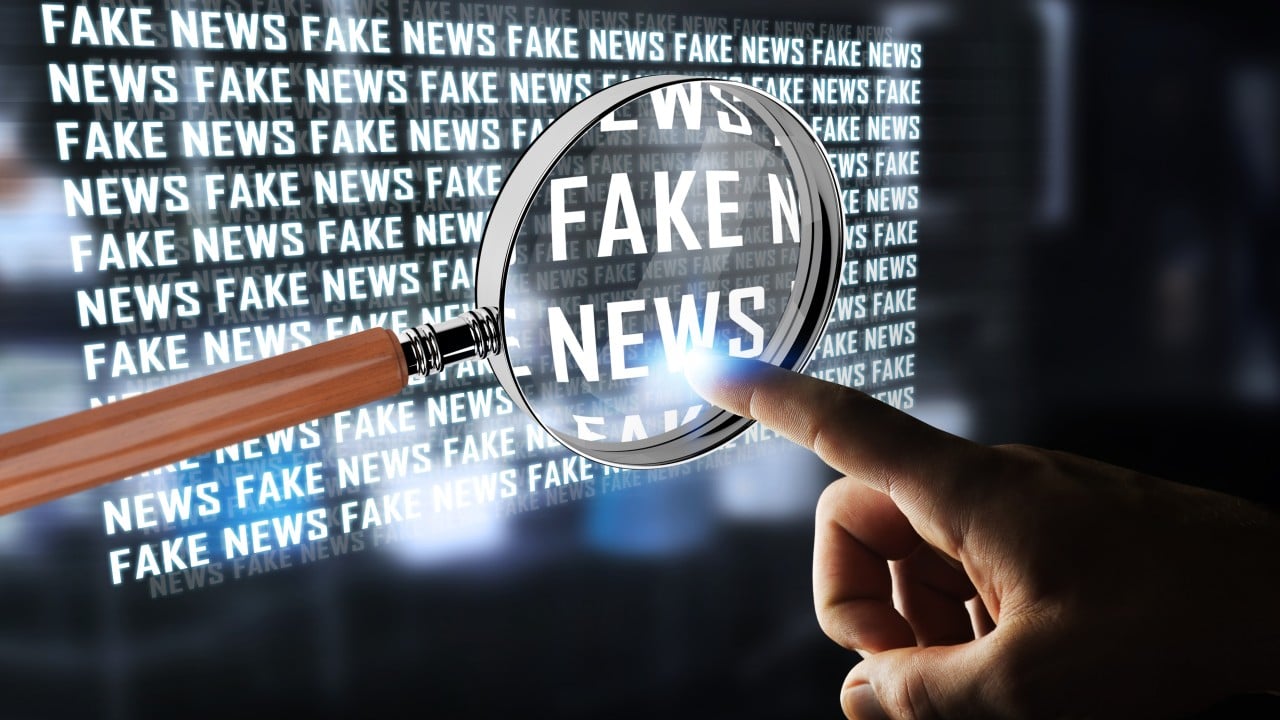
When every politician caught on tape can plausibly claim "that was a deepfake," accountability evaporates. Corruption thrives in the fog of plausible deniability. Conversely, when real wrongdoings are exposed, perpetrators can simply dismiss genuine evidence as synthetic fabrication. This phenomenon, known as the liar's dividend, turns truth into a weapon for whoever shouts the loudest.
We feel this exhaustion in our bones. Every time a shocking news clip surfaces, a cold knot forms in the stomach. Is it real? Is it a cheap trick? Is the person on the screen even alive?
The psychological toll is staggering. We are retreating into echo chambers, trusting only our immediate circles because the wider world has become a hall of mirrors. Trust, once broken, requires generations to rebuild. Technology moved fast and broke things, leaving us to sweep up the shards of our shared perception.
Outrunning the Mirror
Legislation alone cannot code integrity back into the digital ecosystem.
Laws provide the perimeter fence, but the battle is fought in the architecture of the web itself. Cryptographic provenance tools, pioneered by coalitions of journalists and technologists, aim to stamp media files with unchangeable digital birth certificates at the exact moment of capture. If a camera records a scene, it signs the file cryptographically. Edit it, and the signature breaks.
Yet, bad actors will always find the cracks in the armor. They will find the moments where security lapses, where verification tools fail, where human gullibility outpaces technical safeguards.
The regulatory push in India is a desperate, necessary acknowledgment that passive consumption is no longer safe. We have entered an era where media literacy is as fundamental as reading and writing. Children must be taught not just how to navigate the internet, but how to interrogate it. They must learn that pixels can lie with absolute conviction.
The screen flickers in the dark. Another face smiles, another voice speaks words that were never uttered in any room on earth. The burden now falls on all of us to refuse to be fooled, even when the lie looks remarkably like the truth.