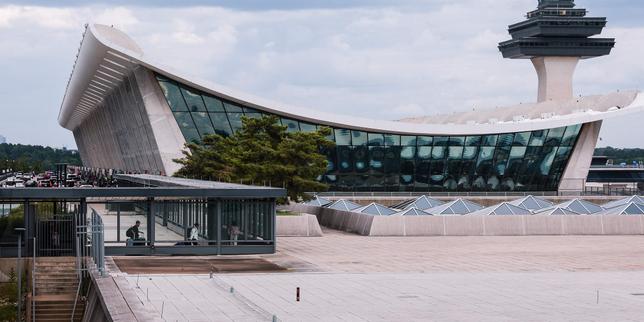
Every international traveler who touches down at Washington Dulles carries a very specific, secret exhaustion. It is not merely the jet lag of a red-eye from Frankfurt or Tokyo. It is the peculiar, creeping despair born of the mobile lounge.
Picture the scene. You step off the aircraft in 2026, breathing in the stale air of a jet bridge only to be herded down into a windowless, rumbling monolith of mid-century industrial design. They call it a people mover. It looks like a hybrid between a city bus and a lunar lander, painted an institutional cream and brown. It heaves its heavy chassis into motion, lifting its passenger compartment upward on hydraulic stilts to dock with the main terminal. Inside, hundreds of weary souls sway in unison, gripping vertical poles, staring blankly at the scratched fiberglass walls.
For more than sixty years, these lumbering mechanical beasts have served as the awkward handshake of the American capital. Built in 1962 when Eero Saarinen’s magnificent, sweeping main terminal stood like a solitary cathedral amid the empty Virginia fields, the mobile lounges were meant to spare passengers long walks. Instead, they became monuments to transit purgatory.
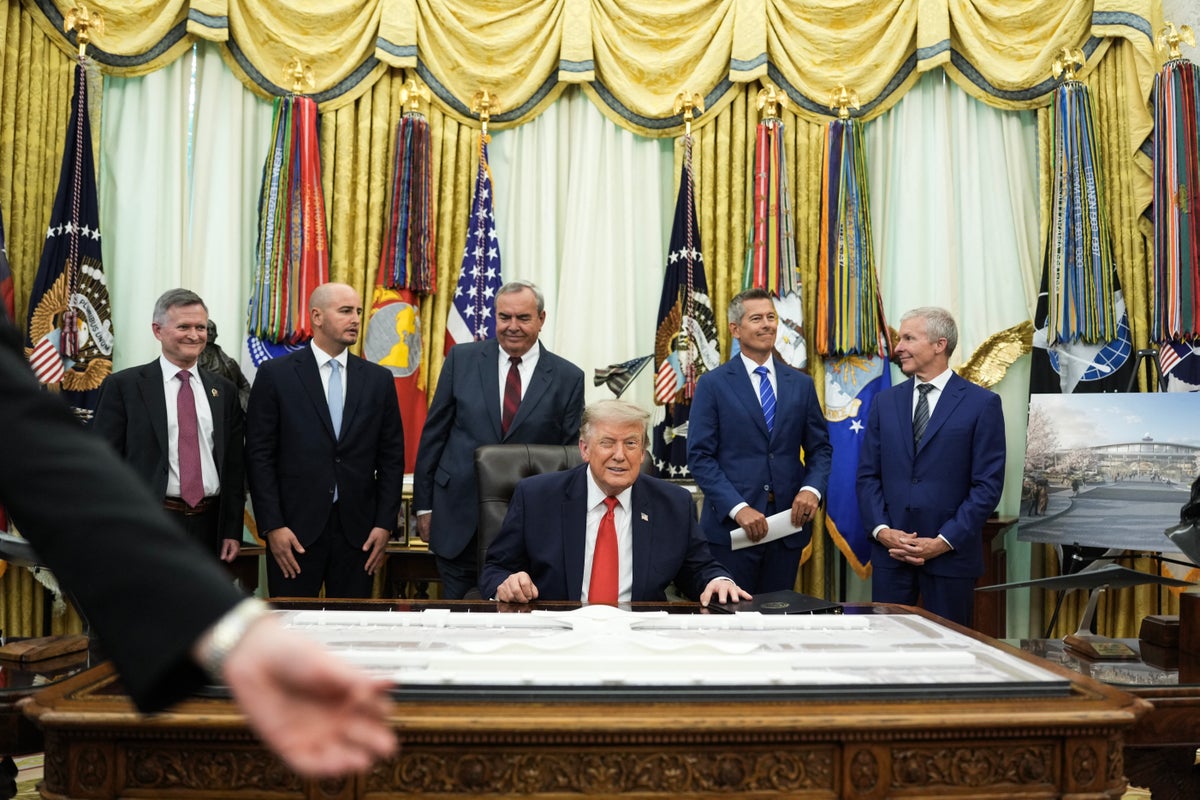
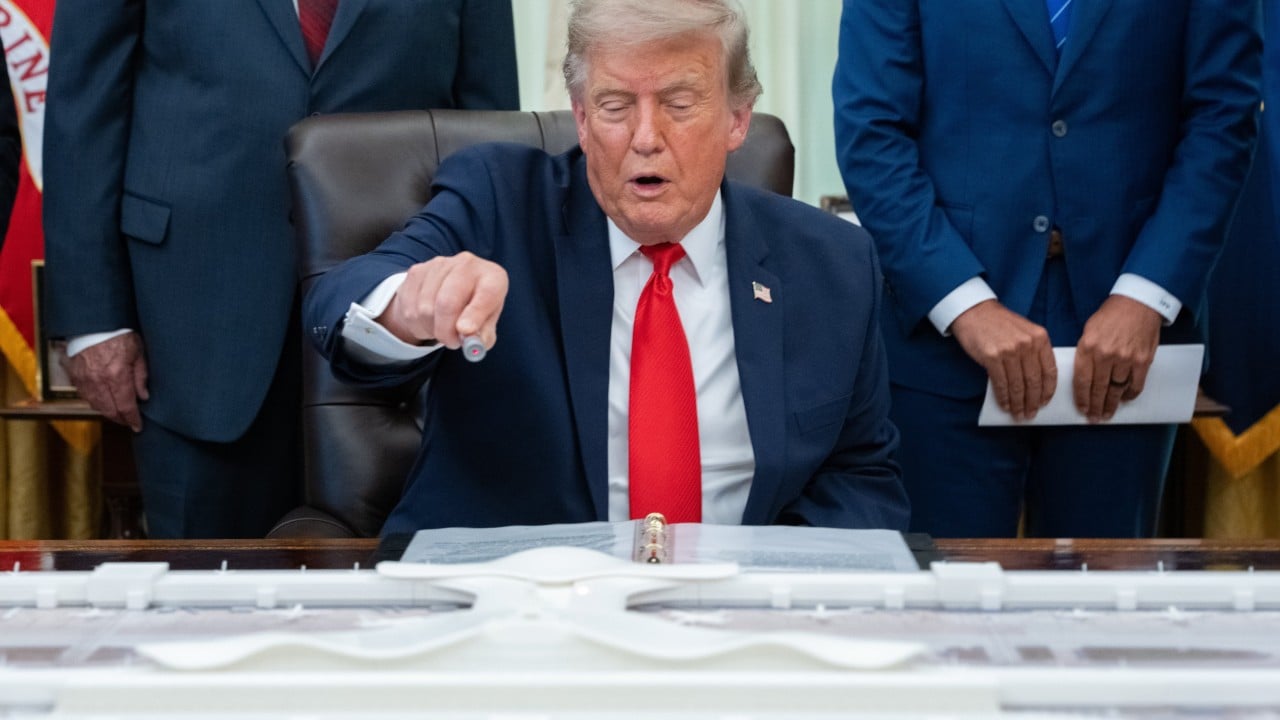
Change, when it arrives in government-backed megaprojects, usually smells of cold coffee and bureaucratic compromise. But the announcement echoing out of the Oval Office carried a different weight. Donald Trump, standing alongside Transportation Secretary Sean Duffy and United Airlines Chief Executive Scott Kirby, unveiled a twenty-two-and-a-half-billion-dollar blueprint designed to gut, rebuild, and resurrect the capital region's primary international gateway.
The core of the proposal is breathtaking in its ambition. The lunar-style buses are finally scheduled for extinction, destined for the scrapyard of transportation history. In their place will rise a U-shaped passenger train system, a central pedestrian tunnel network, and an array of moving walkways designed to return human beings to the lost art of walking at their own pace.
Consider what happens next: years of scaffolding, thousands of construction workers, and a financial architecture built on municipal bonds rather than direct federal appropriations. Metropolitan Washington Airports Authority head John Potter confirmed that the airport authority and participating airlines, anchored by United's massive hub presence, will shoulder the enormous cost.
Skeptics will immediately point to the ledger. Twenty-two and a half billion dollars is a staggering sum. Questions linger about how much of that multi-billion-dollar price tag will quietly trickle down to the consumer in ticket taxes and airport fees. Anyone who has watched infrastructure projects spiral past their deadlines knows the shadow of doubt that hangs over grand architectural visions. Airports are living organisms; operating on them while keeping twenty-nine million annual passengers moving is open-heart surgery performed while sprinting a marathon.
Yet, the status quo was no longer tenable. Last year, Dulles saw record-breaking passenger volumes, bucking national trends with a six percent surge. The airport groaned under the weight of its own success. Gates were distant islands. Parking required a shuttle pilgrimage of its own.
Under the newly revealed plan, a massive new above-ground parking structure will crawl closer to the terminal, swallowing thirty-two thousand vehicles. Concourse replacements will reshape the airfield. Saarinen's landmark main terminal—the architectural holy grail of the complex—will remain untouched, preserved like a sculpture in a gallery while the machinery of modern aviation roars up around it.
This is not merely a concrete and steel investment. It is an argument about national competence. For decades, international travelers landing in modern hubs across Asia and the Middle East have cleared hyper-efficient customs before stepping onto high-speed rail links, looking back at American infrastructure with a mixture of pity and disbelief.
Construction could break ground as early as next spring. Dust will rise over the Virginia tarmac. Flight paths will thread through temporary corridors. Commuters will curse the traffic cones.
The mobile lounges will idle for the final time. The hydraulic hum will die away. And somewhere in the terminal's cavernous shadow, a traveler will drop their bags, look down a brightly lit corridor free of exhaust and rumbling engines, and walk forward into the open air.
Why America Is Spending $22 Billion on One Airport
This documentary details the staggering scope and engineering hurdles behind the massive overhaul of Washington Dulles International Airport.
http://googleusercontent.com/youtube_content/1