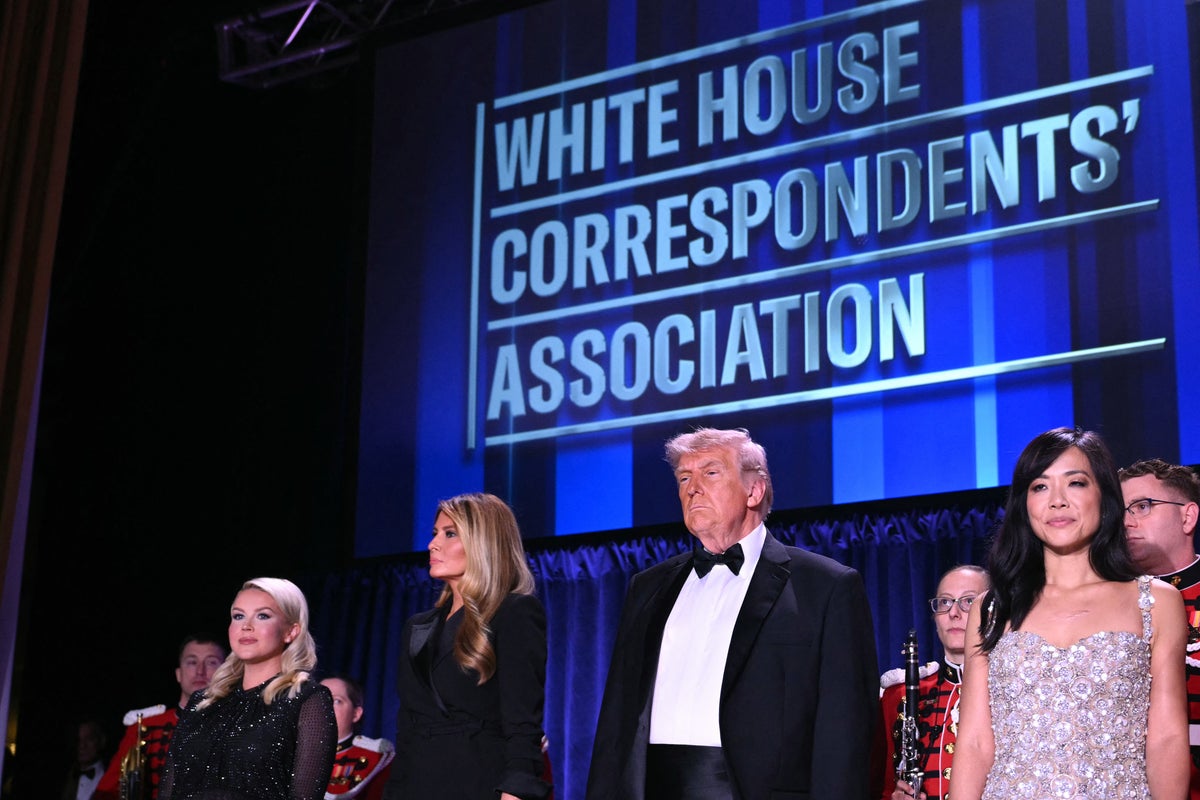
Trust has become a luxury item that most Americans can no longer afford. When a quarter of the country looks at a high-profile violent event—specifically a documented assassination attempt at a venue as public as the White House Correspondents’ Dinner—and concludes it was a theatrical production, we are no longer dealing with simple skepticism. We are witnessing the total breakdown of the collective consensus. This isn't just about a fringe group of conspiracy theorists anymore. It is a mainstream psychological pivot where "faking it" is the default assumption for any event that carries significant political weight.
The recent polling data suggesting that 25% of Americans believe the event was staged isn't a reflection of the evidence provided. It is a reflection of a deep-seated institutional betrayal. For decades, the public has been fed a diet of managed perceptions, "spin," and outright propaganda. Now, the bill has come due. When people stop believing the news, they don't believe in nothing; they become capable of believing in anything.
The Mechanics of Modern Doubt
The speed at which "staged" narratives take hold is breathtaking. Within minutes of the first reports, social media feeds were already flooded with frame-by-frame breakdowns, many of them claiming that the physics of the scene didn't add up or that the reactions of those on stage were "too cinematic." This is the CSI effect applied to political tragedy. Every citizen now fancies themselves a forensic analyst, armed with a smartphone and a deep suspicion of the establishment.
This skepticism is fueled by a legitimate history of being misled. From the phantom weapons of mass destruction in Iraq to the shifting narratives of corporate scandals, the American public has learned that the initial "official" story is often a placeholder for a more complicated, uglier truth. However, that healthy skepticism has metastasized into a reflex. It is easier to believe in a grand, coordinated conspiracy than to accept the chaotic, terrifying reality of a lone individual with a weapon.
The "staged" accusation also serves as a psychological shield. If an event is fake, it cannot hurt you. It doesn't require you to change your worldview, support new legislation, or fear for the stability of the country. By dismissing reality as a script, the observer retains a sense of control. They aren't victims of a chaotic world; they are the "smart ones" who saw through the charade.
The Algorithm is an Accelerant
We have moved past the era of the town square and into the era of the echo chamber. Algorithms are designed to keep users engaged, and nothing drives engagement like outrage and "hidden truths." If you linger for five seconds on a video questioning the ballistics of an event, the platform will serve you ten more. By the end of the hour, you are no longer seeing the news; you are seeing a curated reality designed to confirm your existing fears.
The technology itself has made the "staged" argument more plausible in the mind of the average person. We live in an age of deepfakes and high-end CGI. People see what Hollywood can do with a green screen and assume that the government or "the elites" have access to even better tools. When reality looks like a movie, it is treated like one. The distinction between a livestream and a produced broadcast has blurred to the point of invisibility for many.
Historical Precedents and the New Normal
Conspiracy theories have always been part of the American fabric, but they used to live in the shadows. The JFK assassination spawned a cottage industry of doubt, but it took years for those theories to reach the mainstream. Today, that process is compressed into seconds. The assassination attempt at the Correspondents’ Dinner was unique because it happened in front of the very people—the press—who are tasked with reporting the truth. For a quarter of the population, the presence of the media didn't validate the event; it served as proof of the conspiracy.
In their eyes, the media isn't a witness; they are the stagehands.
This represents a terrifying shift in the relationship between the government, the press, and the people. If 25% of the population believes the literal "eyes and ears" of the country are lying in unison, then the concept of a shared national experience is dead. We are living in two different Americas. In one, a tragic event almost claimed a life. In the other, a sophisticated piece of performance art was executed to sway an election or distract from a scandal.
The High Cost of the Performance
The danger of this widespread disbelief is not just social friction. It has real-world consequences for security and policy. When a large portion of the electorate believes an attack was faked, they will naturally oppose any security measures or legislative changes that follow. They view those responses not as necessary protections, but as the "payoff" for the staged event.
Furthermore, this environment creates a "liar’s dividend." Actual bad actors can now operate with more freedom because they know that any evidence brought against them can be dismissed as a fabrication. If everything can be faked, then nothing can be proven. This is the ultimate goal of disinformation: not to make you believe a specific lie, but to make you stop believing in the truth altogether.
The burden of proof has shifted in an impossible direction. It is no longer enough to show the blood, the weapon, or the perpetrator. For the skeptic, those are just props. They demand a level of transparency that no security organization can provide without compromising its operations. This creates a vacuum that is quickly filled by influencers and grifters who profit from the "staged" narrative.
Breaking the Cycle of Disbelief
Fixing this isn't about "debunking" or "fact-checking." Those methods often backfire, as the act of debunking is seen by the skeptic as part of the cover-up. The solution requires a fundamental rebuilding of institutional credibility, a process that takes decades and can be destroyed in a weekend.
Institutions must stop using "perception management" as a standard operating procedure. When the government or the media treats the public like a group to be "messaged" rather than a citizenry to be informed, they foster the very cynicism they later bemoan. Transparency isn't just a buzzword; it is the only antidote to the narrative of the stage-managed world.
If we continue on this path, the next major crisis won't just be a physical threat; it will be a cognitive one. We will find ourselves in a position where a genuine catastrophe occurs, and a majority of the population simply shrugs it off as a well-funded production. At that point, the Republic doesn't just fail; it evaporates into a cloud of competing fictions.
Stop looking for the man behind the curtain and start looking at the decay of the theater itself.