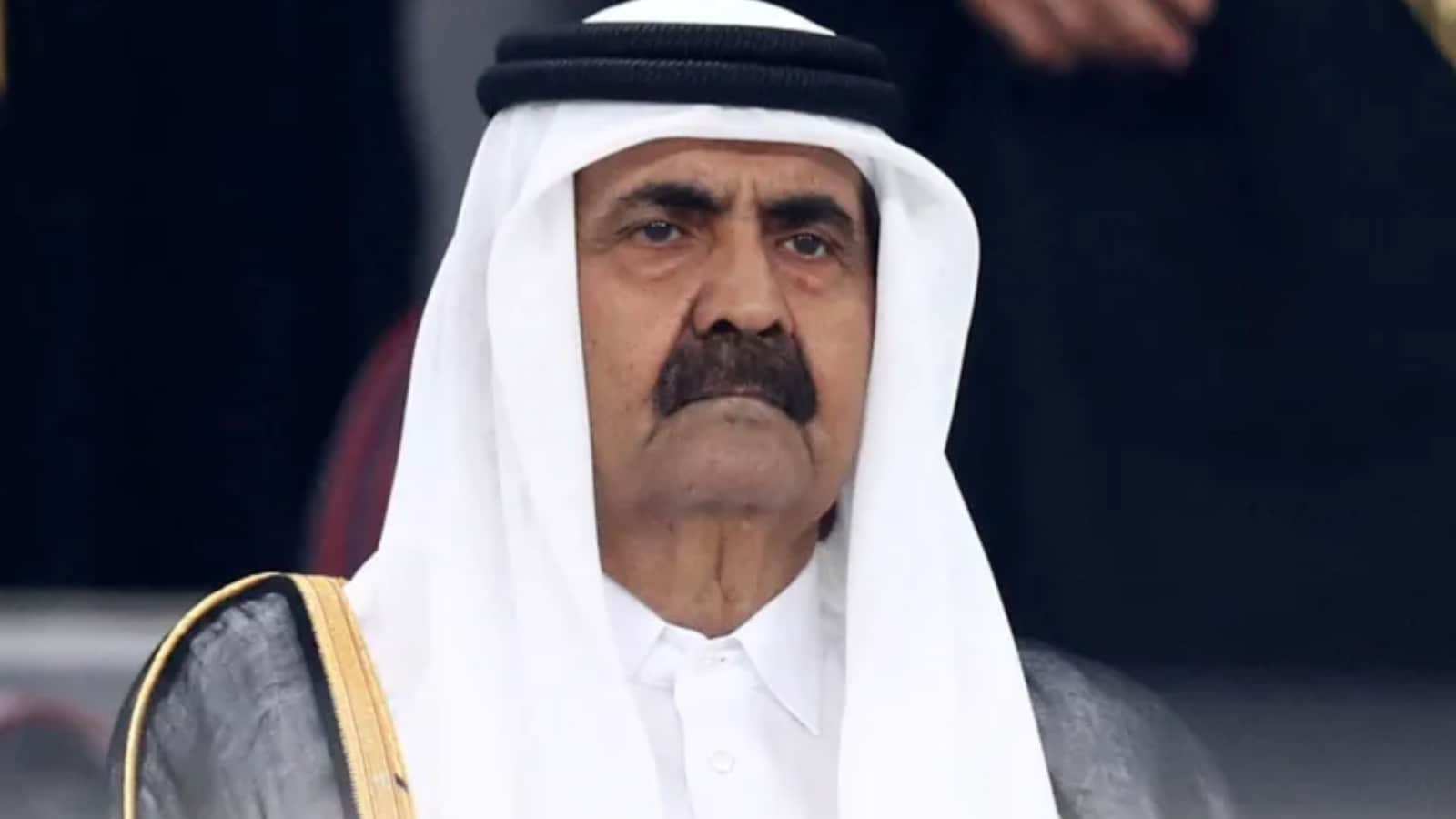
The passing of Sheikh Hamad bin Khalifa Al Thani at age 74 closes the ledger on one of the most audacious geopolitical experiments in modern history. When the Amiri Diwan announced his death on Sunday morning, Qatar immediately entered four days of official mourning, lowering flags to half-mast and pausing government operations. He will be buried at Lusail Cemetery following evening prayers at the Imam Muhammad ibn Abd al-Wahhab Mosque in Doha.
Most obituaries will focus on the mechanics of his passing or repeat boilerplate lines about him being the "architect of modern Qatar." But that framing completely misses the point. Sheikh Hamad didn't just build a country; he fundamentally altered how small nations project power globally. Learn more on a related subject: this related article.
Before he took the throne, Qatar was a sleepy, easily overlooked peninsula largely overshadowed by Saudi Arabia and regional heavyweights. By the time he walked away, it was a financial behemoth, an indispensable diplomatic mediator, and the richest country on earth per capita. Love him or hate him, you can't deny that he rewrote the rules of Middle Eastern diplomacy.
The Palace Coup That Changed Everything
To understand his impact, look at how he gained power. In June 1995, while his father, Sheikh Khalifa bin Hamad Al Thani, was vacationing in Europe, Hamad executed a flawless, bloodless palace coup. It wasn't just a family squabble. It was a calculated move by a young, Sandhurst-educated military man who realized his country was sitting on an ocean of wealth but doing absolutely nothing with it. Additional journalism by NPR highlights related views on the subject.
His father had treated Qatar’s massive hydrocarbon reserves with extreme caution, keeping billions in personal accounts. Hamad seized the throne, froze those accounts, and clawed back between $3 billion and $7 billion back into the state treasury. He knew that survival meant growth.
At the time, Western oil majors were skeptical about liquefied natural gas (LNG). It required massive upfront capital, complex cooling technology, and specialized shipping fleets. Hamad ignored the doubters. He bet the entire country’s financial future on developing the North Field, the largest non-associated gas field in the world.
The gamble paid off spectacularly. By 2006, Qatar was the top exporter of LNG globally. During his 18-year reign, Qatar's gross domestic product skyrocketed more than 24-fold, and the country's hydrocarbon sector grew from a modest $3 billion to an astronomical $110 billion.
Weapons of Mass Distinction: Al Jazeera and the QIA
Hamad realized early on that money alone couldn't buy security or global relevance. A tiny nation with a small citizen population sandwiched between regional giants needs soft power.
In 1996, he put up $150 million to launch Al Jazeera. It was a direct punch to the gut of traditional Arab state media. By abolishing official censorship and giving a platform to dissidents, Islamists, and critics of neighboring regimes, Hamad created a media giant that infuriated every capital from Riyadh to Cairo. It gave Doha an outsized voice in regional politics, effectively serving as an independent foreign policy tool.
Simultaneously, he established the Qatar Investment Authority (QIA). Instead of just hoarding cash, Qatar began buying up the world. Under his guidance, the sovereign wealth fund snapped up iconic assets:
- The Shard and Harrods department store in London
- Massive stakes in Volkswagen and Barclays
- Sovereign real estate portfolios across Manhattan and Paris
- The purchase of Paris Saint-Germain (PSG) football club, transforming it into a global sports brand
This wasn't just about financial returns. It was about creating strategic interdependence. If Western capitals were filled with Qatari investments, those nations suddenly had a vested interest in keeping Qatar safe.
The Diplomatic Tightrope Act
If you look at Qatar’s foreign policy under Hamad, it looks completely contradictory on paper. He hosted the largest U.S. military base in the Middle East (Al Udeid Air Base) while simultaneously maintaining close diplomatic ties and shared gas fields with Iran. He funded Syrian rebels while hosting offices for the Taliban and Hamas. He even maintained low-level economic ties with Israel at a time when other Gulf states wouldn’t dare.
Western analysts often criticized this as playing both sides. In reality, it was a deliberate strategy to make Doha the ultimate diplomatic clearinghouse. If you needed to talk to an group or a state that the West couldn't officially communicate with, you went through Doha. He positioned Qatar as the indispensable mediator, facilitating talks from the Doha Agreement on Lebanon to negotiations involving Afghan factions.
A Rare Exit Strategy
Perhaps the most surprising move of his entire career came in June 2013. In a region where rulers almost always leave office in a casket or via a coup, Hamad voluntarily abdicated. He handed the reins of power to his 33-year-old son, the current Emir Sheikh Tamim bin Hamad Al Thani.
He didn't disappear entirely; taking the title of "Father Emir," he remained an influential figure behind the scenes, particularly during the grueling 2017–2021 blockade imposed on Qatar by its neighbors. But by stepping down early, he ensured a seamless transition of power and proved that the institutional framework he built could outlast his personal rule. His strategic foresight was vindicated on the global stage when Qatar successfully hosted the 2022 FIFA World Cup, an event secured during his reign that drew rapturous praise from citizens and visitors alike.
The playbook he created—using sovereign wealth as geopolitical leverage, investing heavily in soft power, and maintaining open dialogue with all sides—is now being copied by neighboring Gulf states. But Hamad did it first, and he did it with far fewer resources at the start. His death marks the passing of a master strategist who took a vulnerable peninsula and turned it into an unshakeable global player.