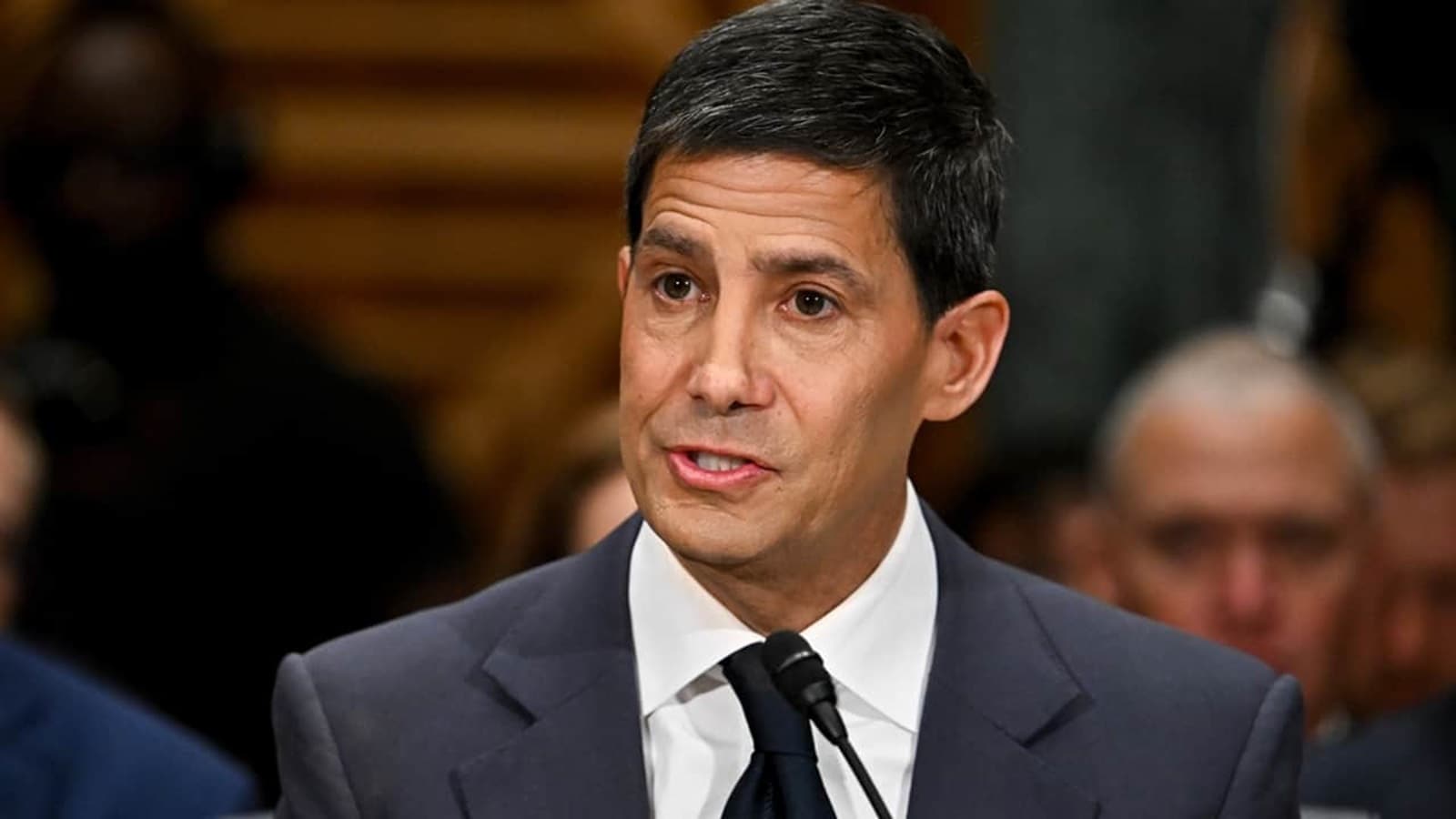
Tracking a Federal Open Market Committee (FOMC) decision requires filtering out financial media noise and focusing directly on primary institutional feeds, market-implied probabilities, and the specific monetary reaction function of the Federal Reserve Chair. For the October 2026 FOMC meeting—occurring amid the structural shift of Kevin Warsh’s leadership at the central bank—observers must combine live broadcast monitoring with real-time fixed-income analytics to capture the true policy signal before consensus pricing locks in.
The Primary Broadcast Architecture and Release Schedule
Standard financial television networks introduce latency and editorial bias between the release of the FOMC statement and its public interpretation. To analyze the October 2026 decision with institutional precision, monitor the direct primary sources according to the standardized Federal Reserve operational schedule (all times Eastern Daylight Time):
- The Policy Statement Release (2:00 PM EDT): The FOMC publishes its official monetary policy statement simultaneously on the Board of Governors website (federalreserve.gov) and via direct wire feeds. Do not rely on television chyrons; read the redline comparison against the September 2026 statement to isolate altered verbs regarding inflation persistence, labor market tightness, and balance sheet runoff.
- The Live Press Conference Stream (2:30 PM EDT): Chair Kevin Warsh takes the podium thirty minutes after the statement drops. Stream the unedited feed directly via the Federal Reserve’s official YouTube channel or the Board of Governors live video portal. Major financial outlets such as Bloomberg Television, CNBC, and Reuters carry the feed live, though direct institutional streams eliminate third-party audio cutaways.
- Implementation Note Analysis (2:00 PM EDT): Concurrent with the main statement, the Open Market Desk at the Federal Reserve Bank of New York releases the operational implementation note. This document specifies exact adjustments to the Interest on Reserve Balances (IORB) rate, the Overnight Reverse Repurchase Agreement (ON RRP) offering rate, and the primary credit rate.
A critical operational distinction separates the October meeting from the September and December gatherings: the October FOMC meeting does not include an updated Summary of Economic Projections (SEP) or the accompanying "dot plot." Because committee members do not publish revised median rate forecasts at this meeting, market participants place disproportionate weight on the exact phrasing of the 2:00 PM statement and the semantic nuances of Warsh’s 2:30 PM press conference.
The Warsh Monetary Reaction Function
Understanding how to interpret the October 2026 broadcast requires mapping Kevin Warsh’s established economic philosophy against traditional post-2008 central bank orthodoxy. Having served on the Federal Reserve Board of Governors from 2006 to 2011 before returning to lead the institution in 2026, Warsh operates from a distinct analytical framework that alters how the FOMC communicates policy.
Balance Sheet Discipline Versus Rate Adjustments
Traditional recent FOMC leadership treated the federal funds rate as the primary active tool while keeping Quantitative Tightening (QT) on a predictable, passive autopilot. Warsh’s historical writings and policy critiques consistently emphasize that the Federal Reserve’s balance sheet size directly distorts asset pricing and price discovery in Treasury markets. When watching the October press conference, pay acute attention to any linkage Warsh draws between the pace of balance sheet reduction and the terminal level of the policy rate. Under his framework, shrinking the System Open Market Account (SOMA) portfolio is not merely a background liquidity drain; it is an active tightening mechanism that can substitute for, or complement, adjustments to the overnight target range.
Skepticism of Backward-Looking Data Models
Standard central bank forecasting relies heavily on backward-looking econometric models, such as the Phillips Curve, which attempts to trade off unemployment against inflation. Warsh has repeatedly critiqued excessive "data dependence" when that dependence forces the central bank to react to lagging indicators like trailing Consumer Price Index (CPI) prints. In the October 2026 Q&A session, distinguish between his references to trailing government data and his focus on forward-looking market signals—specifically credit spreads, currency valuations, and inflation breakevens. A shift away from strict backward-looking data dependency means the FOMC under Warsh is more willing to preemptively adjust rates based on financial conditions rather than waiting for sequential monthly confirmations in lagging labor statistics.
Forward Guidance Restraint
Over the past fifteen years, FOMC chairs used explicit forward guidance to suppress market volatility, effectively pre-committing the committee to future rate paths. Warsh views heavy forward guidance as a source of moral hazard that suppresses necessary market discipline and traps the central bank when macro conditions shift unexpectedly. Expect shorter, sharper answers during the press conference and a deliberate refusal to validate market pricing for the December 2026 meeting. This intentional ambiguity increases realized volatility in short-term interest rate futures during the 2:30 PM to 3:15 PM window.
Pre-Meeting Market Calibration Mechanics
Watching the announcement without knowing what is already priced into the yield curve leads to severe misinterpretation. A 25-basis-point cut or a hold is rarely a surprise in isolation; the market reaction is driven entirely by the variance between the announced policy path and the pre-meeting implied distribution.
Before 2:00 PM EDT on the day of the October decision, establish three baseline metrics:
- CME FedWatch Tool Probabilities: Derived from 30-Day Federal Funds futures pricing, this metric quantifies the exact percentage probability the market assigns to a rate hold, a 25-basis-point cut, or a 50-basis-point move. If futures price a 92% probability of a hold, an actual hold will produce virtually zero movement in the 2-year Treasury yield unless the statement language shifts expectations for December.
- The 2-Year Treasury Yield Spread to Effective Fed Funds: The 2-year U.S. Treasury note serves as the purest market proxy for the expected path of the federal funds rate over the medium term. Measure the spread between the 2-year yield and the current Effective Federal Funds Rate (EFFR) at 1:55 PM EDT. A negative spread indicates the bond market expects net easing over the next twenty-four months; a widening or narrowing of this spread during Warsh’s press conference reveals whether his rhetoric is perceived as hawkish or dovish relative to baseline expectations.
- 5-Year, 5-Year Forward Inflation Expectation Rate: Available via Federal Reserve Economic Data (FRED), this metric measures expected average inflation over the five-year period that begins five years from today. Because Warsh prioritizes long-term monetary credibility over short-term growth stimulus, any sudden spike in this metric following the decision signals that bond vigilantes believe the FOMC is falling behind the inflation curve.
Step-by-Step Real-Time Execution Protocol
To extract actionable intelligence during the ninety-minute window surrounding the October 2026 FOMC decision, execute this sequential tracking workflow:
- 1:45 PM EDT – Lock Baseline Pricing: Record the exact levels of the U.S. Dollar Index (DXY), the 2-year Treasury yield, the 10-year Treasury yield, and the S&P 500 front-month futures contract. Open two browser tabs: the Board of Governors press release page (federalreserve.gov/newsevents/pressreleases.htm) and the direct Federal Reserve live video stream.
- 2:00 PM EDT – Parse the Statement Architecture: Refresh the press release page. Immediately scan the first two paragraphs for changes in the assessment of economic activity and inflation progress. Skip down to the operational directive paragraph to confirm the target range for the federal funds rate and check the voting tally at the bottom. Unanimous votes signal strong internal consensus behind Warsh’s framing; dissents from regional bank presidents or governors indicate an ideological split over the pace of policy normalization.
- 2:05 PM EDT – Evaluate the Initial Asset Repricing: Observe the initial five-minute reaction in the 2-year Treasury yield and the DXY. Algorithmic trading desks execute orders within milliseconds of the 2:00 PM text release based on natural language processing of the statement. Do not mistake this initial algorithmic impulse for the final market verdict; institutional human desks spend the next twenty-five minutes dissecting the implementation note and preparing for the press conference.
- 2:30 PM EDT – Audit the Opening Statement: Chair Warsh opens the press conference by reading a prepared summary of the committee’s rationale. Listen specifically for deviations from the written 2:00 PM statement. When a Chair introduces new framing in the opening remarks that was absent from the negotiated FOMC statement, it reflects the Chair’s personal conviction and signals the direction he intends to steer the committee at subsequent meetings.
- 2:40 PM EDT – Filter the Press Q&A: Reporters from wire services (Bloomberg, Reuters, Wall Street Journal) ask the opening questions. Filter out political questions regarding White House pressure or fiscal deficits, as Warsh will deflect them using standard institutional independence boilerplate. Focus entirely on questions regarding the neutral rate of interest ($r^*$), labor market supply-demand dynamics, and the threshold for altering the pace of balance sheet runoff.
- 3:15 PM EDT – Verify Post-Conference Stabilization: Once the press conference concludes, compare the 3:15 PM asset prices against your 1:45 PM baseline. If the 2-year yield reversed its 2:05 PM move during the press conference, Warsh successfully used his verbal framing to push back against market mispricing of the written statement.
Structural Limitations of Live Event Monitoring
Relying exclusively on real-time broadcast monitoring introduces distinct analytical traps that degrade decision-making quality. First, intraday liquidity in Treasury futures and currency markets thins drastically between 1:58 PM and 2:05 PM EDT as market makers widen bid-ask spreads to protect against adverse selection. Price swings during this seven-minute window frequently represent order-book vacuum effects rather than genuine institutional conviction.
Second, a Chair’s verbal cadence during an unscripted Q&A session can create false positives. Under the intense scrutiny of early tenure meetings, markets often over-index on single adjective choices that were not intended as deliberate policy signals. Genuine shifts in the Warsh FOMC’s trajectory are confirmed not by single soundbites, but by the release of the official FOMC Minutes three weeks later, which reveal the exact distribution of participant views behind the closed-door debate.
Strategic Allocation Posture
For portfolio managers, corporate treasurers, and macro analysts monitoring the October 2026 decision, avoid executing directional trades during the 2:00 PM to 2:30 PM intermission. Position sizing should be established prior to the event based on the asymmetry of the 2-year Treasury yield curve, with execution adjustments reserved for the post-3:15 PM window once the market has digested both the written directive and Warsh’s live cross-examination. Treat any sharp, unconfirmed algorithmic spike in front-end rates during the initial statement release as a liquidity distortion until confirmed by sustained volume after the press conference concludes.