The mainstream scientific media has officially lost its mind.
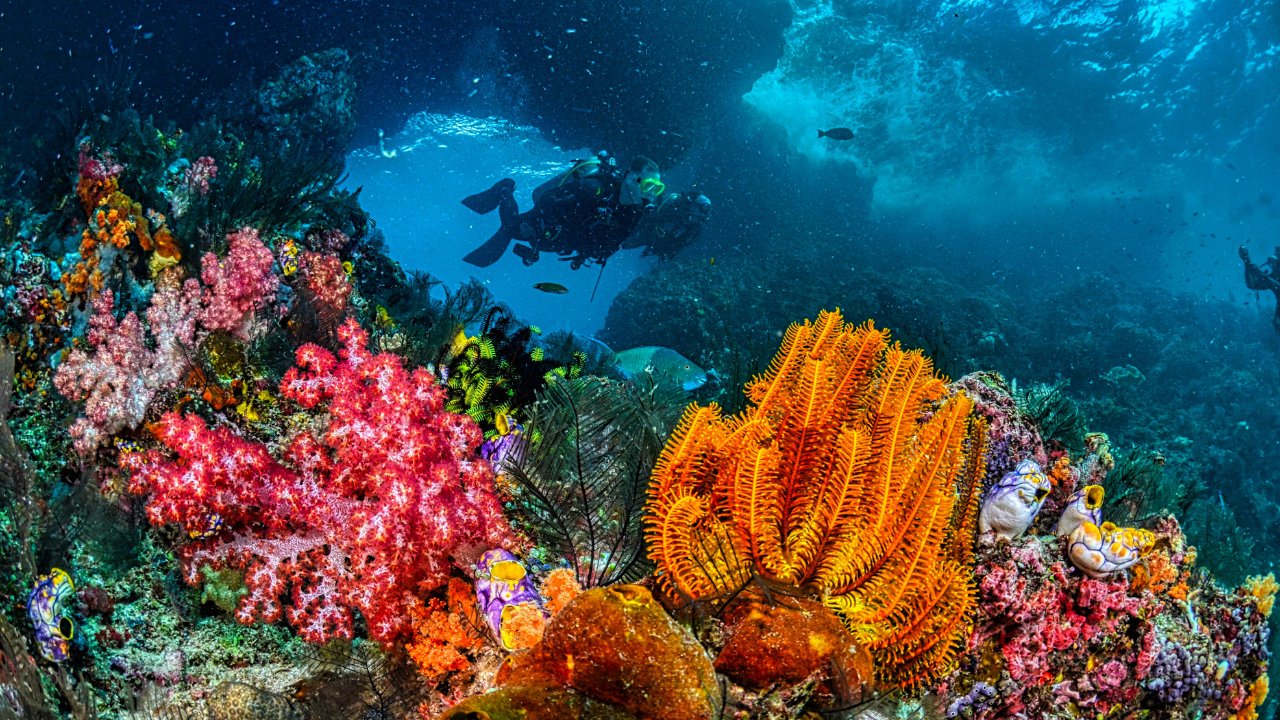
Lately, a wave of breathless reporting has emerged celebrating a "silver lining" to the terrifying pace of Arctic ice melt. The narrative goes something like this: as massive icebergs break off and melt, they drop trapped boulders and pebbles into the muddy abyssal plains 2,500 meters below. These "ice-rafted debris" deposits create rocky reefs, introducing hard substrates to a soft-bottom ecosystem. Voila! A brand-new deep-sea habitat is born, complete with sponges, anemones, and a sudden burst of biodiversity.
It sounds lovely. It sounds like nature finding a way.
It is unadulterated nonsense.
This romanticized view of "glacial dropstones as ecological salvation" is a classic case of missing the forest for a single, deeply flawed tree. It applies shallow, terrestrial logic—where more structure generally equals more life—to a fragile, hyper-specialized deep-sea environment that operates under entirely different physical laws.
We are not witnessing the creation of new habitats. We are witnessing the chaotic, unpredictable disruption of one of the most stable ecosystems on Earth.
The Myth of the Substrate Salvation
Let's break down the basic physics and ecology that the "feel-good" articles conveniently ignore.
The Arctic abyssal plain is predominantly a soft-sediment environment. For millions of years, creatures here have evolved explicitly to thrive in thick, uninterrupted mud. Sea cucumbers (Elpidia heckeli), specialized polychaete worms, and bivalves spend their lives tunneling through, feeding on, and aerating this sediment.
When a multi-ton boulder drops from a melting iceberg, it doesn't gracefully "enhance" this environment. It crushes it.
[Ice-Rafted Debris Dropping]
       │
       ▼
[Local Sediment Compaction & Smothering of Infauna]
       │
       ▼
[Disruption of Benthic Carbon Burial Capacity]
To view a dropstone as a net positive because a few opportunistic sponges attach to it is pure observational bias. It is the ecological equivalent of bulldozing a meadow, building a concrete parking lot, and claiming you "increased biodiversity" because a few species of weeds and pigeons moved into the cracks.
Furthermore, these new rocky islands don't just exist in a vacuum. They attract mobile predators and filter feeders that were never part of the local food web dynamics. This creates a highly localized, hyper-competitive bottleneck.
I have spent years analyzing benthic data from deep-sea surveys. Whenever you see a sudden, unnatural shift in habitat structure, it is almost always followed by a collapse in the endemic population. The specialized mud-dwellers—the species that actually drive the nutrient cycling at the bottom of the world—get choked out by the sudden influx of hard-substrate opportunists.
The Mass-Balance Delusion: Why More Species Doesn't Equal Health
A core error in the competitor's thesis relies on a fundamental misunderstanding of Alpha Diversity versus Ecosystem Function.
Yes, if you drop a rock into the mud, the local species count (Alpha Diversity) might go up in the short term. You can now count three species of anemone that weren't there before. But in ecology, counting heads is a lazy metric.
The real question is: what happens to the biological pump?
The deep Arctic seafloor is a critical carbon sink. The soft sediment locks away organic carbon that drifts down from the surface over millennia. This process relies on a undisturbed benthic boundary layer.
When you litter the seafloor with ice-rafted debris at an accelerated, anthropogenic rate, you alter the hydrodynamics of the bottom currents. The presence of large rocks creates localized turbulence, accelerating bottom currents around the obstructions.
What does this turbulence do?
- It scours the surrounding soft sediment.
- It resuspends organic matter back into the water column.
- It disrupts the delicate, slow-motion burial of carbon.
The Alfred Wegener Institute and other leading polar research bodies have documented how sensitive these deep-sea boundary layers are. By celebrating the physical restructuring of the Arctic floor, commentators are cheering for the destabilization of a global carbon vault.
The Speed Kill: Evolutionary Time vs. Anthropogenic Shock
Dropstones are not a new phenomenon. Icebergs have been shedding rocks into the oceans since the dawn of glacial cycles. The competitor uses this historical fact to normalize what is happening today.
That is a dangerous conflation of scale.
Historically, ice-rafted debris was deposited at a glacial pace—literally. A rock dropped here, another rock dropped miles away, centuries later. The deep-sea ecosystem had generations to adjust, adapt, or simply bypass the obstruction.
Today, the Arctic is warming four times faster than the rest of the planet. The Greenland Ice Sheet and marine-terminating glaciers are disintegrating at unprecedented rates. The volume of debris raining down onto the 2,500-meter-deep abyssal plains is no longer a slow trickle; it is a geological blitzkrieg.
Ecosystems can adapt to stress over evolutionary time. They cannot adapt to structural shocks. When you compress ten thousand years of physical habitat alteration into a few decades, you do not get a "thriving new ecosystem." You get ecological chaos. The endemic species cannot migrate—there is nowhere else for them to go. The abyssal plain is their evolutionary dead end.
Dismantling the "People Also Ask" False Premises
Look at the common questions floating around public forums regarding this phenomenon. The premises are universally broken.
"Don't new rocky reefs help deep-sea fisheries?"
This is a blatant misunderstanding of depth and economics. We are talking about 2,500 meters beneath the Arctic ice pack. There are no commercial fisheries operating at this depth, nor should there ever be. The species that colonize these rocks are slow-growing, deep-sea invertebrates—corals and sponges that grow mere millimeters a year. There is zero commercial or practical benefit to human food security here. It is a pure ecological shift, and a destructive one at that.
"Can we use artificial dropstones to engineer deep-sea biodiversity?"
This is the ultimate techno-optimist trap. The moment a study suggests that melting ice creates habitats, someone in a boardroom suggests we start dumping quarry waste off the back of cargo ships to "save the oceans."
Let's be unequivocally clear: engineering the deep ocean floor is an exercise in hubris. We understand less than 1% of the functional biology of the abyssal plains. Altering the physical structure of the deep sea to trigger localized biodiversity spikes is a superficial fix that ignores the broader systemic collapse of ocean stratification, acidification, and warming.
The Hard Truth of the Anthropocene Seafloor
If you want to understand what is truly happening 2,500 meters beneath the Arctic Ocean, you have to shed the comforting lie that nature always self-corrects for our benefit.
The transformation of the Arctic seafloor is not an exciting new chapter in marine biology. It is a symptom of a planet out of equilibrium. The colonization of these rocks by opportunistic species is the biological equivalent of scar tissue. It is a sign of trauma, not health.
We must stop searching for silver linings in data sets that demand absolute alarm. The deep-sea muds of the Arctic are not an empty canvas waiting for melting icebergs to paint a prettier picture. They are ancient, functional, hyper-stable systems that require isolation, cold temperatures, and undisturbed tranquility to perform their role in the global climate engine.
Every rock that hits the deep Arctic floor right now is a ticking clock. Stop looking at the sponges growing on them and start looking at the system that is slipping away beneath them.