Defense analysts are chasing ghosts in the Philippine Sea.
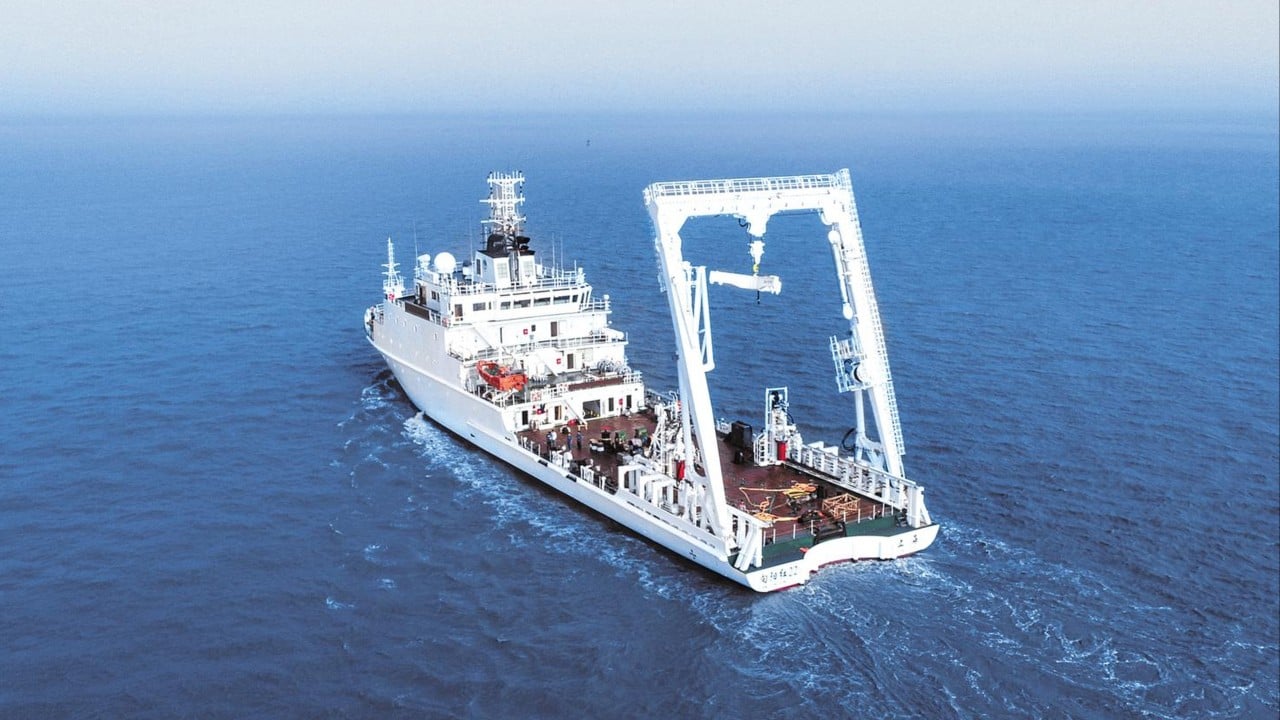
Every time a Chinese maritime survey vessel drops a sonar towfish east of Taiwan, the Western defense establishment suffers a collective panic attack. The narrative is always identical: Beijing is mapping the bathymetry to plot a stealth corridor for its nuclear attack submarines. They claim these surveys are the prelude to an underwater blitzkrieg, a calculated move to block American intervention from the Pacific.
It is a neat, cinematic theory. It is also fundamentally flawed.
The lazy consensus treats every scientific research vessel like a tactical scout for the People's Liberation Army Navy (PLAN) submarine force. This view grossly misunderstands modern anti-submarine warfare (ASW), misreads Beijing’s actual strategic anxieties, and completely ignores the hard physics of the ocean.
Beijing is not prepping a submarine ambush east of Taiwan. They are mapping a defensive shield against yours.
The Bathymetry Myth and the Physics of Sound
The conventional argument hinges on a simplistic premise: to operate a submarine effectively, you need hyper-precise maps of the seafloor. Therefore, Chinese vessels like the Haiyang Dizhi or Xiang Yang Hong series must be scouting paths for PLAN Type 094 or Type 093 hulls.
This logic crumbles under basic oceanography.
The waters east of Taiwan—the West Philippine Basin—are not a treacherous, shallow archipelago requiring micro-navigation. It is a deep-ocean basin, with depths regularly plunging between 4,000 and 6,000 meters.
Submarines do not cruise along the abyssal plain like tanks navigating mountain passes. They operate in the upper few hundred meters of the water column. At those depths, knowing whether the seafloor is 5,100 meters or 5,120 meters below the keel is tactically irrelevant to a navigator.
What actually matters in the upper water column is acoustic propagation. Sound in the ocean does not travel in straight lines; it bends, refracts, and trapped in channels based on three variables:
- Temperature
- Salinity
- Pressure
These variables create the sound speed profile (SSP). A single survey from a surface ship gives a snapshot of these conditions, but the ocean is dynamic. Currents like the Kuroshio, seasonal temperature shifts, and internal waves change the acoustic environment constantly.
If the PLAN wanted to map the ocean for their own submarines to hide, a periodic surface survey is the least efficient way to do it. The real value of this data is not helping a Chinese submarine find its way; it is figuring out where an American submarine can hide.
The Real Target is the American Silent Option
The Western defense establishment loves to project its own strategies onto Beijing. Because the US Navy relies on high-end, ultra-quiet Virginia-class submarines to project power close to the Chinese mainland, analysts assume Beijing wants to do the same in reverse.
They are blind to the asymmetry.
The PLAN submarine force, despite rapid modernization, remains significantly louder than its American counterparts. The older Type 093 shang-class SSNs and even the newer variants still lag in acoustic quieting compared to American or Japanese boats. Sending a louder Chinese submarine into the deep, clear waters of the Philippine Sea—where the US Navy has spent eighty years perfecting its acoustic arrays—is a suicide mission.
Beijing’s naval architects are not stupid. They know their limitations.
Therefore, these maritime surveys are not offensive scouting missions; they are defensive data harvesting. The PLAN is building an acoustic model of the Western Pacific to optimize their anti-submarine capabilities.
To catch an American submarine, you must understand how sound behaves in the specific patch of ocean you are defending. By mapping the shifting thermoclines and salinity fronts east of Taiwan, Beijing is training its algorithms to detect the faint acoustic signatures of American boats hiding in the deep sound channel. They are gathering data to deploy their own fixed underwater sensor networks—similar to the American SOSUS array—and to program the sonar systems of their surface combatants and maritime patrol aircraft.
It is an anti-access umbrella, flipped upside down and sunk underwater.
Misplaced Panic on the PAA Queries
Look at the standard questions regularly tossed around think-tank panels and search engines:
Can Chinese submarines hide in the deep waters east of Taiwan?
The brutal reality is that they do not want to. The PLAN’s primary naval doctrine relies on land-based air defense and massive missile bastions. Operating submarines far beyond the First Island Chain strips them of the air cover and land-based missile support that forms the core of China's military advantage. If conflict breaks out, Chinese submarines are far more likely to be deployed inside the South China Sea or the Taiwan Strait to deny access, rather than hunting in the open Pacific where they are vulnerable.
Does China’s civilian oceanographic fleet violate international maritime law?
Strictly speaking, no. The United Nations Convention on the Law of the Sea (UNCLOS) protects Marine Scientific Research (MSR) in Exclusive Economic Zones (EEZs), provided it is for peaceful purposes. China exploits this ambiguity ruthlessly. They run civilian flags on vessels operating dual-use sonar tech. It infuriates regional neighbors, but it is a legal gray zone that the West cannot easily shut down without rewriting the global maritime rules they claim to defend.
The Blind Spot of Civilian Dual-Use Tech
I have watched maritime security analysts hyper-fixate on military hulls while completely missing how commercial and scientific integration actually works in East Asia.
The competitor’s thesis relies on the old-school view that military actions require gray hulls. But China’s maritime strategy operates on total structural integration. The data collected by an oceanographic research vessel funded by a university in Qingdao flows into the same centralized data centers utilized by the PLAN’s acoustics laboratories.
This is not a secret plot; it is standard bureaucratic efficiency.
The downside to this approach—and the flaw in Beijing’s strategy that nobody talks about—is data saturation. Collecting terabytes of hydrological data is easy. Processing that data into real-time, actionable tactical intelligence for a sonar operator on a Type 055 destroyer in the middle of a high-intensity conflict is immensely difficult.
China’s sensor network is vast, but its operational synthesis is untested. The West frets about the sheer volume of Chinese survey missions, failing to realize that data volume does not automatically equal combat capability.
Stop Looking for Submarines, Start Looking for Sensors
The obsession with predicting a submarine breakout misses the real threat vector.
Beijing's maritime surveys east of Taiwan are the opening phase of an underwater surveillance grid. They are laying the groundwork for automated, uncrewed systems. The data harvested today will dictate where China drops its underwater gliders, its autonomous acoustic nodes, and its moored buoy networks tomorrow.
Imagine a scenario where the waters east of Taiwan are salted with thousands of low-cost, disposable acoustic sensors, all linked via satellite and machine-learning grids. An American submarine entering the theater would no longer just be playing cat-and-mouse with a single Chinese destroyer; it would be navigating an active, digital net that constantly feeds its location to land-based anti-ship ballistic missile batteries.
That is the real threat. It is colder, more automated, and far more dangerous than a handful of Chinese attack submarines playing World War II-style convoy raiders.
The Western defense establishment needs to drop the Cold War playbook. Stop scanning the horizon for periscopes and start analyzing the data streams. Beijing is not trying to sneak through the gate; they are wiring the entire courtyard with alarms.