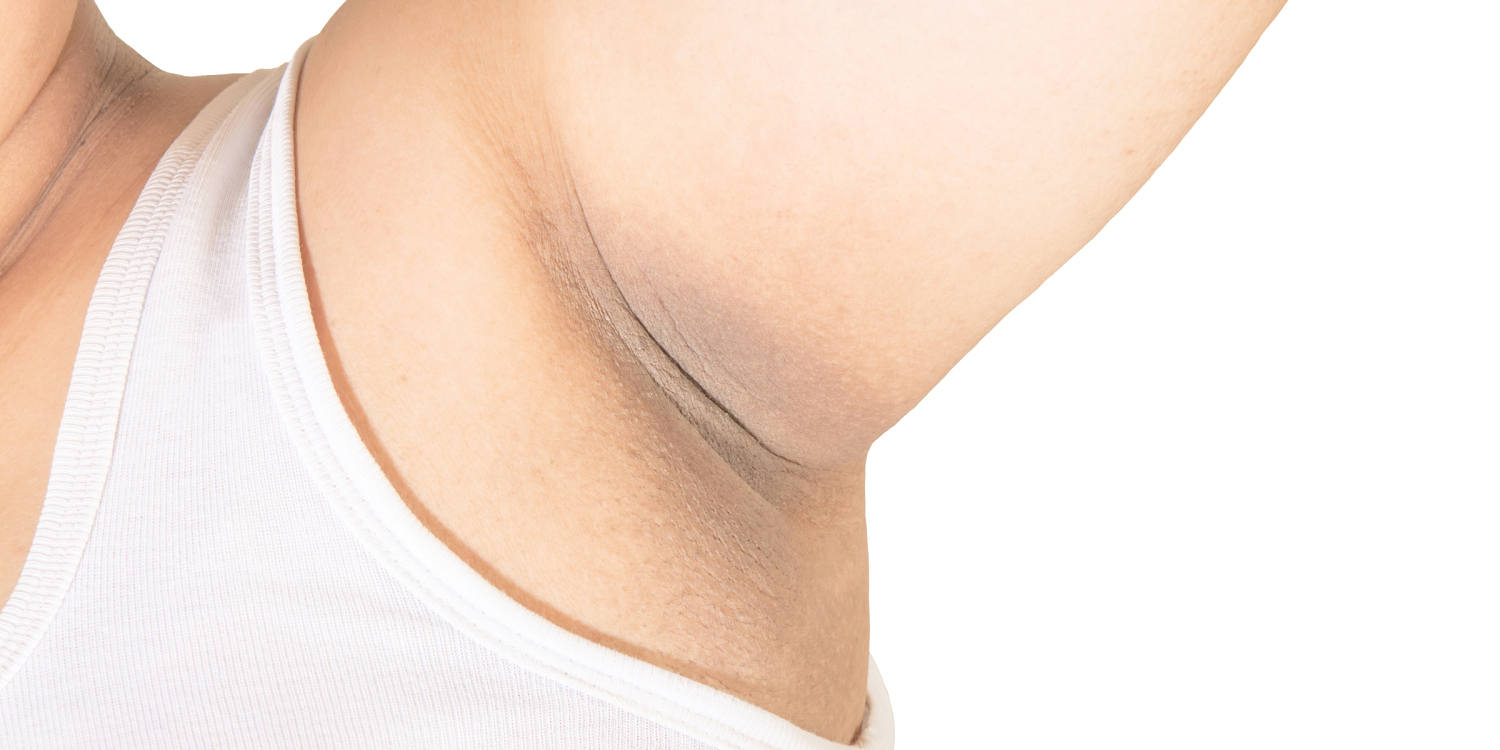
Underarm hyperpigmentation represents an intersection of cosmetic insecurity, cutaneous inflammation, and dermatological dysfunction. The recent emergence of "deodorant concealers"—hybrid topical formulations combining volatile siloxanes, iron oxides, and odor-masking lipids—targets this distress by offering immediate optical correction alongside odor management. This dual-action mechanism introduces significant biological liabilities. Formulating a single topical agent to perform simultaneously as an volatile pigment vehicle, a skin barrier protectant, and an antimicrobial agent creates inherent biochemical conflicts. Evaluating these products requires understanding the physiological drivers of axillary dark spots, the chemical architecture of hybrid cosmetics, and the dermatological risks associated with prolonged use.
The Etiology of Axillary Hyperpigmentation
Axillary hyperpigmentation is a reactive physiological state rather than a standalone skin pathology. The underarm ecosystem exhibits high friction, elevated moisture, reduced airflow, and dense populations of both hair follicles and apocrine glands. Discoloration in this vault occurs primarily through three distinct pathways: You might also find this similar story insightful: Is Your Lettuce Actually Going to Make You Sick.
- Post-Inflammatory Hyperpigmentation (PIH): Repeated mechanical trauma (such as blade friction during shaving) or chemical trauma (such as contact dermatitis from synthetic fragrances or contact allergens) triggers a signaling cascade in epidermal keratinocytes. Arachidonic acid metabolites activate local melanocytes, stimulating excess production and transfer of melanin into surrounding basal cells.
- Acanthosis Nigricans: Darkening driven by systemic metabolic conditions, predominantly hyperinsulinemia. Circulating insulin binds to insulin-like growth factor-1 (IGF-1) receptors on keratinocytes and dermal fibroblasts, inducing cellular proliferation and epidermal thickening. Cosmetic camouflage does not alter this systemic endocrine process.
- Follicular Shadowing: Visible darkness caused by intra-dermal hair shafts remaining beneath the stratum corneum after superficial hair removal. This visual effect is dictated by light refraction through translucent tissue rather than excess melanin deposition.
The Biochemical Architecture of Hybrid Deodorant Concealers
To function as both a concealer and a deodorant, these formulas rely on hydrophobic, film-forming matrices designed to resist friction and perspiration. Typical formulations balance several functional compound classes:
[Volatile Hydrocarbon/Siloxane Phase] ---> Fast Evaporation
             │
             ├──> [Wax/Polymer Lattice] ---> Transfer-Resistant Film Formation
             │          │
             │          ├──> [Suspended Pigments (Iron Oxides / Titanium Dioxide)]
             │          │
             │          └──> [Lipids / Absorbents (Sodium Bicarbonate / Oils)]
- Structural Volatiles and Emollients: Isododecane, cyclopentasiloxane, and cyclohexasiloxane serve as low-viscosity carrier fluids. They distribute the formula evenly across skin folds and evaporate rapidly, leaving behind a smooth, coherent film.
- Pigment Suspension Systems: Titanium dioxide ($TiO_2$) and iron oxides ($Fe_2O_3$, $Fe_3O_4$) provide opacity and color-matching. Hydrophobically modified particles are required to prevent pigment agglomeration when exposed to perspiration.
- Polymeric Film-Formers: Copolymers such as PVP/Eicosene Copolymer and natural or synthetic waxes (Candelilla, Ceresin, Synthetic Beeswax) establish a hydrophobic barrier. This barrier limits pigment transfer onto apparel while containing active deodorant agents like sodium bicarbonate.
Physiological Liabilities of Pigmented Axillary Films
Applying heavy, film-forming hydrophobic cosmetics to high-friction, occlusion-prone anatomical zones disrupts normal skin physiology. As highlighted in recent reports by CDC, the implications are worth noting.
Follicular and Sweat Gland Occlusion
The axilla contains dense aggregations of eccrine and apocrine glands alongside pilosebaceous units. Polymers and dense waxes, combined with particulate pigments like titanium dioxide, can accumulate within follicular orifices. This entrapment disrupts normal gland clearance, heightening the risk of folliculitis, hidradenitis-like inflammation, and keratitis-like plugs.
Inflammatory Amplification Loops
Formulations containing potential sensitizers like sodium bicarbonate or synthetic fragrances disrupt the skin barrier, altering its normal pH. When these ingredients are held against the skin beneath hydrophobic polymers, contact dermatitis risk increases. The resulting localized inflammation stimulates melanocyte activity, directly accelerating the post-inflammatory hyperpigmentation the product was applied to mask.
Incomplete Cleansing and Barrier Degradation
Transfer-proof, water-resistant pigment matrices require dedicated lipophilic cleansers or surfactants for complete removal. Aggressive friction or surfactants applied daily to clean the axilla can erode the stratum corneum, weakening barrier function and exacerbating hyperpigmentation.
Diagnostic and Treatment Frameworks: Medical Correctives vs. Optical Masking
A clinical approach addresses the root causes of hyperpigmentation rather than relying on temporary visual fixes.
| Strategy | Mechanism of Action | Clinical Indication | Risk Profile |
|---|---|---|---|
| Optical Camouflage (Deodorant Concealer) | Surface light reflection using suspended iron oxides and $TiO_2$. | Short-term cosmetic coverage for events. | High risk of follicular occlusion, contact dermatitis, and exacerbated PIH. |
| Topical Tyrosinase Inhibition | Chemical down-regulation of melanin synthesis via active agents (e.g., Azelaic Acid, Kojic Acid, Tranexamic Acid). | True epidermal post-inflammatory hyperpigmentation. | Potential mild irritation; requires strict barrier management. |
| Keratolytic Exfoliation | Acceleration of epidermal turnover using low-concentration alpha-hydroxy acids (e.g., Lactic Acid, Glycolic Acid). | Superficial hyperpigmentation and stratum corneum thickening. | Risk of over-exfoliation leading to secondary PIH if overused. |
| Follicular Redirection | Destruction of the hair follicle via target-specific laser hair removal (e.g., 1064 nm Nd:YAG). | Shadowing from subterranean hair shafts and razor burn trauma. | High initial cost; minimal risk under qualified medical administration. |
To manage underarm health effectively, separate cosmetic concealment from functional care. Reserve pigmented, film-forming deodorants for occasional situational use rather than daily application. Replace daily shaving routines with long-term hair reduction methods like laser therapy to eliminate mechanical trauma. For underlying pigmentation, use targeted topical actives like low-concentration azelaic or lactic acid, while opting for minimal, fragrance-free deodorants that reduce irritation and support barrier recovery.