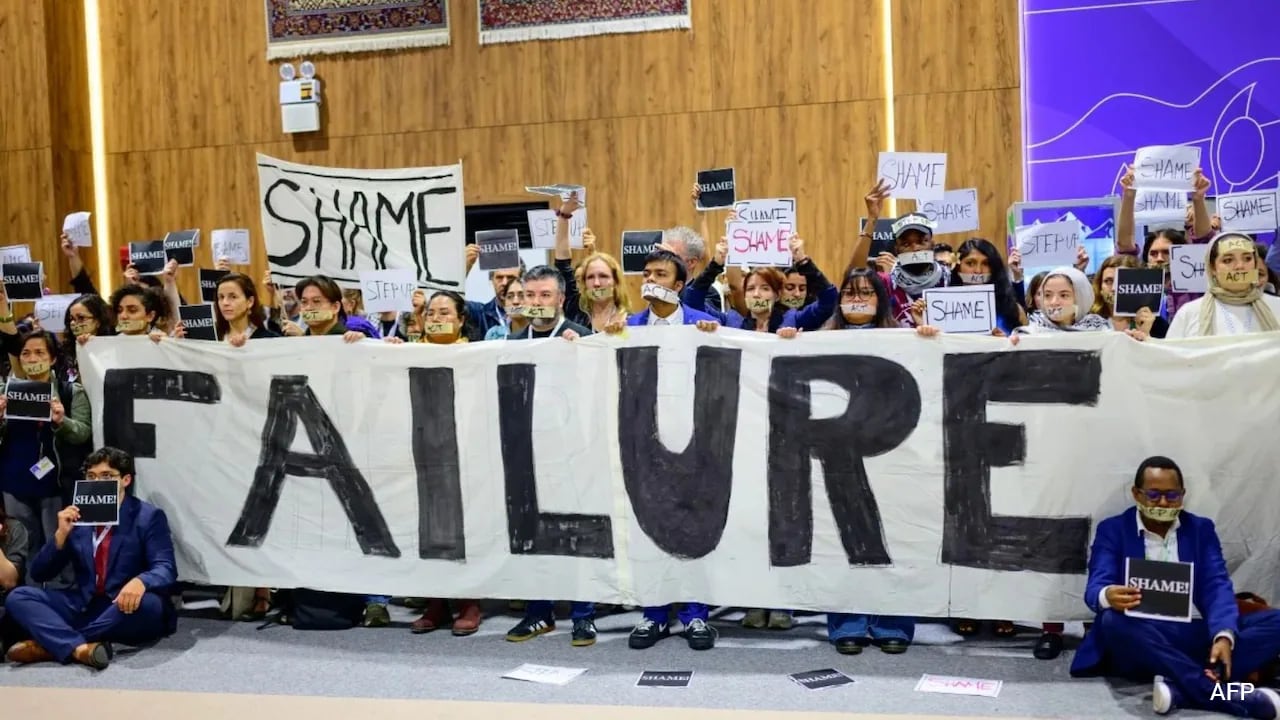
Every November 13, the script repeats itself with suffocating predictability. A hall in London, Berlin, or Toronto fills up. Banners go up. Speeches get delivered about "Baloch National Martyrs Day." Delegates nod solemnly, reaffirming an abstract demand for freedom and self-determination. Then, everyone goes home, posts a few photos on X, and waits another twelve months to do it all over again.
Mainstream coverage—like the recent reports applauding the Baloch National Movement (BNM) for organizing yet another commemorative gathering—treats this ritual as proof of political vitality. It isn't. It is proof of strategic stagnation.
If you look closely at the mechanics of modern geopolitical movements, the obsession with diaspora-led memorialization isn't advancing the Baloch struggle. It is insulating exiled leadership from the brutal reality that moral outrage has zero currency in international statecraft.
The Echo Chamber of Grief
Commemoration feels like action. That is precisely why it is so dangerous.
When political movements lose leverage on the ground, they almost always retreat into symbolism. Grief becomes the primary political product. By centering the narrative almost exclusively on historical victimhood and martyrdom, organizations like the BNM fall into a trap that political scientists have documented across dozens of failed separatist campaigns: substituting moral legitimacy for geopolitical utility.
Let's be brutally honest about how foreign ministries in Washington, Brussels, and New Delhi operate. No Western parliament passes binding sanctions or alters defense aid packages because an exile group held a moving vigil in a rented conference room. International politics runs on cold, transactional self-interest—trade routes, mineral supply chains, counter-terrorism intelligence, and regional containment.
Yet, year after year, the standard coverage of BNM events highlights speeches begging the "international community" to wake up to human rights abuses in Balochistan. The international community is wide awake. It simply hasn't been given a compelling strategic reason to care more about Baloch self-determination than it cares about maintaining transactional stability with Islamabad or protecting multi-billion-dollar infrastructure corridors.
The Myth of "Raising Awareness"
Ask any veteran diplomat or geopolitical risk analyst who has worked on South Asian security over the past two decades. They will tell you the exact same thing: the diplomatic corridors of Europe and North America are saturated with "awareness."
I have watched dozens of diaspora advocacy groups burn through years of donor energy and political capital chasing symbolic resolutions and hosting panel discussions where speakers preach exclusively to people who already agree with them. In the political advocacy space, this is known as the visibility fallacy—the mistaken belief that making noise in a foreign capital translates to exerting pressure on a domestic regime.
Consider what happens in the room during these events:
- Zero Adversarial Engagement: Journalists and policy analysts who hold skeptical views of Baloch separatism are rarely invited, leaving the movement's talking points untested against real-world diplomatic pushback.
- Fragmented Messaging: Because different factions within the broader Baloch nationalist spectrum—from the BNM to the Free Balochistan Movement and various armed fronts—operate without a unified diplomatic doctrine, foreign policymakers hear a cacophony of competing demands rather than a coherent negotiating position.
- Performative Solidarity: Western politicians who occasionally show up at these gatherings do so to court local diaspora votes in their constituencies, not because they intend to shift their country's foreign policy toward Pakistan or Iran.
When media outlets uncritically report that a diaspora event "reaffirmed the call for self-determination," they are laundering a press release. They are mistaking a press conference for a geopolitical shift.
What "Self-Determination" Actually Requires Under International Law
One of the sharpest failures in how Baloch political activism is covered—and practiced—is the sloppy use of the term self-determination.
In casual activist rhetoric, self-determination is treated as an automatic right triggered by suffering. Under actual international law, specifically the frameworks established by the United Nations Charter and subsequent International Court of Justice advisory opinions (such as the 2010 Kosovo ruling), external self-determination—meaning outright secession—is extraordinarily difficult to establish.
International law strongly favors territorial integrity over secession. Unless a movement can demonstrate:
- Unified Political Representation: A single, legitimate authority capable of negotiating on behalf of the population and enforcing agreements.
- Administrative Viability: Concrete governance blueprints showing how an independent state would manage borders, currency, water scarcity, and sectarian fault lines.
- Great Power Sponsorship: Explicit backing from at least one permanent member of the UN Security Council or a dominant regional hegemon willing to absorb the diplomatic fallout.
Look at the historical heavyweights of successful self-determination movements—from East Timor to South Sudan, or even the autonomous model carved out by the Kurdistan Regional Government in Iraq. None of them succeeded because they held superior memorial services in European capitals. They succeeded because they built unified administrative structures, leveraged specific geopolitical fractures (like the post-9/11 invasion of Iraq or the collapse of the Suharto regime in Indonesia), and offered major powers a tangible security or economic dividend.
Right now, the Baloch nationalist movement has none of those three pillars locked down. And no amount of November 13 speeches will build them.
Dismantling the Wrong Questions
When observers look at Balochistan, they usually ask the wrong questions—and standard news reports feed those misconceptions.
"Will international human rights pressure force Pakistan to grant Balochistan autonomy?"
No. Never.
Human rights reports from Amnesty International, Human Rights Watch, and the UN Working Group on Enforced or Involuntary Disappearances have documented thousands of disappearances and extrajudicial killings in Balochistan over the past twenty years. The data is overwhelming and undeniable. Yet, those reports have not altered Islamabad's security calculus in Quetta or Gwadar by a single millimeter.
Why? Because regimes facing what they perceive as an existential threat to their territorial integrity or primary economic lifelines—like the China-Pakistan Economic Corridor (CPEC)—do not concede territory to appease human rights monitors. External moral pressure without hard economic or military leverage merely hardens internal repression.
"Does commemorating martyrs keep the resistance alive for the next generation?"
It keeps the memory alive, which is not the same thing as keeping a strategy alive.
There is a massive difference between cultural preservation and political statecraft. Remembering figures like Nawab Akbar Bugti, Balaach Marri, or the thousands of unnamed students, doctors, and activists lost to enforced disappearances is a vital cultural duty. But when commemoration becomes the centerpiece of a political organization's annual calendar, it breeds a culture of fatalism. It teaches younger generations in the diaspora that the highest form of political participation is mourning the dead, rather than mastering economics, international law, supply chain logistics, or defense policy.
The Uncomfortable Truth About Diaspora Leverage
Let's look at the flip side. Critics of this contrarian view will rightly point out a harsh reality: inside Balochistan, open political organizing is virtually impossible. Enforced disappearances, internet blackouts, and military blockades mean that activists on the ground cannot hold rallies or publish freely without risking their lives. Therefore, the argument goes, the diaspora must be the voice of the voiceless.
That is true—up to a point.
The diaspora has a critical role to play precisely because it enjoys physical safety and access to global financial and political systems. But that privilege is being squandered on low-impact theater.
Think about a scenario where an exiled movement possesses 50,000 dedicated diaspora members across the UK, Germany, Sweden, Canada, and the Gulf states. Right now, that human capital is largely deployed to organize protests outside embassies and host annual martyr commemorations.
Now imagine redirecting that exact same human capital toward hard-power lobbying and institutional penetration:
- Targeting Supply Chains, Not Embassies: Instead of protesting outside Pakistani consulates—which achieves nothing—focus legal and financial pressure on the specific multinational corporations, mining conglomerates, and insurers financing projects in Reko Diq and Gwadar. Force corporate boards to price geopolitical risk into their balance sheets.
- Building a Shadow Technocracy: Establish rigorous, transparent policy institutes staffed by Baloch economists, water-resource engineers, and constitutional lawyers. Publish detailed white papers on how an autonomous or independent Balochistan would govern resource extraction, protect minority rights, and secure maritime trade in the Arabian Sea. Give Western and regional think tanks hard data they can actually cite.
- Unifying the Diplomatic Front: Stop competing for microphone time. Force the various nationalist factions into a single, disciplined diplomatic council with one message, one legal team, and one strategic playbook.
The Cost of Continuing the Status Quo
There is a downside to abandoning the comfort of traditional diaspora activism. Shifting from emotional commemoration to cold, technocratic statecraft is unglamorous. It doesn't generate immediate applause lines. It requires admitting that past tactics have failed to move the needle, which threatens the prestige of entrenched exile leaders who have built their reputations around ritualized resistance.
Furthermore, engaging in realpolitik—offering resource security or regional stability guarantees to major powers in exchange for diplomatic backing—invites messy moral compromises that purists in the movement will despise.
But the alternative is already playing out in real time.
While exiled leaders deliver familiar speeches in rented halls, the facts on the ground in Balochistan are being permanently altered. Mega-projects are locking in foreign capital. Demographic shifts and militarized infrastructure are redrawing the map. Every year spent trapped in the cycle of grief and rhetoric is a year the window for genuine self-determination narrows further.
Martyrs do not need another round of speeches from safe European suburbs. They need a movement ruthless enough to trade its favorite rituals for actual leverage.