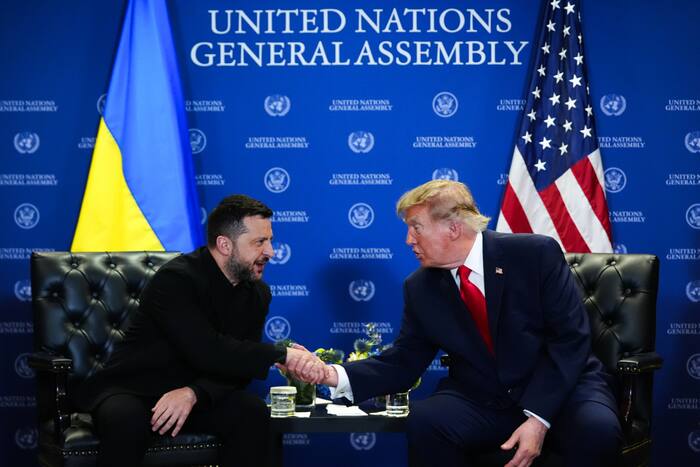
The standard narrative running through every major newsroom right now sounds like a tired script written by someone who has never traded a single barrel of physical crude. The consensus is deafening: Donald Trump bashing Volodymyr Zelenskyy combined with lingering cross-border petroleum whispers means Moscow is laughing all the way to the bank, carving up Western unity while diesel flows through hidden pipes. It is a neat, emotionally satisfying storyline. It is also entirely detached from how commodity markets actually operate.
I have spent years watching traders panic over headlines while ignoring the actual balance sheets. The conventional take assumes that energy flows are political loyalty badges. They are not. They are math wrapped in logistics. When critics foam at the mouth about sanctions leakage, diesel swaps, and rhetorical posturing, they reveal a profound misunderstanding of how fluid global supply chains adapt to pressure. The Kremlin is not relishing anything; they are dealing with a heavily constrained, structurally compromised export machine that is being squeezed by discount pricing and shipping bottlenecks they cannot talk away on state television.
Let us dismantle the lazy assumptions dominating the current discourse.
The Myth of the Untouched Russian Energy Lifeline
Every time a headline suggests that Russia is successfully bypassing trade restrictions via secondary intermediaries, market analysts commit a fundamental error of scale. They look at gross volume and assume net profit. That is amateur hour.
Sanctions do not stop physical molecules from moving. Anyone who thought you could lock a country sitting on the world's largest contiguous energy reserves out of the global grid entirely either failed economics or slept through history class. What sanctions actually do is impose a structural tax on the aggressor.
When Russian diesel or crude finds a circuitous route to an international buyer, it does not do so at market-clearing premium prices. It does so under severe duash. Buyers in third-party nations hold all the cards. They demand steep discounts because they know the seller has nowhere else to put the product without incurring catastrophic storage costs. Tankers sitting idle are burning cash. Refineries cannot simply shut down overnight without risking structural damage to cracking units that cost billions to build.
So what actually happens? Moscow sells volume at a heavy markdown, pays extortionate rates for aging shadow-fleet tankers with dubious insurance, and absorbs massive transaction friction. Calling this a Kremlin victory is like celebrating a business owner who is forced to sell inventory at 40 percent below cost just to keep the lights on. The revenue is bleeding out through the margins.
The Political Theater of Trump and Zelenskyy
Meanwhile, the political sphere fixates on every sharp word exchanged between Washington and Kyiv, treating every public critique as a structural fracture in the Western alliance.
This view ignores the brute-force reality of institutional momentum. Rhetoric is cheap; logistics and military supply chains are heavy. When political figures spar over strategy, commentators love to predict immediate strategic collapses. Yet, the underlying architecture of foreign aid and intelligence sharing operates on timelines that dwarf a twenty-four-hour news cycle.
Trump’s criticism of Zelenskyy is routinely framed by anxious pundits as a death blow to defense coordination. This ignores the decentralized nature of modern security assistance. European capitals have spent years hardening their domestic production capabilities and institutional frameworks. They are no longer waiting for a single executive order from the Oval Office to determine their baseline support levels.
To claim that these verbal friction points hand an immediate victory to Moscow is to misread how autocracies process information. The Kremlin does not adjust its long-term operational planning based on a campaign trail soundbite or a heated interview. They look at industrial output, artillery shell manufacturing capacities, and treasury reserves. And on those metrics, the pressure is compounding daily, regardless of what anyone says on a debate stage.
Following the Actual Flow of Capital
If you want to understand where this is heading, stop reading diplomatic communiqués and start looking at freight rates and refinery cracks.
The diesel market is not dictated by ideological sympathy; it is dictated by middle distillate inventory levels in ARA hubs (Amsterdam-Rotterdam-Antwerp) and Singapore. When European nations banned direct imports of Russian refined products, they did not freeze in the dark. They re-routed. Other producers stepped in, filled the gap, and backfilled their own domestic needs with discounted Russian feedstock.
This created a massive, inefficient shell game. But inefficiency is expensive. Every time a barrel of oil changes hands an extra three times, passes through an unnecessary port, and requires non-standard financial clearing, friction eats the profit. The net effect on the Russian federal budget is a slow, grinding erosion of fiscal health, masked temporarily by high-level propaganda.
Those who argue that this system proves sanctions are useless are falling for the exact trap the Kremlin wants them to fall in: judging success by whether trade drops to absolute zero rather than whether the economic rent is being systematically destroyed. Total isolation is a fantasy. Economic attrition is reality.
The Uncomfortable Truth About Energy Interdependence
The honest admission that policy wonks hate to make is that absolute economic decoupling is a myth in a globalized commodity market. You cannot sever a primary supplier without triggering severe price shocks that punish domestic voters harder than the target regime in the short term.
Western policymakers understood this. That was the entire point of the price cap mechanism—to keep Russian oil flowing just enough to prevent global pump prices from skyrocketing, while stripping away the profit margin that funds state operations. It is messy. It looks ugly on television. It involves loophole exploitation by nimble brokers operating out of Dubai and Mumbai.
Yet, pretending this system is a failure because it is imperfect is intellectual laziness. Perfection is the enemy of effective statecraft. The current setup forces Moscow into a permanent defensive crouch, trading future technological investment for current cash flow just to service an unsustainable wartime budget.
The diesel deals and the political friction are not signs of Western weakness or Russian triumph. They are the friction points of a grinding war of attrition where the side with deeper institutional reserves and more adaptable financial networks always wins in the end.
Stop looking for a clean narrative where villains win easily or heroes achieve total purity. The actual game is played in the margins, and the margins are bleeding dry.


