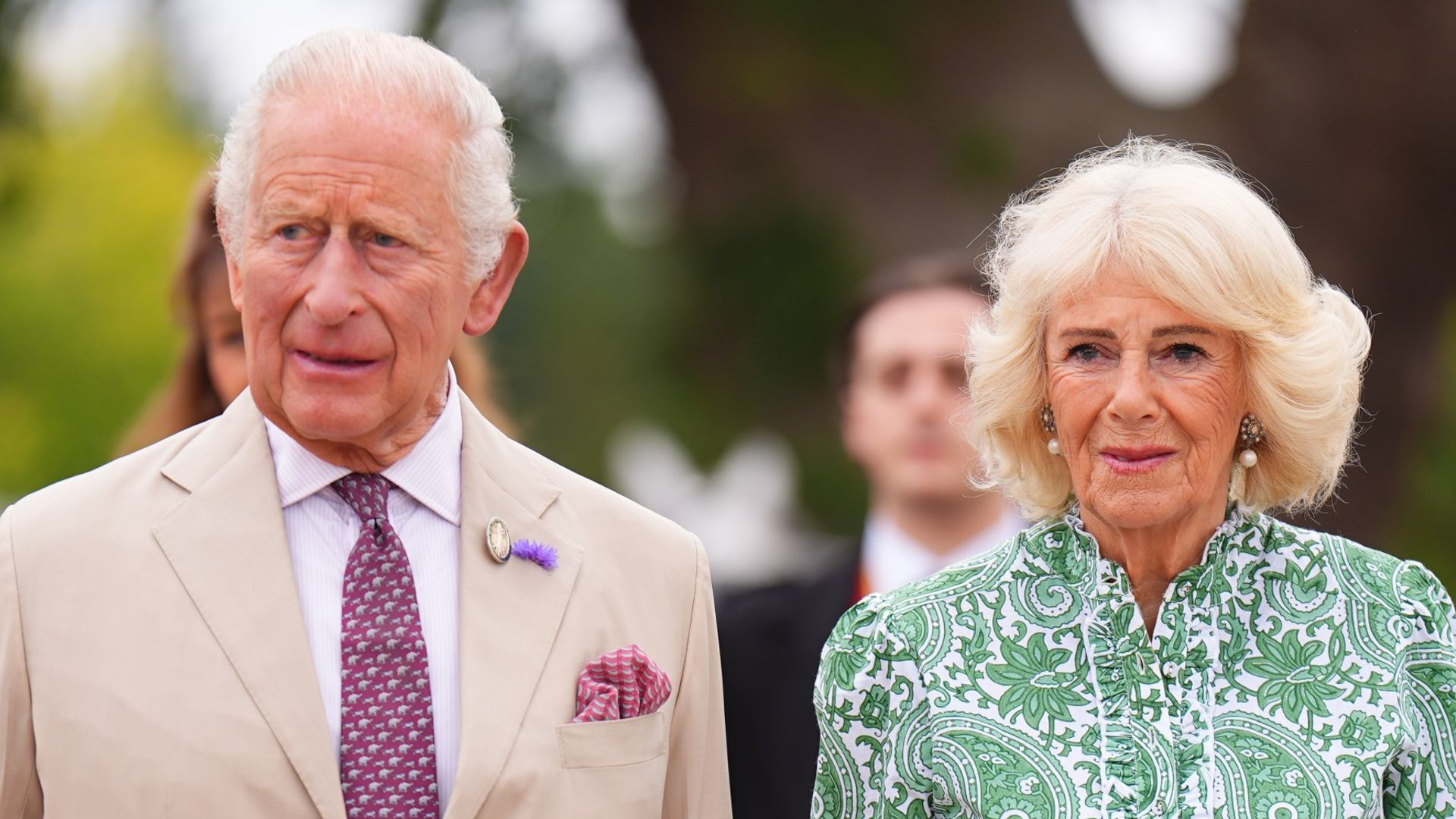
Royal state visits operate as high-stakes instruments of public diplomacy, governed by a rigid matrix of diplomatic signaling, constitutional protocol, and shifting public sentiment. When the British monarch conducts diplomatic tours within Commonwealth realms, the engagement transcends ceremonial pageantry. It functions as an empirical test of institutional endurance, public relations mitigation, and the management of decolonization pressures. Analyzing a royal itinerary for Antigua and Barbuda requires stripping away the traditional media narrative of polite handshakes and parades to expose the underlying machinery of statecraft, economic dependency models, and republican transition mechanics.
The Mechanics of Commonwealth State Diplomacy
State visits executed by the British Crown within the Caribbean are structured around two distinct operational objectives: reinforcing diplomatic alignment and preserving institutional continuity during an era of accelerating republicanism. Antigua and Barbuda operates as a constitutional monarchy with the British monarch serving as head of state, represented locally by a Governor-General.
The logistical architecture of such a tour involves months of synchronized planning between Buckingham Palace, the Foreign, Commonwealth & Development Office, and the local Prime Minister's office. Every public appearance, meeting venue, and wreath-laying ceremony serves a precise signaling function. Diplomatic protocols dictate that the host government manages the domestic political optics, while the visiting delegation supplies the historical weight of continuity.
However, this traditional framework faces structural friction. The primary challenge lies in the divergence of interests between the host population and the visiting institution. While the host government may utilize the high-profile visit to secure international media attention, tourism promotion, or bilateral goodwill, domestic civic groups frequently leverage the exact same spotlight to air unresolved historical grievances and press for constitutional reform.
The Cost Function and Economic Trade-Offs
Hosting a royal delegation involves quantifiable expenditures absorbed by public funds, a factor that intensifies scrutiny in developing economies. The cost function of a state visit includes comprehensive security deployments, transport logistics, venue preparation, and public relations management.
At the same time, the economic rationale presented by proponents relies heavily on the indirect value of international media exposure. High-visibility coverage across global broadcast networks acts as a promotional vehicle for the nation's tourism sector, potentially driving hospitality revenues and foreign direct investment. Yet, calculating the true return on investment remains notoriously difficult due to the absence of direct attribution models separating royal tourism boosts from baseline market trends.
Critics within the local populace often frame these expenditures through an opportunity cost lens, arguing that public capital allocated toward ceremonial hosting would yield higher utility if redirected toward domestic infrastructure, healthcare, or educational systems. This tension transforms every logistical decision into a calculated political trade-off for the sitting administration, balancing the potential for international visibility against the risk of domestic political backlash.
The Republican Transition Horizon
Antigua and Barbuda's political leadership has consistently signaled an intention to transition toward a republican form of government, positioning a constitutional referendum as a logical evolution of sovereignty. This trajectory alters the baseline context of any royal visit.
The transition process follows a strict legal sequence:
- Parliamentary debate and drafting of constitutional amendments altering the head of state provision.
- Public consultation phases designed to gauge civic alignment and address procedural concerns.
- A mandatory national referendum requiring a specified majority vote to ratify the removal of the Crown.
- Subsequent adjustments to domestic legal frameworks, judicial appeals processes, and gubernatorial roles.
When a royal delegation arrives against this backdrop, the visit functions as a barometer of the current pace of institutional change. Rather than halting the momentum toward a republic, these diplomatic engagements often accelerate public discourse, forcing both government officials and civic organizers to articulate their timelines and strategic objectives with greater clarity.
Public Sentiment and Media Framing Divergence
A critical variable in analyzing royal tours is the widening gap between official media framing and grassroots public sentiment. Traditional coverage frequently emphasizes enthusiastic crowds, cultural displays, and historical ties. This approach relies on curated visual narratives designed to project stability and enduring affection across generations.
Conversely, modern civic movements and anti-colonial advocacy groups operate with sophisticated media strategies of their own. They utilize digital platforms to broadcast alternative viewpoints, demand formal acknowledgments of historical injustices, and question the contemporary relevance of hereditary institutions. This dynamic creates a fractured public square where the reception of the monarch is not uniform, but deeply polarized along generational, ideological, and socio-economic lines.
The operational response from security and public relations teams has evolved to manage these competing realities. Rather than attempting to suppress dissent, modern itineraries are designed with buffer zones and compartmentalized engagements that minimize direct confrontation while allowing peaceful demonstrations to register within the global media stream. This coexistence of pageantry and protest defines the modern operational reality of Commonwealth diplomacy.
Strategic Outlook for Bilateral Relations
The future of diplomatic ties between the United Kingdom and Antigua and Barbuda does not hinge on the success or failure of a single ceremonial tour. Instead, it relies on the willingness of both states to recalibrate their relationship away from historical dependency models toward a modern partnership based on mutual economic interest, climate resilience cooperation, and diplomatic parity.
As Antigua and Barbuda advances its timeline toward a potential republican future, the diplomatic apparatus must prepare for a managed transition. The ultimate measure of success for contemporary state visits is no longer the preservation of the status quo, but the smoothness with which both nations can navigate institutional evolution without severing vital channels of trade, diplomacy, and cultural exchange. Strategic engagement moving forward requires anticipating constitutional shifts and establishing bilateral frameworks that remain robust regardless of whether the head of state resides in London or St. John's.