State-sponsored cultural institutions function as soft power infrastructure. Beyond their primary pedagogical or artistic output, entities like language centers and cultural institutes serve two distinct operational purposes: maintaining an institutional footprint within a rival or strained jurisdiction and providing a decentralized intelligence and communication node.
When a host government decides to shut down such a facility, the action is rarely impulsive. It represents the final step in a calculated escalation ladder. If you found value in this article, you should check out: this related article.
The Escalation Ladder of Cultural Denial
The closure of foreign cultural outposts follows a predictable trajectory of state friction. Understanding this sequence requires deconstructing the operational phases a government utilizes to signal displeasure without engaging in direct military or major economic conflict.
The first phase involves administrative friction. Visa delays for cultural attachés, sudden tax audits on institutional assets, and increased regulatory scrutiny of local staff create an operational drag. This imposes a steady financial and administrative cost on the sponsoring nation, forcing them to expend diplomatic capital just to maintain baseline operations. For another angle on this story, refer to the latest update from The Guardian.
The second phase introduces public signaling. State-aligned media campaigns begin framing the institution not as a bridge for bilateral understanding, but as an ideological vector or a security liability. This shifts domestic public opinion and establishes a pretext for punitive action. By conditioning the local populace to view the foreign entity with suspicion, the state lowers the political cost of a future shutdown.
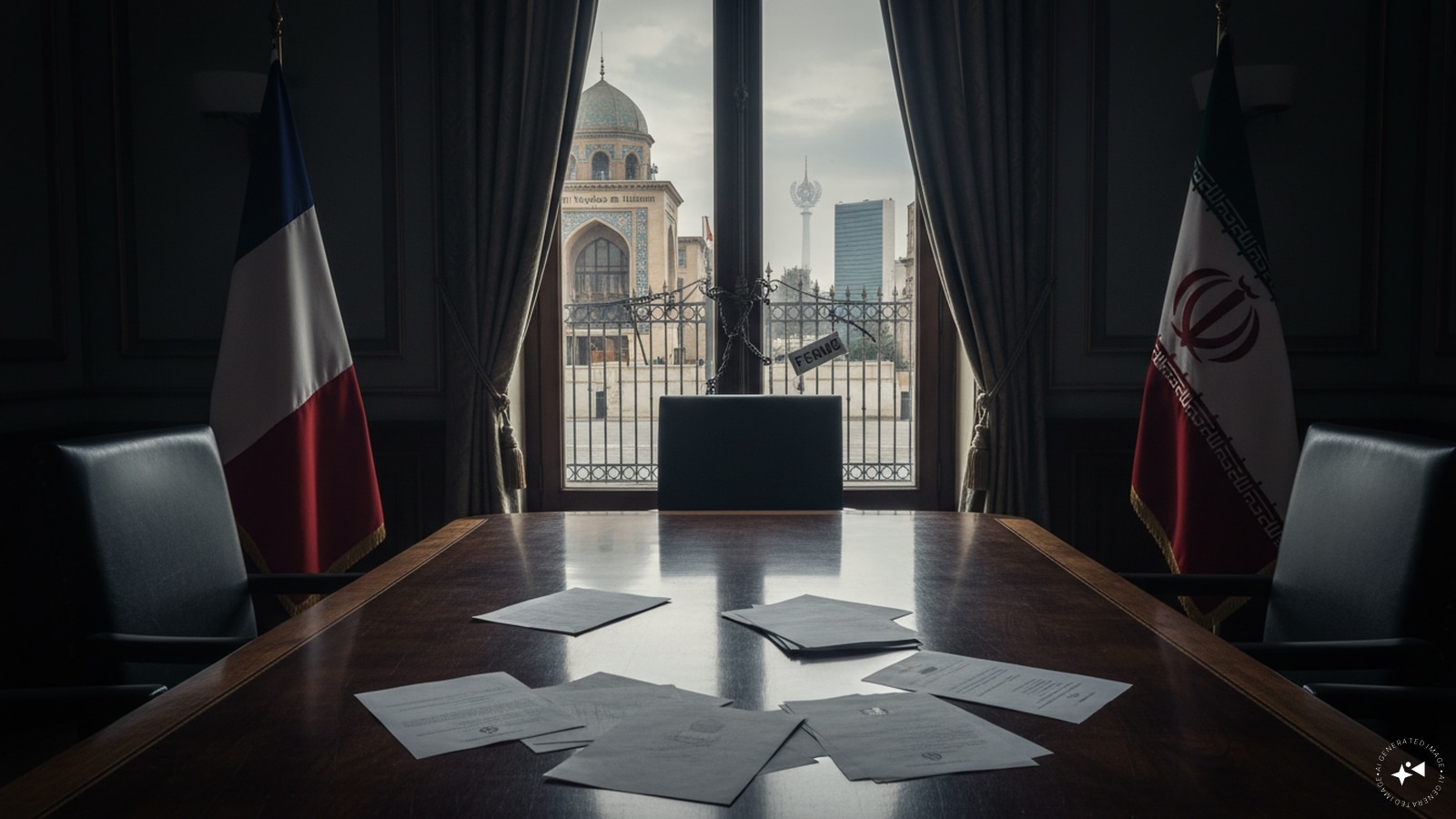
The final phase is the formal closure or seizure of assets. In the case of the Tehran language center closure, the action directly targets France's cultural operational capacity within Iranian territory. This creates an asymmetrical dilemma for the responding nation.
The Response Dilemma and Asymmetrical Leverage
When a state retaliates against the closure of a diplomatic or cultural asset, it operates within severe constraints. A proportional response—such as closing an equivalent Iranian cultural center in France—often carries minimal strategic weight if the target institution possesses a smaller operational footprint or lower strategic value. This asymmetry is the core challenge of managing diplomatic friction.
To evaluate France's vowed response, one must calculate the cost function of available countermeasures.
First, economic sanctions offer a high-impact mechanism, but their utility depends on existing baseline integration. If trade channels are already heavily restricted due to broader international sanctions regimes, adding incremental measures yields diminishing returns.
Second, diplomatic downgrading—expelling ambassadors or recalling diplomatic staff—reduces communication bandwidth. While this sends a strong signal, it also eliminates the channels necessary to de-escalate crises or negotiate outcomes regarding detained nationals or regional security issues.
Third, legal and financial targeting of regime-affiliated assets abroad provides a tangible retaliatory lever. Freezing assets or restricting travel for specific officials directly impacts the targeted leadership without requiring broader economic warfare that might harm civilian populations or alienate allies.
Information Operations as a Strategic Variable
The public posturing surrounding these closures serves a dual audience: domestic constituents demanding a display of strength and international observers assessing the credibility of a nation's red lines.
Rhetorical vows of a response often outpace actual policy implementation because foreign ministries must balance immediate signaling with long-term strategic stability. A state cannot afford to appear weak in the face of institutional expulsion, yet it must avoid triggering a runaway escalation spiral that closes the remaining diplomatic escape valves.
The strategic reality of cultural center closures is that they are designed to be permanent or semi-permanent losses traded for short-term political leverage. Once an institution is closed and its local network is disrupted, rebuilding that infrastructure requires years of patient diplomacy and favorable political conditions.
The immediate calculus for the responding government involves determining whether the cost of escalation exceeds the value of the lost asset. If the institutional footprint was already compromised or operating under severe restrictions, the closure may simply formalize a de facto reality, allowing the state to pivot its resources toward higher-leverage diplomatic arenas.