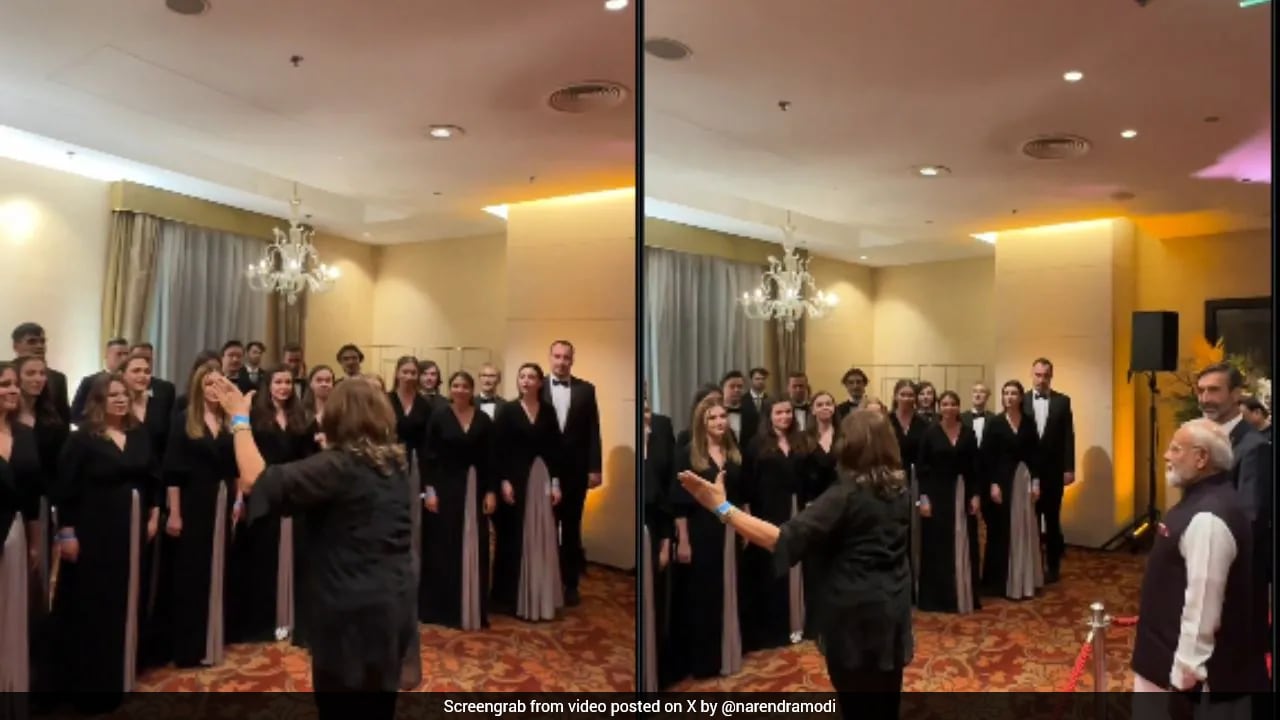
Mainstream media outlets love a good optics play. When Indian Prime Minister Narendra Modi landed in Slovakia, the headlines immediately latched onto the textbook feel-good narrative: a local choir delivering a rendition of "Vande Mataram." Cue the social media applause. Cue the collective pat on the back for global cultural footprint.
It is a lazy, superficial consensus.
Geopolitics is not a talent show. Measuring the success of a high-level state visit by how well a European choir can pronounce Sanskrit syllables is the diplomatic equivalent of judging a corporate merger by the quality of the catering at the press conference. While the public eats up the viral video clips, the real machinery of international relations—the hard-nosed negotiation over trade corridors, defense manufacturing, and semiconductor supply chains—is completely ignored.
We need to stop conflating cultural pandering with strategic leverage.
The Choreography of Flattery
Let us dismantle the mechanics of the modern state visit. Foreign ministries possess massive departments dedicated entirely to cultural signaling. They know exactly which buttons to push. If the Indian Prime Minister visits, you dust off a patriotic anthem. If the American President arrives, you wave the star-spangled banner and talk about shared democratic values.
This is basic diplomatic hygiene, not a breakthrough in bilateral relations.
I have spent years watching trade delegations and diplomatic attachés behind closed doors. Do you know what happens after the cameras stop flashing and the choir packs up their sheet music? The host nation pulls out a spreadsheet. They do not give concessions on tariffs because they sang a song. They do not ease visa restrictions for Indian tech workers out of a newfound love for Indian literature.
They want to know what India is buying, what India is selling, and where India stands on regional security.
By focusing on the performance, the media helps governments hide the lack of substantive outcomes. It creates a smoke screen of success. A foreign trip can yield zero signed treaties, zero trade agreements, and zero security pacts, yet still be branded a triumph on evening news cycles simply because the welcoming ceremony looked impressive on TikTok.
The Hidden Cost of the Optics Obsession
When we prioritize cultural spectacles, we miss the actual shifts occurring in Central and Eastern Europe. Slovakia and the broader Visegrád Group are critical nodes in Europe’s shifting industrial landscape. They are manufacturing powerhouses, major automotive hubs, and crucial players in Western Europe's supply chain resilience strategy.
India's real objective in Bratislava is not cultural exchange. It is securing a foothold in Central European manufacturing and logistics.
Consider the actual economic friction points:
- Tariff Barriers: The European Union's Carbon Border Adjustment Mechanism (CBAM) poses a direct threat to Indian engineering and metal exports. A song will not lower those carbon taxes.
- Defense Diversification: India is actively seeking to diversify its defense procurement away from traditional suppliers. Central European defense firms possess deep engineering capabilities that India needs to tap into via joint ventures.
- Labor Mobility: Central Europe faces massive demographic deficits. Indian industry needs structured, legal migration pathways for skilled professionals, bypassing bureaucratic EU red tape.
Every minute spent dissecting the symbolism of a musical welcome is a minute lost analyzing whether Indian negotiators extracted concrete commitments on these three fronts.
The Myth of Global Cultural Dominance
The common defense of these spectacles is that they prove India’s "soft power" is ascending. This is a fundamental misunderstanding of what soft power actually achieves. Joseph Nye, the political scientist who coined the term, defined it as the ability to affect others to get the outcomes one wants through attraction rather than coercion or payment.
Does a foreign choir singing a patriotic song mean India has acquired soft power? No. It means the host country is polite.
True soft power is structural. It is the widespread adoption of your technology standards. It is your judicial frameworks influencing international law. It is your currency being used to settle third-party trade deals. When the United States projects soft power, it is through global financial systems and dominant digital platforms, not just Hollywood movies.
When we celebrate superficial cultural nods, we accept a cheap imitation of global influence. It allows domestic audiences to feel a sense of triumph without demanding the hard, multi-decade institutional building required to wield actual international authority.
Dismantling the Premium on Praise
Look at how other global powers conduct business. When Chinese state delegations travel, they do not demand or care if the host nation performs traditional Chinese opera. They care about port infrastructure ownership, mineral rights, and 5G network integration. When German delegations travel, they focus on machinery standards and intellectual property protections.
They do not confuse politeness with policy.
The danger of the current media environment is that it creates a feedback loop where politicians are incentivized to chase the viral clip rather than the grueling, unsexy work of trade negotiation. A trade treaty takes years of legal wrangling, compromises that will inevitably anger some domestic constituency, and meticulous policy alignment. A viral musical performance takes an afternoon to arrange and delivers instant political capital.
The Hard Truth of Central European Realpolitik
Central European nations are highly pragmatic actors. Slovakia’s foreign policy is dictated by its position within the EU, its economic reliance on German industry, and its immediate security concerns regarding Eastern Europe. They are looking at India through a purely transactional lens: can New Delhi act as a counterweight to economic over-dependence on other Asian manufacturing giants?
If India cannot deliver on competitive trade terms, infrastructure investments, or reliable supply chains, the warm feelings generated by a musical rendition evaporate before the Prime Minister's plane clears Slovak airspace.
We must stop treating foreign policy like a diaspora gala.
The next time you see a headline shouting about a foreign capital welcoming an Indian leader with traditional songs or cultural displays, ignore the video. Do not click share. Search instead for the joint statement issued at the end of the summit. Look at the annexes. Count the number of binding bilateral agreements. Check if the tariff disputes were resolved.
If those documents are empty, the visit was a failure, no matter how beautiful the choir sounded.