A podium is a quiet piece of furniture until someone stands behind it. Then, it becomes a staging ground. Words travel faster than artillery shells, and they often leave a different kind of wreckage behind them.
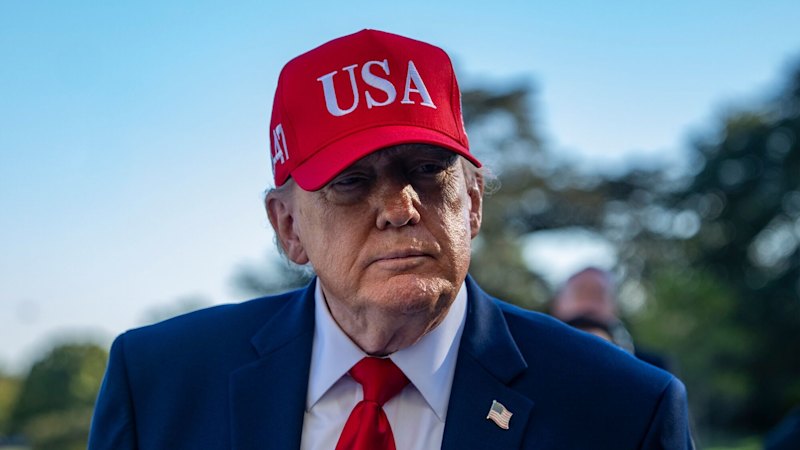
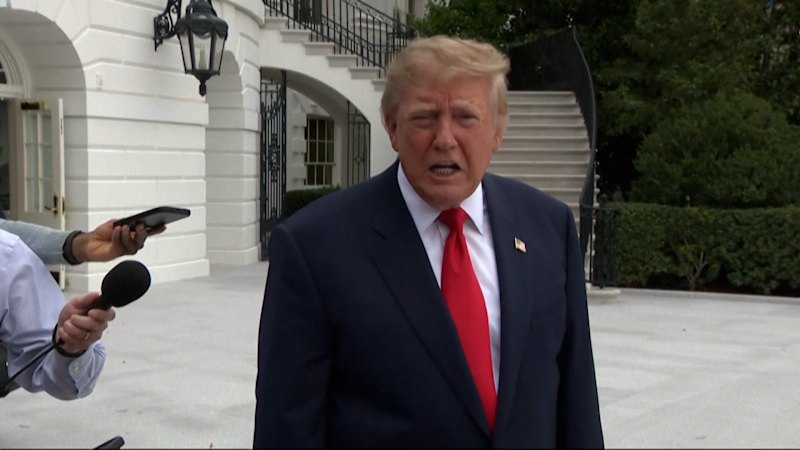
Consider the geography of a modern disagreement. On one side, a former American president speaks into a bank of microphones, his sentences rolling with the cadence of grievance and campaign-trail certainty. On the other, a leader in a wartime capital navigates the flickering light of a generator-powered office, measuring his responses not in political points, but in kilometers and fuel reserves. Between them lies an ocean, a continent of anxious allies, and a widening chasm of strategy.
The flashpoint was deceptively mundane: diesel. Or more precisely, the targeting of fuel infrastructure that keeps a nation breathing through the freezing dark.
When Donald Trump took to his platform to criticize Ukrainian President Volodymyr Zelenskyy, the critique was sharp, delivered with the familiarity of a man who views international politics through the lens of a failed real estate negotiation. Why, the argument ran, are we here? Why is the friction not ending? The framing was designed to provoke, to cut through the noise of diplomatic niceties and strike at the core of American exhaustion.
Yet, reducing a continental war to a personality clash misses the machinery underneath.
Imagine standing in a switching station in central Ukraine just as the sun dips below the horizon. The air smells of ozone and diesel exhaust from the backup generators humming outside. A worker named Oleh checks a pressure gauge for the third time in an hour. He isn't thinking about election cycles in Florida or speeches in Pennsylvania. He is thinking about whether the transformer three miles down the line will hold when the evening load peaks, or if the next strike will plunge his neighborhood back into a silence broken only by air raid sirens.
When political figures thousands of miles away spar over tactical decisions—whether fuel strikes are escalatory, whether aid comes with too many conditions, or whether peace can be brokered by sheer willpower—the distance between the rhetoric and the reality can feel absolute.
Trump’s critique of Zelenskyy tapped into a very real American fatigue. Billions of dollars flow across the Atlantic. Headlines blur together. The promise of a quick resolution, so casually floated on stages and in interviews, collides with the stubborn, grinding mechanics of a war fought over trenches and supply lines. In that context, blaming the leadership on the ground becomes an easy narrative shortcut. It suggests that if the characters changed, the script would too.
History suggests otherwise.
Wars do not usually end because the starring actors grow tired of each other; they end when the arithmetic of survival forces a reckoning. When fuel depots burn, the price is paid in the cold of winter apartments, in delayed ambulances, in the slowing pulse of an industrial economy trying to fight with one hand tied to an emergency generator.
Zelenskyy’s position has always been rooted in an unyielding premise: compromise with an active invader is an invitation to a larger conflict. It is a maximalist stance, born from the existential dread of a country that watched its borders redraw overnight. To step back from that stance, to entertain critiques about strikes on energy grids or diplomatic tone, is to risk fracturing the internal morale that keeps the frontlines manned.
So the verbal sparring continues. A statement is issued. A headline is generated. A social media post is scrutinized by analysts in London, Brussels, and Washington.
Meanwhile, back in the switching station, Oleh wipes grease from his hands with a rag and watches the digital display stabilize. The power stays on for now. The arguments across the ocean sound distant, like static from an old radio playing in another room, irrelevant to the immediate task of keeping the lights burning against the dark.