Justice doesn't always come fast. Sometimes it takes four decades and a discarded piece of gum to put a killer behind bars. Robert Eugene Brashers didn't live to see his day in court, but the man who helped him—or at least stayed silent while lives were destroyed—finally did.
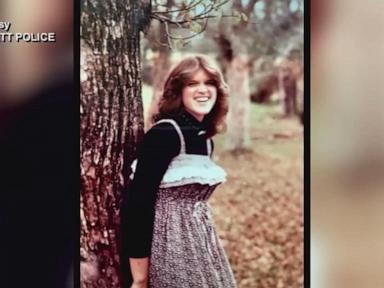
Billy Ray Turner just received a life sentence for his role in the 1980 Metro Center murders. If you think cold cases are just for television dramas, this case proves that the real world is much more patient and much more clinical. It took 44 years to close the book on the deaths of 22-year-old Bobby Gentry and 18-year-old Judy Gentry. They were just kids. They were found shot to death inside their jewelry store in a busy Nashville shopping hub. For years, the trail went cold. It stayed cold until genetic genealogy and a surveillance team changed everything.
The long road to a conviction
For decades, the Gentry family lived with a void. Imagine going to work and never coming home because someone wanted a tray of rings. The Nashville Police Department worked this for years. They had DNA, but they didn't have a name. In the 80s, the tech simply didn't exist to find a match unless the killer was already in a database.
The breakthrough didn't happen in a lab at first. It happened in the trash. Investigators eventually linked the crime scene DNA to Robert Eugene Brashers, a man who died in 1999. But he didn't act alone. Suspicion turned to Turner. To get him, they needed his DNA without him knowing.
They followed him. They watched him. They waited for him to slip up. When Turner spat out a piece of chewing gum and walked away, he handed the state his confession. That saliva contained the genetic map that placed him at the scene of a 1980 double homicide.
Why genetic genealogy is the ultimate truth teller
You can't argue with your own biology. Criminals used to think that if they didn't have a record, they were invisible. That's a lie now. Investigative genetic genealogy uses public databases like GEDmatch or FamilyTreeDNA to find relatives of the suspect.
If your second cousin uploads their DNA to find out if they’re Irish, they might accidentally hand over your location to the police. It’s a fascinating, slightly terrifying evolution in privacy and policing. In Turner's case, the gum was the final nail. It confirmed what the family trees suggested.
The legal system moves slowly, but it's relentless. Turner is now an old man. He thought he got away with it. He lived a full life while the Gentrys were frozen in 1980. The judge’s sentence of two consecutive life terms ensures he won't see the outside of a cell again. It’s a grim kind of symmetry.
The reality of cold case investigations
Most people think cold cases are solved by a "eureka" moment. They aren't. They're solved by boring, repetitive police work. It's about looking at the same file for the thousandth time and waiting for science to catch up with your gut feeling.
The role of the Metro Nashville Police Cold Case Unit
The detectives in this unit don't give up. They kept the Gentry evidence preserved. If they hadn't kept that 44-year-old evidence pristine, the gum wouldn't have mattered.
- Evidence Preservation: Keeping biological samples dry and uncontaminated for half a century is a massive logistical feat.
- Funding: These cases are expensive. Testing DNA costs thousands.
- Witness Memory: After 40 years, people forget. DNA doesn't forget.
What this means for unsolved crimes in 2026
If you’re sitting on a secret from 1980, you should be worried. The technology used to catch Turner is only getting more sensitive. We're now at a point where a few skin cells left on a door handle can be enough to build a profile.
The Gentry case isn't just about one man going to prison. It’s a signal. It tells families of victims that "too much time" isn't a real thing anymore. It tells criminals that their past is always walking right behind them.
Nashville has changed a lot since 1980. The Metro Center isn't what it used to be. But the grief of the Gentry family remained exactly the same. They spoke in court about the birthdays missed and the holidays that felt empty. They got their answer.
The ethics of the gum grab
Some people get uneasy about "surveillance DNA." They wonder if it’s legal for a cop to follow you and grab your trash. The courts have been pretty clear on this: once you throw it away or spit it out in public, you’ve abandoned it. It’s no longer yours. It belongs to whoever finds it.
In this case, that abandonment led to a life sentence. It’s hard to find sympathy for someone complaining about privacy when they’ve spent four decades hiding from a murder charge. Turner’s defense tried to fight it, but the science was too solid. The jury didn't take long to decide.
Moving forward from the Gentry verdict
If you’re following these types of cases, the best thing you can do is support local cold case units. They are often underfunded and overworked. Many cities have non-profits that help pay for the advanced DNA testing required to crack these decades-old mysteries.
Check out organizations like Project Justice or the DNA Doe Project. They do the heavy lifting that smaller precincts can't afford. You can also advocate for better evidence storage laws in your state. Too often, evidence is destroyed to make room in a warehouse, effectively killing any chance of a future solve.
The Gentry family can finally breathe. Turner can finally reflect on 1980 from a 6x9 cell. The gum is gone, but the result stays forever. Keep an eye on your local news because there are thousands of these cases still waiting for their "chewing gum moment."