Seizing seven domains linked to a threat actor disrupts a specific slice of infrastructure, yet rarely terminates a determined intrusion campaign on its own. For defenders, CISOs, and policy analysts trying to evaluate law enforcement headlines, the central strategic question is not how many domains were taken offline, but how domain seizure alters the threat actor's cost function, operational tempo, and visibility. This breakdown establishes an analytical framework for evaluating small-scale domain takedowns, separating confirmed mechanics from educated hypotheses, and mapping tactical responses for enterprise security teams.
Deconstructing the Standard Takedown Narrative
Headlines announcing that authorities disrupted a hacking network and seized a handful of domains typically frame the event as a decisive victory. That framing compresses a complex multi-layered operation into a single metric: domain count. When a story treats seven seized domains as proof that a network is crippled, it conflates control-plane friction with campaign eradication. If you enjoyed this piece, you should look at: this related article.
In real-world incident response, domain names are among the cheapest, most replaceable elements in an intrusion lifecycle. A threat actor can register new domains in minutes through resellers, rotate infrastructure across cloud providers, or rely on direct IP addresses, compromised legitimate sites, and alternative rendezvous channels when a primary domain goes dark. Treating a small domain seizure as a knockout blow overestimates the durability of the disruption and can lull defenders into premature complacency.
The second limitation in superficial coverage is attribution shorthand. Phrases like "Chinese-linked" often bundle distinct operational tiers—state-sponsored espionage units, contractor-led cyber operations, and financially motivated threat groups—under a single label without specifying the underlying evidence. Accurate analysis requires separating confirmed technical and legal facts (such as court-authorized registrar transfers, sinkholing, or observed command-and-control traffic patterns) from educated hypotheses (such as inferred operator motives, probable backup infrastructure, or shifts in targeting cadence). For another perspective on this development, check out the recent update from Ars Technica.
The Economics and Mechanics of Domain Seizure
To understand what a seven-domain seizure actually accomplishes, evaluate the disruption through three conceptual lenses: the Domain Cost Function, the Three Pillars of Infrastructure Resilience, and Causal Chains of Disruption.
The Domain Cost Function
From an operator's perspective, a domain name sits at the intersection of registration cost, operational setup time, reputation burn, and exposure risk. Registering a handful of domains carries negligible financial cost, especially when funded by state budgets or criminal proceeds. The real cost to an attacker is operational time and coordination: provisioning new servers, configuring TLS certificates, updating implant configurations or staging scripts, testing reachability, and re-establishing communication with compromised hosts that are still polling old addresses.
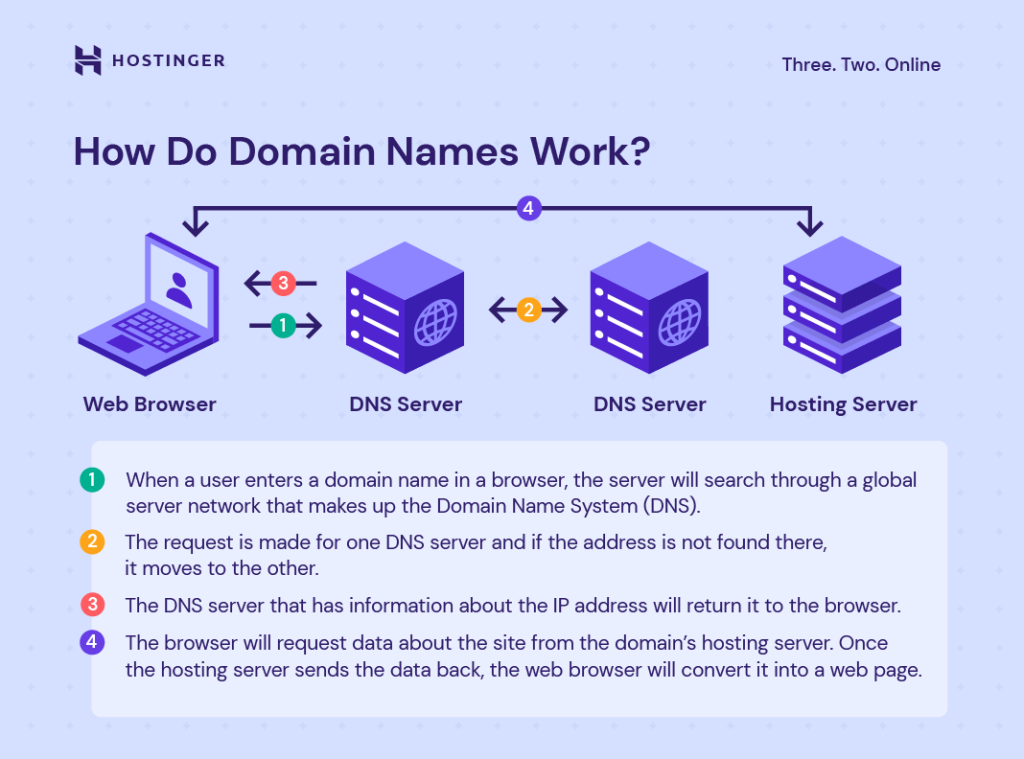
When law enforcement seizes domains—often redirecting traffic to a sinkhole operated by investigators or partners—the operator loses visibility into beacons coming from those specific names and loses an active route to reach implanted systems. If an implant is hardcoded to check only those seven domains without a fallback mechanism, those specific implants may become orphaned or harder to task until the attacker regains access through another vector.
The Three Pillars of Infrastructure Resilience
Threat networks absorb takedowns through three structural pillars:
- Redundancy and Diversity: Operators rarely rely on a single domain or single hosting provider. Backup domains, subdomain shifts, bulletproof or offshore registrars, compromised third-party web servers, and IP-based fallbacks allow operations to continue even when specific names are seized.
- Decoupling of Roles: Modern intrusion architectures separate initial access, staging/payload delivery, command-and-control (C2), and data exfiltration. Losing seven domains tied to one stage—such as C2 relays or staging—does not automatically destroy stolen credentials, ongoing persistence on victim networks, or separate exfiltration channels.
- Agility and Automation: Groups with scripted deployment pipelines and pre-staged infrastructure can stand up replacement domains far faster than legal seizure orders can be drafted, served, and executed across international jurisdictions.
Cause-and-Effect Chains Missed in Surface Reporting
Surface-level coverage often stops at the seizure event itself. Tracing cause and effect reveals secondary consequences that matter more to defenders:
- Seizure creates a telemetry window, not total silence. When a seized domain points to a sinkhole server, investigators can observe which victim IP addresses or networks attempt to resolve or connect to the domain. This provides defenders and law enforcement with valuable intelligence on potential exposure, even if sinkhole data alone cannot prove full compromise or identify every victim behind NAT or corporate proxies.
- Forced rotation exposes fresh artifacts. Rebuilding infrastructure forces the operator to register new domains, provision new certificates, and potentially modify tooling or staging paths. Defenders monitoring certificate transparency logs, passive DNS, and anomalous outbound connections often spot new infrastructure during these rebuild windows.
- High-value access rarely dies with one domain. If an attacker already holds valid credentials, active sessions on edge devices, or internal foothold access, losing seven external domains slows remote command and control temporarily, but does not erase existing access inside a victim environment.
What Defenders and Analysts Should Verify Next
When a small-scale domain seizure hits the news, analysts and security teams do not need to guess blindly. They can test the real impact of the operation by examining concrete indicators and operational questions.
How to Tell If a Small Seizure Truly Hurts an Operator
A seven-domain seizure inflicts heavy damage only under specific conditions: the seized domains were primary, non-redundant C2 or staging endpoints; the implants lacked agile fallback mechanisms; the operator lacked pre-staged replacement infrastructure; or the seizure coincided with broader operational disruption such as server seizures, arrests, or leaked tooling. Conversely, if the domains were low-cost rotation nodes or secondary relays, the impact is primarily tactical and temporary rather than strategic.
Why Attribution Labels Need Precision
"Linked" in threat intelligence can mean anything from shared infrastructure and code overlap to geopolitical alignment or victimology. Analysts should treat attribution as a confidence assessment, not a binary fact. Technical indicators show how infrastructure operated; behavioral patterns and intelligence context inform who likely operated it. Conflating technical links with proven state direction weakens both threat modeling and policy decisions.
Operational Steps for Security Teams
Security leaders can turn a domain seizure announcement into a disciplined defensive check rather than a headline distraction:
- Extract and validate indicators carefully. Obtain exact domain names, associated IP histories, and any published sinkhole or advisory context from trusted threat intelligence or government notices. Avoid blindly blocking broad domains without checking for shared hosting or legitimate service overlap.
- Hunt historical DNS and proxy logs. Query passive DNS, internal DNS logs, and web proxy/firewall telemetry for prior lookups or connections to the seized domains. Historical hits identify systems that may have communicated with the network before sinkholing began.
- Inspect hosts for persistence beyond the domain. If an internal asset queried a seized domain, do not rely solely on blocking the domain at the perimeter. Audit scheduled tasks, services, unauthorized accounts, anomalous outbound traffic, and edge-device configurations to verify whether a foothold exists.
- Harden against infrastructure rotation. Focus defensive effort on behaviors and identity controls—such as phishing-resistant multi-factor authentication, rapid patching of internet-facing appliances, egress filtering, and anomaly detection—because domain blocklists always lag behind domain registration.
Limits of Takedowns and the Strategic Play
Domain seizures have clear structural limits. Cross-border legal processes move slowly, registrars and hosting providers operate under varying jurisdictional rules, and attackers continuously adapt their command-and-control channels—shifting toward encrypted protocols, legitimate cloud services, or compromised infrastructure that cannot simply be seized without collateral damage. Furthermore, sinkhole telemetry has blind spots: encrypted traffic, dynamic IP addresses, and unmonitored fallback channels limit what investigators can see.
Because domain takedowns rarely end a campaign permanently, the most effective strategic play for organizations is to treat every law enforcement domain seizure as a time-boxed intelligence and hunt trigger, not a finished remediation. Pair an immediate 72-hour historical log sweep and host triage with structural resilience—eliminating exposed unpatched edge devices, enforcing strict identity and privilege boundaries, and alerting on anomalous command-and-control behavior regardless of which domain name an attacker registers next.


