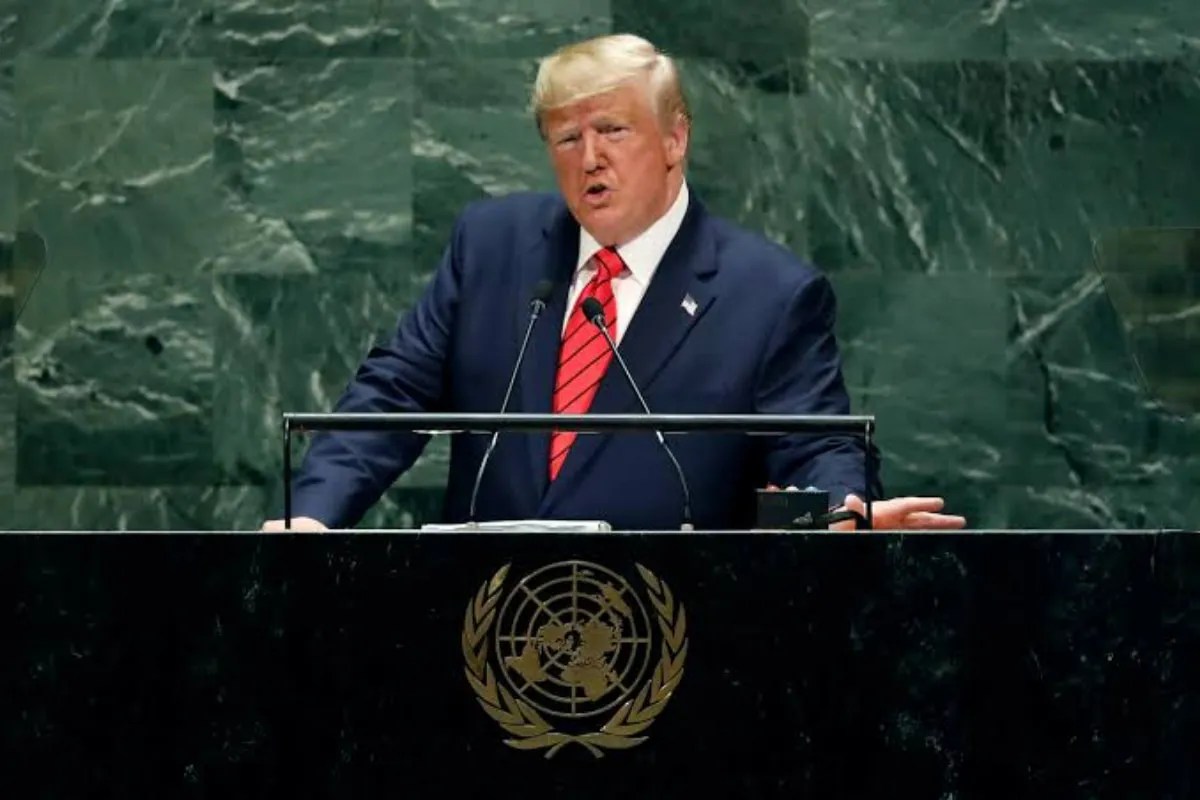
No, Donald Trump does not own Greenland, and the United States did not annex the world’s largest island. Despite triumphant claims from Washington that Europe handed America "the greatest gift we were ever given," the trilateral 2026 United States–Denmark–Greenland agreement is a sweeping military and security pact, not a real estate deed. Signed at the United Nations Headquarters on September 22, 2026, by Trump, Danish Prime Minister Mette Frederiksen, and Greenlandic Prime Minister Jens-Frederik Nielsen, the treaty expands Pentagon bases, locks out Chinese and Russian infrastructure, and binds an independent Greenland to NATO forever.
Sensational headlines across international media have painted the pact as a territorial surrender. That narrative misses the real story. After months of diplomatic brinkmanship that strained the transatlantic alliance to its breaking point, Copenhagen and Nuuk traded permanent military access and investment veto powers to make Trump drop his annexation demands.
The Anatomy of an Arctic Compromise
To understand what happened in New York, you have to separate political theater from treaty text. In early November 2026, following parliamentary approval in Nuuk, Trump told reporters and television audiences that the United States had secured Greenland on an "unlimited basis" at zero cost. The White House followed up by declaring the deal secures "permanent American security control" over the territory.
Read the actual text of the agreement, and a sharper, more nuanced picture emerges. The 2026 accord amends and supplements the original 1951 Defense of Greenland Agreement. Denmark retains full sovereignty over the territory. Greenland’s 57,000 residents remain Danish citizens with their existing self-rule architecture intact.
What changed is the operational footprint of the United States military. For decades, Washington operated primarily out of Pituffik Space Base (formerly Thule Air Base) in the far northwest. The new treaty blows the doors open across the entire island.
New Bases and Unmanned Zones
Under Article IV and Article V of the treaty, the Pentagon gains explicit authorization to modernize Pituffik and establish two major new Defense Areas:
- Narsarsuaq in the south, a dormant Cold War airfield sitting near critical shipping lanes and rare-earth deposits.
- Mestersvig on the rugged eastern coast, previously patrolled only by Denmark’s elite Sirius Dog Sled Patrol.
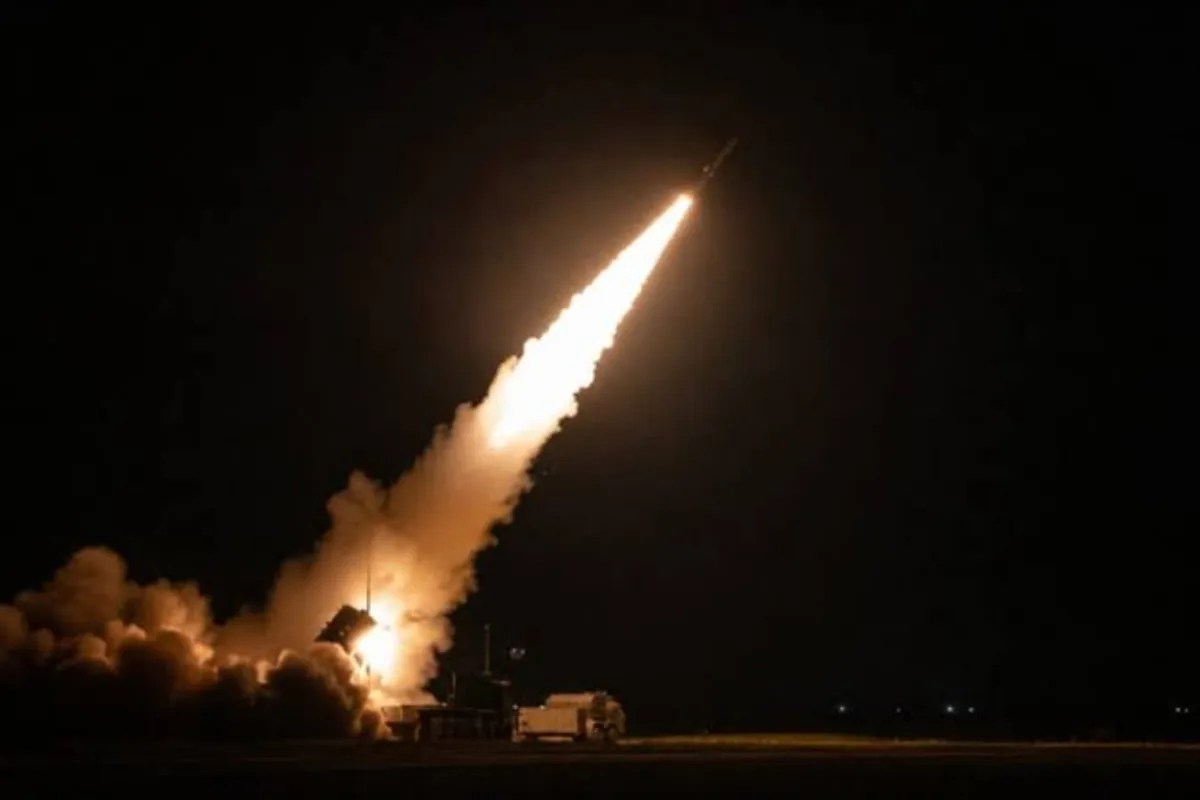
Beyond manned bases, the treaty authorizes unmanned military installations across the island. In plain English, the United States can now build networks of automated radar stations, autonomous sensor arrays, and missile-tracking infrastructure from the ice cap to the coast. The preamble explicitly links this buildup to the establishment of a Golden Dome defense system, Washington’s ambitious architecture designed to intercept next-generation hypersonic and ballistic threats coming over the North Pole.
Total Air and Undersea Access
Article VI grants American military aircraft the right to fly over and land anywhere in Greenland and its territorial waters without routine bureaucratic friction. Even more consequential for naval strategists is the undersea access clause. U.S. submarines and public vessels now hold explicit, codifed rights to move beneath Greenland’s territorial waters.
As Arctic sea ice retreats, the GIUK Gap—the maritime choke point between Greenland, Iceland, and the United Kingdom—has regained its Cold War urgency. Russian nuclear submarines based in the Kola Peninsula must pass through these waters to reach the Atlantic. By locking in unrestricted undersea and coastal sensor access, the Pentagon effectively turned Greenland into an immovable aircraft carrier and sonar array guarding North America's northern flank.
Why Copenhagen and Nuuk Signed
If Denmark did not sell the island, why did Prime Minister Mette Frederiksen and Greenlandic leader Jens-Frederik Nielsen stand beside Trump in New York and sign a deal that grants the U.S. permanent military rights?
The answer comes down to survival and leverage. Throughout 2025 and 2026, Trump’s repeated threats to acquire Greenland—backed by veiled warnings of punitive tariffs against Danish exports and doubts over NATO’s mutual defense guarantees—created an existential crisis in Copenhagen. Denmark is a nation of fewer than six million people. It cannot militarily defend an ice-covered landmass three times the size of Texas against major power encroachment, nor could it survive a bilateral trade war with Washington.
European allies rallied rhetorically and sent modest troop contingents for Arctic exercises, but nobody in Brussels or Berlin was going to risk a rupture with the United States over Danish sovereignty. Copenhagen needed an off-ramp that allowed Trump to claim a historic victory at home while preserving the legal reality of Danish sovereignty abroad.
The Independence Trap
For Greenland’s government in Nuuk, the calculus was even more delicate. Greenlanders have spent decades negotiating their path toward full independence from Denmark under the 2009 Self-Government Act. Every major political party in Nuuk supports eventual statehood, though they disagree on the timeline and how to replace Denmark’s annual block grant of roughly $600 million.
Trump’s team exploited that ambition. Washington floated direct economic partnerships and massive infrastructure investments, forcing Nuuk to confront a stark reality: an independent Greenland without American security guarantees would be instantly vulnerable to Russian military pressure and Chinese economic capture.
Yet the 2026 agreement contains a poison pill for Greenlandic nationalists. Under Article XI, the treaty is permanent. If Greenland votes for full independence from Denmark ten or fifty years from now, the agreement automatically remains binding on the new sovereign nation, and Greenland is legally obligated to remain inside NATO.
Greenland’s opposition party, Naleraq, immediately attacked this provision. During heated debates in the Inatsisartut (Greenland’s parliament) in October and November 2026, opposition lawmakers argued that Nuuk had mortgaged its future foreign policy before even achieving statehood. When the parliament finally voted to approve the pact on November 3, 2026, the tally was 16 in favor, zero against, and seven abstentions—a clear sign of lingering discomfort beneath the official consensus.
Locking Out Beijing and Moscow
The quietest—and arguably most consequential—part of the deal has nothing to do with missiles or runways. It sits inside Article VII and the foreign direct investment consultation clauses.
For over a decade, Washington has watched nervously as Chinese state-backed firms attempted to buy abandoned naval bases, build dual-use airports, and secure mining licenses across Greenland. During Trump’s first term, the Pentagon had to intervene behind the scenes to pressure Denmark into blocking a Chinese state enterprise from financing three civilian airports on the island.
The 2026 agreement turns informal American pressure into binding international law.
- Investment Screening: Denmark and Greenland are now legally required to engage in close consultation with U.S. authorities regarding foreign direct investment and major infrastructure activities. While the text avoids naming China explicitly, the mechanism gives Washington an effective early-warning system and diplomatic veto over non-NATO capital entering Greenland’s mining, telecom, or transport sectors.
- Buffer Zones: Article VII prohibits any activity in the vicinity of U.S. Defense Areas that could threaten base security. Because the new Defense Areas span the north, south, and east of the island, any foreign mining consortium hoping to extract rare-earth elements near Narsarsuaq or Mestersvig must now pass American counter-espionage scrutiny.
- Counter-Espionage Integration: Danish intelligence and police authorities are now locked into continuous operational coordination with American agencies to counter foreign intelligence operations on the island.
The Rare-Earth Reality Check
Much of the breathless coverage surrounding the Greenland deal assumes American bulldozers will begin digging up trillions of dollars in rare-earth minerals tomorrow morning. Industry veterans know better.
Greenland holds massive deposits of neodymium, praseodymium, dysprosium, and terbium—the exact elements needed to build F-35 fighter jets, Virginia-class submarines, wind turbines, and electric vehicle motors. Deposits like Kvanefjeld and Tanbreez in southern Greenland rank among the largest undeveloped rare-earth reserves on earth.
Having minerals in the ground and getting them into a supply chain are two completely different businesses. Greenland has almost zero interior roads. Only a tiny fraction of its coastline is ice-free year-round. Extreme weather limits construction windows to a few months each summer, and environmental regulations—backed by fierce local opposition to uranium byproducts—have stalled major mining projects for years.
The 2026 treaty includes preferential contracting opportunities for Greenlandic firms and pledges respect for traditional hunting, fishing, and environmental guardrails. It does not, however, provide a dime of direct U.S. federal subsidies to build deep-water ports or processing refineries. Without massive capital expenditure and years of environmental permitting, Greenland’s mineral wealth will remain locked beneath basalt and permafrost long after Trump leaves office.
A Damaged Alliance Behind Closed Doors
On paper, everyone walked away from New York with what they needed. Trump got to tell voters he secured Greenland permanently at no cost. Frederiksen and Nielsen preserved legal sovereignty and avoided a catastrophic rupture with Washington. Denmark’s parliament, the Folketing, is widely expected to finalize ratification on November 19, 2026, with broad bipartisan backing.
Look closer at the diplomatic wreckage, however, and the long-term cost becomes obvious.
Denmark has been one of America’s most loyal allies for generations. Danish soldiers fought and died alongside American troops in Afghanistan and Iraq at higher per-capita rates than almost any other coalition partner. Yet over the past two years, Copenhagen watched its closest security guarantor treat its sovereign territory like a distressed real estate asset.
Greenlandic Foreign Minister Múte B. Egede captured the mood in Nuuk when he described the crisis as a "serious breach of trust" that will take years to repair. European capitals took notes as well. If Washington is willing to use economic coercion and existential threats against a founding NATO ally to extract basing rights it largely already possessed under a 1951 treaty, no smaller European nation can view American security guarantees the same way again.
Trump won his bases, his missile defense perimeter, and his headline. The United States now holds an unbreakable military lock on the North American Arctic. What Washington lost in the process—quiet trust among its oldest allies—cannot be written back into a treaty.