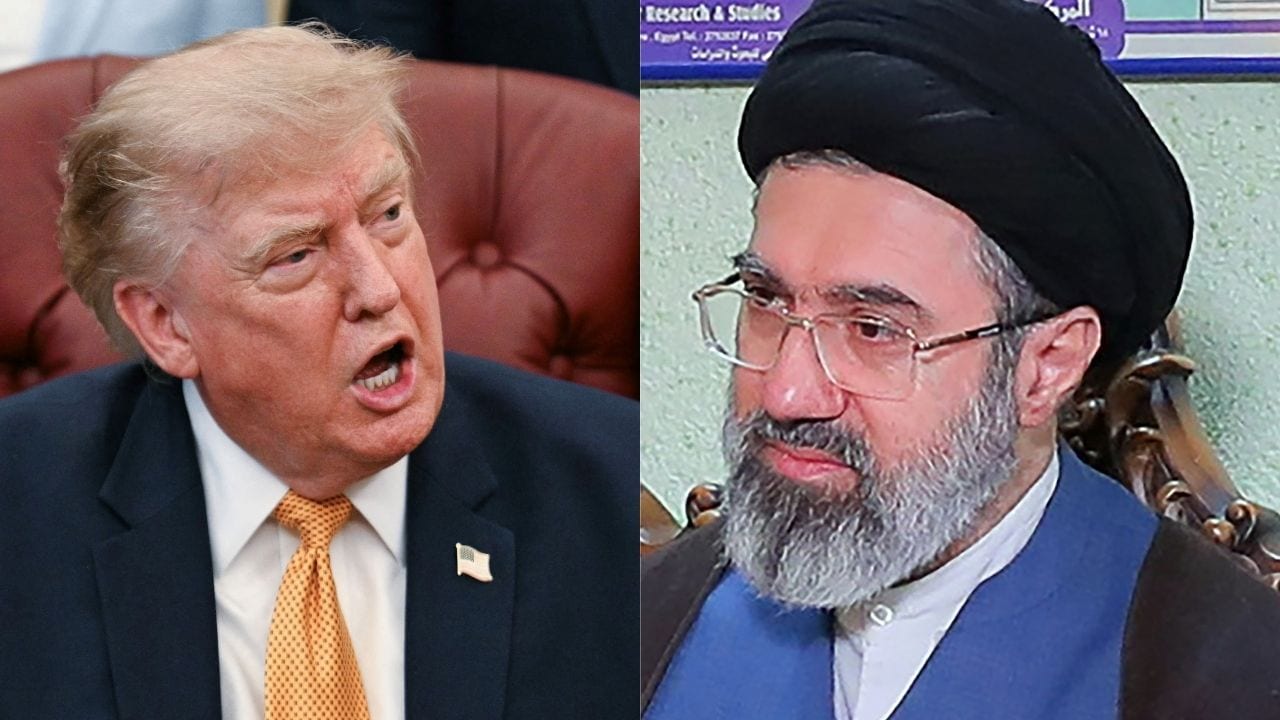
Rumors about the physical state of foreign leaders spread fast, but US President Donald Trump recently offered a very specific assessment regarding Iran's leadership. During a radio interview with Glenn Beck, Trump stated explicitly that he does not believe Iranian Supreme Leader Mojtaba Khamenei is dead. Instead, Trump claimed that the newly appointed leader is alive but dealing with severe, life-altering injuries.
If you have been following the fallout from the ongoing military conflicts in the Middle East, you already know how much mystery surrounds Tehran's top office. Mojtaba Khamenei assumed the role of supreme leader following the death of his father, Ayatollah Ali Khamenei, during joint US-Israeli strikes back on February 28. Ever since that transition, speculation has run wild. Has the younger Khamenei been physically incapacitated? Is he actively running the government, or are hardline military factions steering the state behind closed doors? Trump's recent comments inject a brand-new perspective into an already chaotic intelligence picture. Also making news in this space: Inside the Himalayan Glacier Collapse That Triggered Nepal's Catastrophic Floods.
Inside the Claims About Mojtaba Khamenei's Injuries
Trump didn't just offer a vague guess. He got granular about the physical toll of the military campaign. According to his statements on the program, Khamenei took heavy hits on the left side of his body.
"I don't think he's dead. He was very seriously wounded. The left side of his body, the arm, the leg, the whole thing. He was very seriously wounded. But I don't think he's dead," Trump told listeners. Further details regarding the matter are covered by USA Today.
This assessment matches up with whispers that have circulated among regional intelligence trackers for months. While state television in Iran has broadcasted messages attributed to Mojtaba Khamenei—including statements addressing family losses and pledging vengeance—he has remained completely out of the public eye since taking power. That total absence from public view creates a vacuum. When a supreme leader vanishes right after taking the oath, conspiracy theories naturally fill the gap.
The Power Struggle Behind the Silence
An absentee leader changes everything. Iran's Islamic Revolutionary Guard Corps has steadily expanded its footprint, leaving outside observers to question whether Khamenei holds real authority or serves merely as a figurehead while recovering from trauma.
Trump also threw another curveball into his media appearance by arguing that the current supreme leader might be more rational than his late father. Whether that assessment holds any weight in actual diplomatic channels remains to be seen. Tehran and Washington are still locked in a high-stakes standoff involving naval security, economic blockades, and the vital Strait of Hormuz.
While diplomatic backchannels involving nations like Qatar and Oman attempt to hammer out interim frameworks for commercial shipping, Washington is keeping economic pressure dialed up. Trump maintains that his strategy is working toward a decisive outcome, even as critical issues like Iran's nuclear ambitions remain unresolved.
Expect more conflicting reports to leak out of Tehran as long as Khamenei stays hidden from cameras. Watch for official state media cues and shifts in Revolutionary Guard rhetoric to gauge who is truly calling the shots.