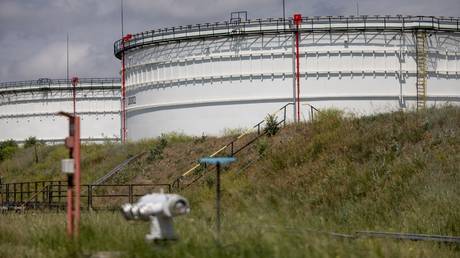
The headlines are celebrating a "return to normalcy" because oil is flowing through the Druzhba pipeline again. They want you to believe that a few signatures in Budapest and Kyiv have patched a gaping hole in European energy security. They are lying to you.
The resumption of flow isn't a victory for diplomacy or a sign of stability. It is a desperate, short-term band-aid on a gangrenous limb. The mainstream narrative treats the Druzhba—the "Friendship" pipeline—as a static piece of infrastructure. In reality, it is a geopolitical leash. Every time the taps turn back on, the dependency deepens. We aren't watching a recovery; we are watching a hostage situation where the hostage is thanking the captor for a glass of water. Also making headlines in related news: Structural Constraints and Strategic Mandates for UN Leadership Under Rebeca Grynspan.
The Myth of the Reliable Transit State
The lazy consensus suggests that as long as Hungary pays the transit fees or Lukoil navigates the latest sanctions loophole, the lights stay on in Central Europe. This ignores the fundamental physics of 21st-century warfare. Pipelines are the most vulnerable assets on the planet. They are fixed, unhideable, and impossible to defend across thousands of kilometers of contested territory.
Investors and analysts keep asking: "When will the risk subside?" That is the wrong question. The risk is the feature, not the bug. Ukraine's transit role isn't a service; it's a weapon of last resort. Hungary's reliance isn't a strategy; it's a failure of imagination. When you look at the Druzhba, stop seeing a carrier of crude. Start seeing a 4,000-kilometer fuse. Further information regarding the matter are covered by The Washington Post.
I have sat in boardrooms where "diversification" is a buzzword used to appease ESG consultants while the actual procurement remains 70% tethered to a single, aging Soviet-era pipe. It’s cheap, sure. But "cheap" is the most expensive mistake you can make in energy.
The Technical Decay Nobody Mentions
Everyone talks about the politics. Nobody talks about the steel. The Druzhba system was commissioned in the 1960s. It was designed for a world that no longer exists, using metallurgy that is rapidly reaching its fatigue limit.
Why Pressure Matters
- Constant Fluctuations: Stopping and starting a pipeline of this magnitude isn't like turning a kitchen faucet. It creates pressure surges that stress weld points.
- Contamination: Maintenance windows are being skipped or rushed. The risk of "sour" crude or high-chloride content—which decimated European refineries in 2019—is higher now than ever.
- The Sinkhole Effect: Infrastructure investment in transit zones has plummeted. You cannot maintain a world-class pipeline in a zone where the workforce is displaced and the supply chain for spare parts is severed.
If you think the flow is "stable" just because the sensors show movement today, you don't understand how heavy infrastructure fails. It fails slowly, then all at once.
Hungary’s Dangerous Game of Solitaire
Viktor Orbán is praised by some as a pragmatist for securing these flows. He is actually a gambler playing with a deck that’s missing all the aces. By doubling down on Druzhba, Hungary is opting out of the European energy transition—not the "green" one, but the security one.
While neighboring states are building LNG terminals and interconnectors, Budapest is clinging to a rusting pipe. This creates an internal friction within the EU that actually lowers the value of the oil being delivered. The "security" Hungary thinks it bought comes with a massive "political discount" that will be paid in diplomatic isolation and future infrastructure catch-up costs that will dwarf today's savings.
The Illusion of Sanction Compliance
Let’s dismantle the "legal" victory here. The industry is patting itself on the back for finding a way to transfer ownership of the oil at the Belarusian-Ukrainian border. This is a paper trick. It doesn't change the origin of the molecules. It doesn't change where the money ends up.
The market is currently addicted to these workarounds. We see it in the "shadow fleet" of tankers and we see it in the Druzhba’s legal gymnastics. But workarounds create complexity. Complexity creates hidden costs. Insurance premiums for refineries sitting at the end of these pipes are quietly skyrocketing. The "cheap Russian oil" is now burdened with a hidden tax of risk that no one is putting on the balance sheet.
Beyond the Pipe: What Real Diversification Looks Like
If you want to actually protect a nation's energy future, you stop looking at pipes. You look at modularity.
- Storage as Strategy: Not 90 days. Not 120 days. You need a year of strategic reserves to have any leverage.
- Refinery Re-tooling: Most Central European refineries are "locked" into the specific chemical profile of Urals crude. Spending $500 million to re-tool for Brent or Middle Eastern grades isn't an "expense." It’s an insurance premium.
- Virtual Pipelines: Increased rail and barge capacity. It’s less efficient? Yes. It’s more expensive per barrel? Absolutely. But you can't blow up a rail network and stop the flow for a month with a single drone.
The Brutal Reality of the Energy Map
The Druzhba pipeline is a ghost of the Cold War haunting a hot war. Every day we pretend it is a viable long-term solution is a day we waste not building the infrastructure that will actually survive the next decade.
We are obsessed with "resuming flow." We should be obsessed with "ending the need for the flow." The moment that oil started moving again via Hungary, the pressure to innovate vanished. That is the real tragedy. Comfort is the enemy of survival.
Stop checking the flow rates. Start checking the expiration date of the entire system. It’s much sooner than the "experts" are telling you.
The pipe isn't back. It's just waiting to break again.
Don't be the one holding the empty bucket when it does.