The wind over Kenya’s coast does not smell like oil. It smells like crushed limestone, dried mango leaves, and a very old, heavy salt that settles on the tongue.
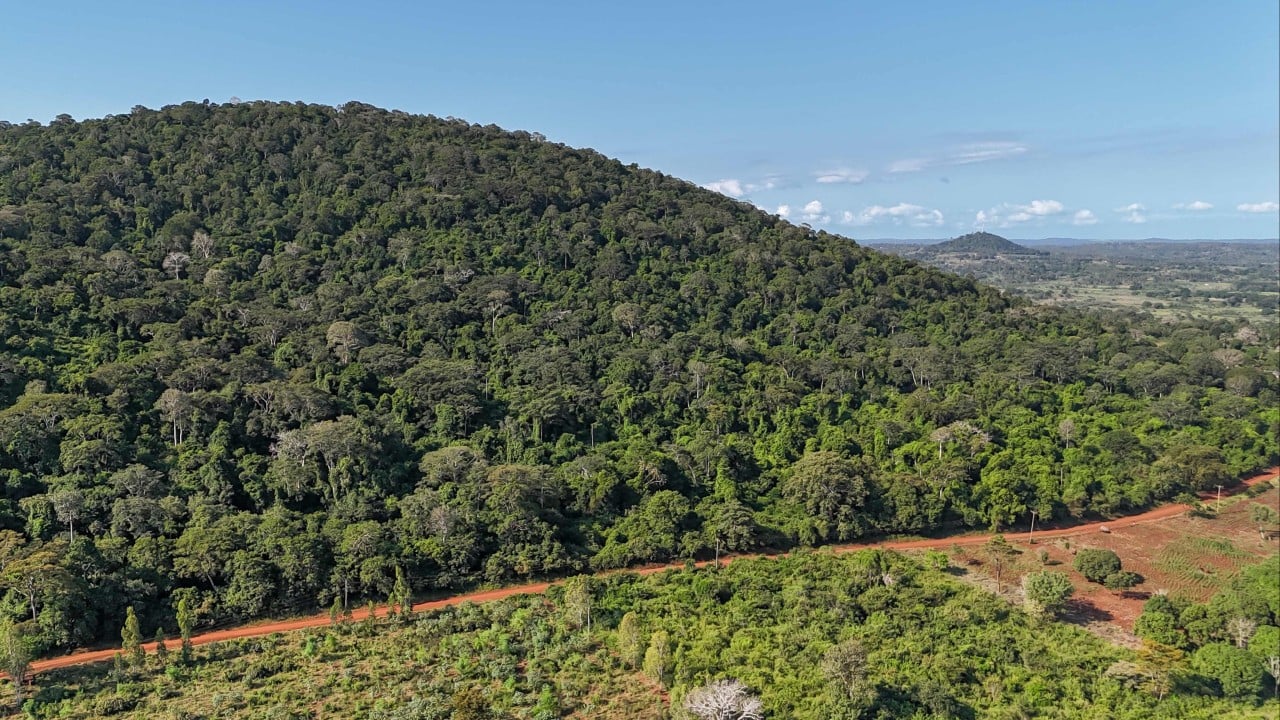
For generations, the people living in the shadow of Mrima Hill thought of it simply as a steep, green dome rising abruptly from the flat scrubland of Kwale County. Cows grazed on its slopes. Children climbed its ridges to look for wild fruit. Elders spoke of it with a quiet, superstitious reverence, warning that the earth here held a strange weight—that digging too deep might wake something best left asleep.
They had no idea how right they were.
Today, Mrima Hill is no longer just a landmark. It is a prize. Beneath its rust-red soil lies an extraordinary concentration of rare earth elements, the microscopic minerals that power everything from electric vehicle motors to advanced missile guidance systems. And as the global race for technological supremacy accelerates, this quiet corner of East Africa has become an unexpected battleground.
Consider what happens when a superpower needs dirt.
Not ordinary dirt. The kind of dirt that contains neodymium, dysprosium, and niobium. The kind of invisible building blocks that modern technology cannot function without. For decades, global supply chains for these critical materials were concentrated in a single nation, leaving Western and Asian economies vulnerable to sudden export curbs and geopolitical leverage.
Now, the hunt for alternatives has driven prospectors, diplomats, and state-backed corporations across the globe. They are looking at forgotten hills, remote deserts, and ocean floors. They are looking at Mrima Hill.
On one side stands the United States and its allies, desperate to secure diversified supply chains that do not rely on Beijing. On the other stands China, which has spent the last twenty years systematically building dominance over the extraction, processing, and refinement of critical minerals worldwide through infrastructure investments and mining concessions.
The tension is rarely loud. It does not look like war. It looks like men in high-visibility vests walking through the acacia scrub with handheld scanners. It looks like quiet boardroom meetings in Nairobi, where promises of economic transformation are traded against long-term resource extraction. It looks like local farmers wondering whether the green hill they grew up with will soon be replaced by an open-pit mine and heavy machinery.
To understand the stakes, you have to look past the stock tickers and geopolitical briefs. You have to look at the soil itself.
Rare earth elements are actually not all that rare in terms of absolute abundance in the Earth's crust. But finding them in concentrations high enough to mine economically—and possessing the complex, environmentally hazardous chemical technology required to separate them—is exceedingly difficult. China mastered that process over decades, enduring the environmental toll while the rest of the world looked away.
Now, the world wants back in. And countries like Kenya find themselves courted with offers of billions in foreign investment, technological partnerships, and infrastructure development.
Yet, history casts a long shadow across the African continent. Mineral wealth has rarely translated into lasting prosperity for the communities sitting directly on top of it. Time and again, extraction has brought dust, displaced families, and wealth that flows outward faster than water through sand.
Local leaders in Kwale County know this history by heart. They have watched titanium mining come and go in their region, leaving behind mixed economic legacies and scarred landscapes. When they look at Mrima Hill today, they see opportunity, yes. But they also see a profound vulnerability.
The rivalry playing out here is a modern proxy war fought not with bullets, but with balance sheets, bilateral agreements, and diplomatic pressure. Every delegation that arrives in Nairobi bearing gifts of technology and infrastructure represents a gravitational pull, drawing Kenya deeper into a global tug-of-war.
The afternoon sun beats down on the rusty slopes of Mrima Hill, casting long shadows across the maize fields below. A flock of white egrets lifts off from a nearby acacia tree, banking sharply against the vast blue sky. Everything looks peaceful. The wind still carries the scent of salt and dust.
But down in the dark, silent earth, the atoms wait. They are too small to see, yet powerful enough to redraw the map of global power.